Advanced practice should ask the player to understand more, not simply move faster.
In this progression, I connect dribbling, passing, and shooting while changing how the player interprets the information.
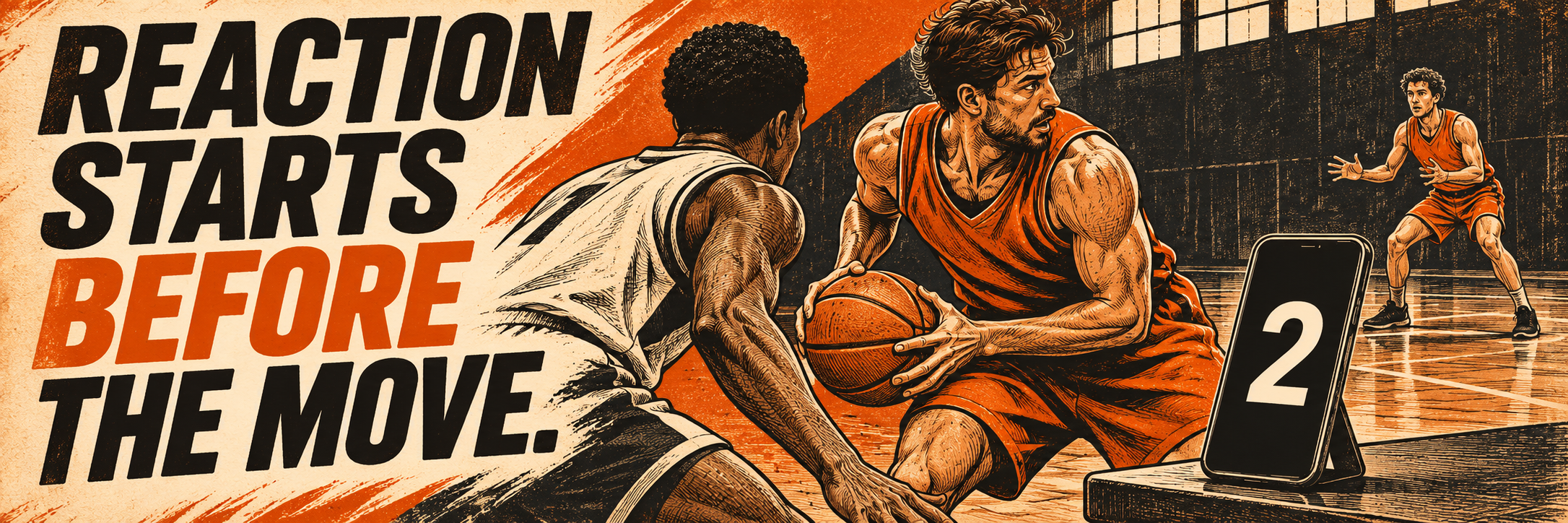
The screen gives a cue in one location. The player must decode it, scan the working space, and find the appropriate action or target.
That connection lets us work on reaction alongside movement memory, spatial awareness, and cognitive flexibility.
Scanning has a purpose
Scanning means actively checking the environment to understand what is happening and what might become available.
In basketball, that may happen while dribbling, before using a screen, during penetration, or while moving without the ball. The player needs information about defenders, teammates, and space.
In this practice, locating a target after reading the screen creates a structured scanning demand. Continue the progression toward live basketball information so the player has to read the game as well.
Stage 1. Arrows: Establish the response
Use the arrows in REACT CRT and place the kit targets on the wall as reference points for passing accuracy.
The arrow provides the direction for the agreed action. Add S as a separate cue to shoot at the basket. Only one symbol appears at a time.
Begin without defensive pressure. Once the player can maintain control, a shadow defender can add a changing physical demand.
This stage gives a relatively direct relationship between the symbol and the movement. It establishes the task before more interpretation is required.
Stage 2. Letters: Decode and locate
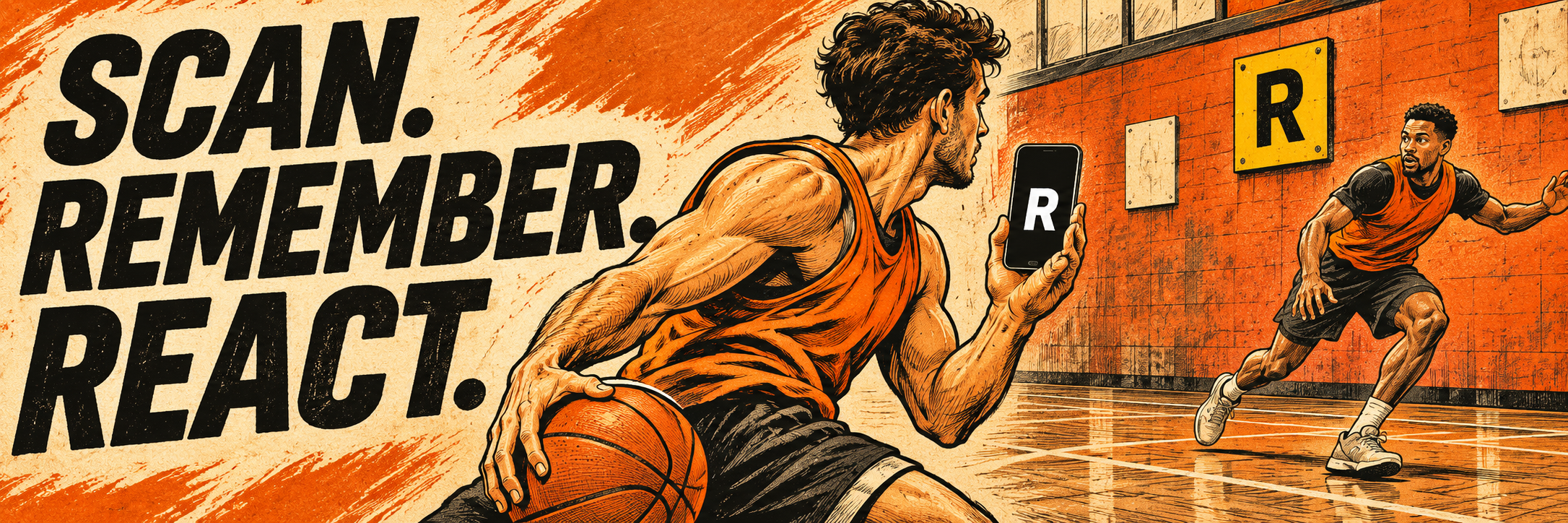
Use the R, E, A, C, and T targets. The player reads the letter on the screen, locates the matching target in the space, and delivers the pass accurately.
The cue and the target are in different places. The player must keep track of the mapping while controlling the ball and preparing the delivery.
S remains the agreed cue to shoot. It is an action cue, not another target in the five magnet kit.
Correct the whole sequence: read, locate, prepare, and deliver. Do not accept a fast pass to the wrong target as a successful repetition.
Stage 3. Numbers: Change the interpretation
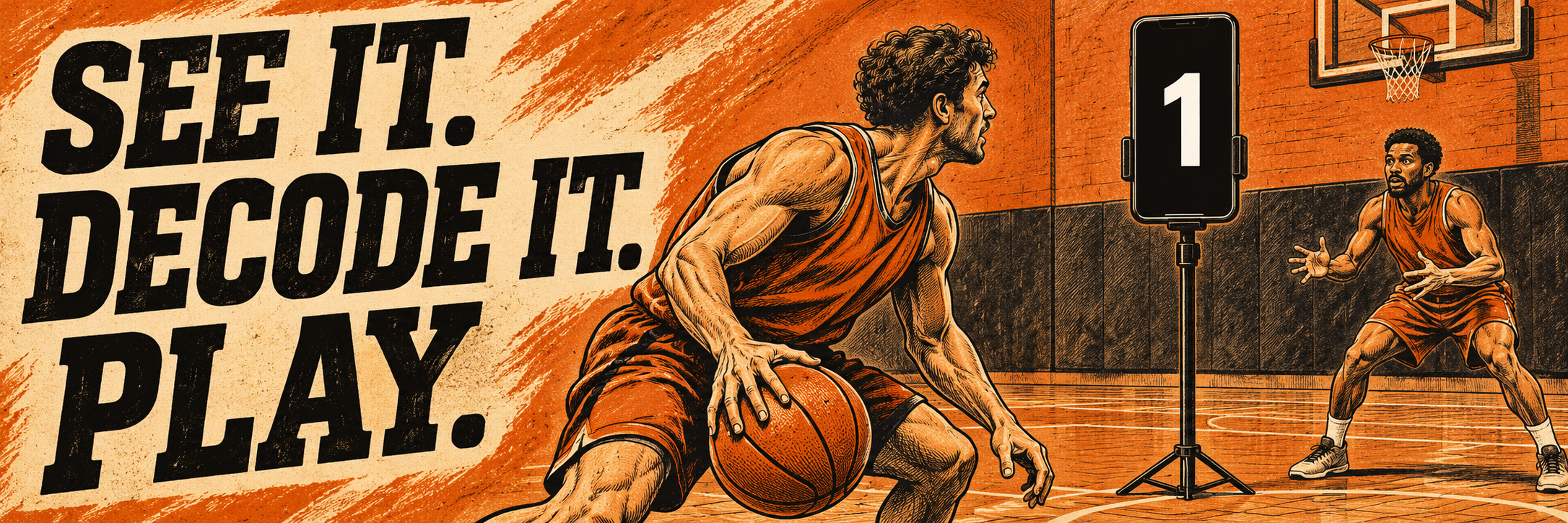
Use the numbered targets and assign each displayed number to its matching location.
The player now works with a different representation while continuing to dribble, pass, and respond to the shooting cue.
Before changing from letters to numbers, explain the new rule and allow a controlled practice period. The purpose is flexible use of information, not confusion over an instruction the player never learned.
Keep the equipment language consistent
The five target identities are 1 with yellow R, 2 with purple E, 3 with light blue A, 4 with green C, and 5 with orange T.
Use a clear screen and one cue per frame. Keep the display separate from the targets so the athlete must shift attention and locate the answer.
Set the cue interval to match the time needed to complete the chosen action. The player should have a genuine opportunity to read and execute before the next demand.
Add pressure without losing the read
Progress from controlled execution to movement through space and then to an appropriate defender.
Watch for the moment when the player starts guessing, drops the head, or abandons passing accuracy. That tells you which demand needs adjustment.
Keep at least one familiar part of the task while changing another. For example, retain the target arrangement while introducing letters, then keep the letter rule while adding movement.
Those are practical coaching progressions built around the original article’s principles.
Finish in the game
The kit gives a repeatable training setting. A teammate and a defender create a different information problem.
After the structured work, use a live basketball situation in which the player must scan, recognize a useful option, and act. Look for the habits you have practiced: early attention, controlled movement, and an accurate response.
The goal is not to become good at chasing symbols. It is to bring better awareness and decisions into basketball.
Watch a related practice
Arrow guided wall passing: a starting point for the progression. This video is from the REACT CRT channel. Use it alongside the coaching principles above; it is a related practice example rather than a demonstration of every detail in the article.
Written and developed by Coach Yoed Agmon. Adapted from his original Hebrew article, with practical basketball applications.