A passing drill can look organized and still teach players to play slowly.
The ball comes back to a familiar starting position. The arms load up. The player completes the full motion. By the time the pass arrives, the opportunity has changed.
There are situations that need a longer passing motion. Keep those tools. But do not let that motion become the automatic answer to every passing situation.
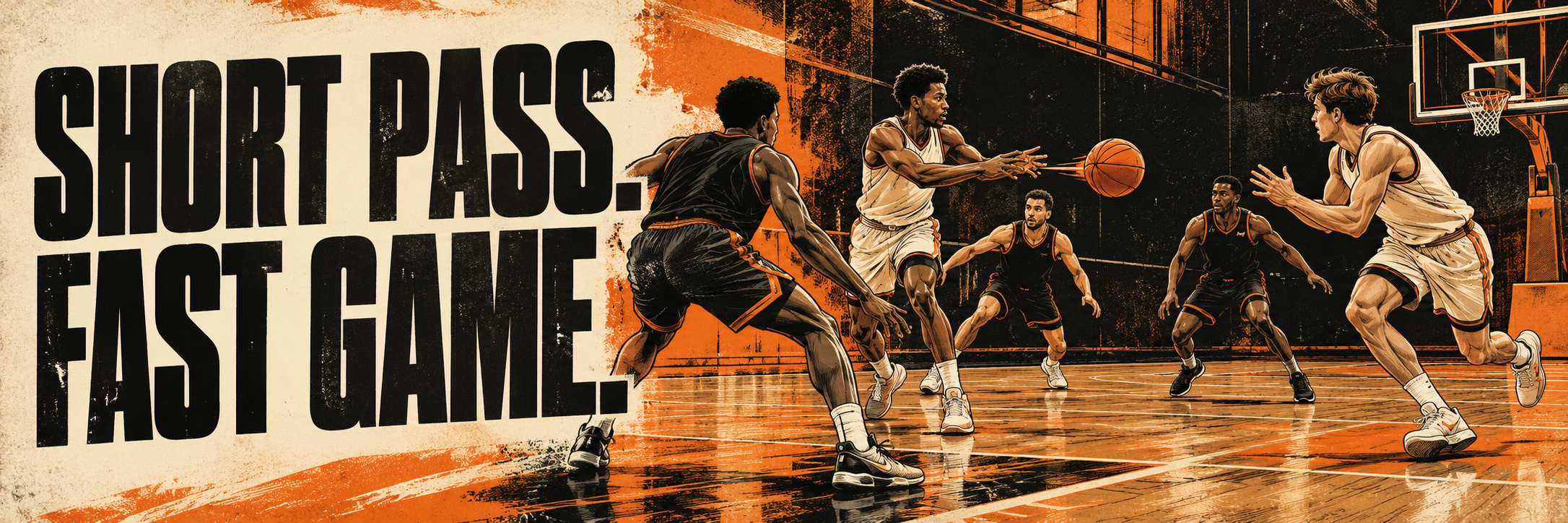
My emphasis is on short, quick deliveries that keep the team connected and the game moving.
Shorten the motion
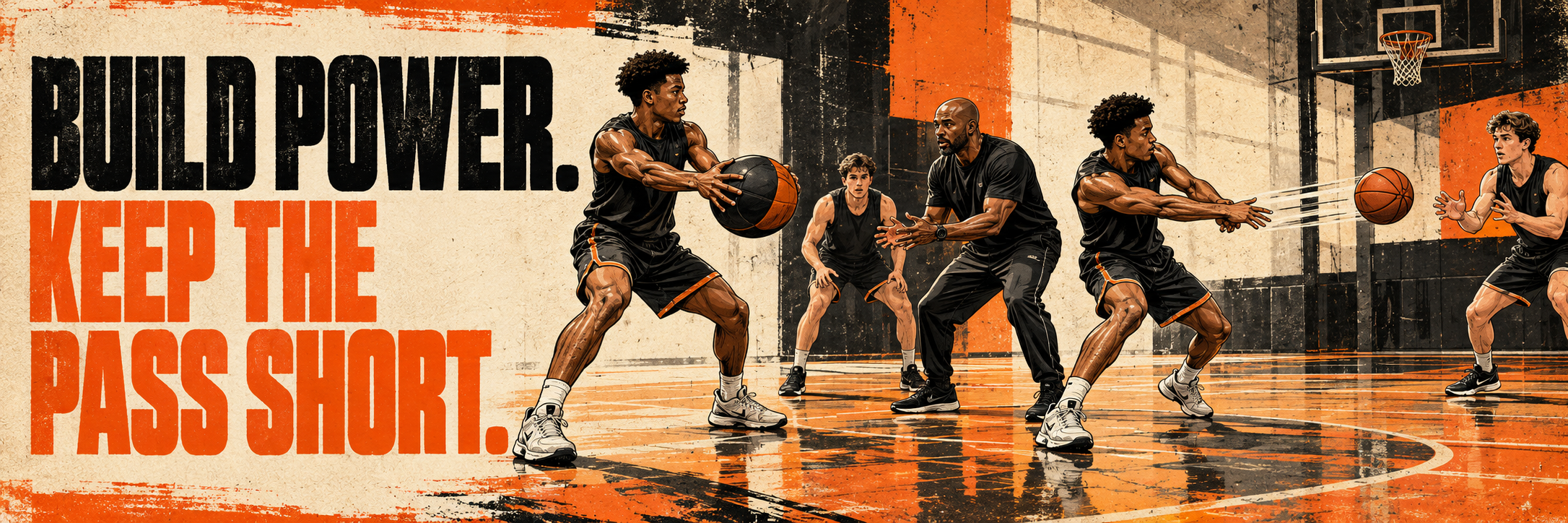
A short passing motion and a short passing distance are different things. Here, the first question is how much movement the player needs before releasing the ball.
Does the ball really need to return to the chest? Does the passer need another windup? Can the delivery come from the position the ball is already in?
Teach the player to recognize an available angle and use an efficient release. The technique should help the opportunity survive.
Keep the game from becoming robotic
When every pass must follow the same visible sequence, team play can become slow, overly mechanical, and predictable.
Players need a technical foundation. They also need permission to adapt it to what they see.
A moving teammate, a reaching defender, or a passing lane that opens briefly may demand a different release. Give players enough tools to solve that problem without forcing every situation into the same pattern.
Quick does not mean careless
The objective is an effective delivery that helps the receiver continue the play.
A rushed ball that pulls a teammate out of position does not improve the possession. Neither does an unnecessary preparation that lets the defense recover.
Look at the whole connection: the read, the release, the placement, and the receiver’s next action. Speed matters when those pieces work together.
Take the principle into practice
As a practical application, begin with two players moving and passing at a manageable pace. Ask them to notice unnecessary preparation before the release.
Vary the receiving angle so the passer has to adjust. Then add a defender who can interrupt the passing lane.
Keep the coaching focus narrow: can the player shorten the motion while preserving control and accuracy?
If the delivery breaks down, reduce the pressure and rebuild the connection. Add pace as the players become more effective.
Keep the right tool for the situation
Longer passing motions still belong in basketball. The point is to choose them when the situation calls for them.
Build a range of solutions. Encourage players to recognize when a compact delivery is enough and when a different pass is necessary.
The goal is a team that moves the ball with purpose, adjusts to the defense, and keeps its creativity.
Shorten the preparation. Preserve the connection. Let the game move.
Watch: Team passing with REACT CRT
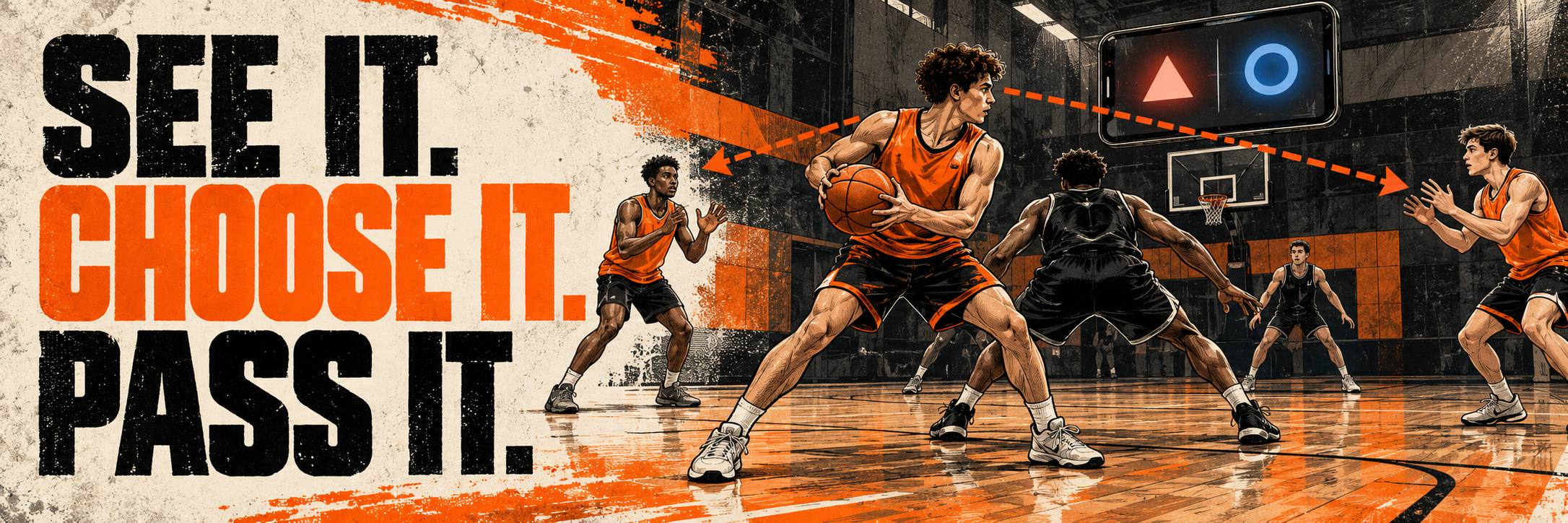
This related team drill from the REACT CRT channel adds changing visual information to basketball practice. Use it as a progression toward reacting and passing in a changing situation. Keep the coaching focus on an efficient release and a delivery the receiver can use.
Article 2 of the passing series. Adapted from Coach Yoed Agmon’s original article, with practical coaching applications.