Ask a room full of coaches who is responsible for a successful pass. Most will say the passer and the receiver.
Now ask how much practice time they spend teaching the receiver to catch.
That is where the conversation changes. We agree that receiving matters, but we often leave it to chance.
Passing on the move is one of my favorite ways to teach basketball fundamentals. It brings several skills together in the same action. The catch deserves its own attention within that work.
Move toward the ball
Do not make waiting the default receiving habit.
Move toward the ball when the situation calls for it and shorten the passing distance. Help the passer complete the connection instead of leaving the ball to travel through space the defender can attack.
The receiver is part of the solution. Coach the movement to receive as deliberately as you coach the delivery.
Prepare the hands
Hand position is a skill to teach, observe, and correct.
Prepare the hands for the ball’s arrival and secure it under control. Do not treat getting a touch on the ball as the same thing as completing the catch.
Connect the hands to the body position. The receiving action should leave the player organized for what comes next.
Bring the chest to the ball
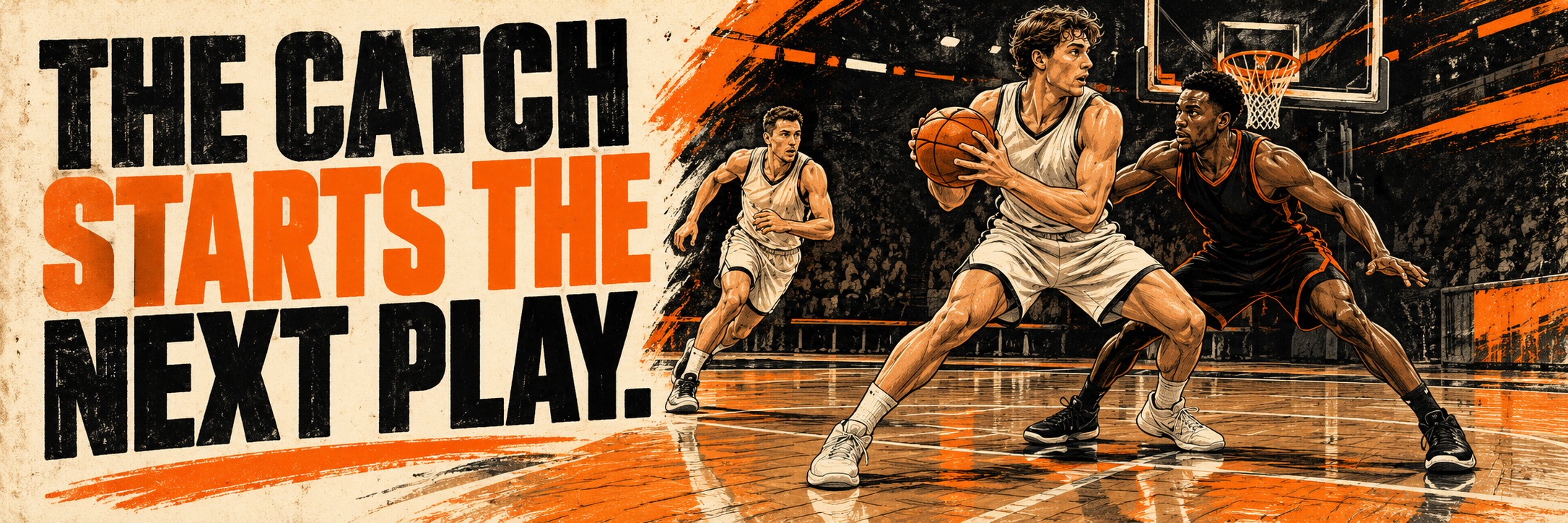
Bring the chest toward the ball rather than relying only on the arms to pull the ball back toward the body.
This is a body action, not simply a hand action. Practice how the player arrives, meets the ball, and brings it under control.
Keep the coaching cue clear: move to meet the ball.
Keep the defender away from the ball
The receiver must account for defensive pressure while preparing the catch.
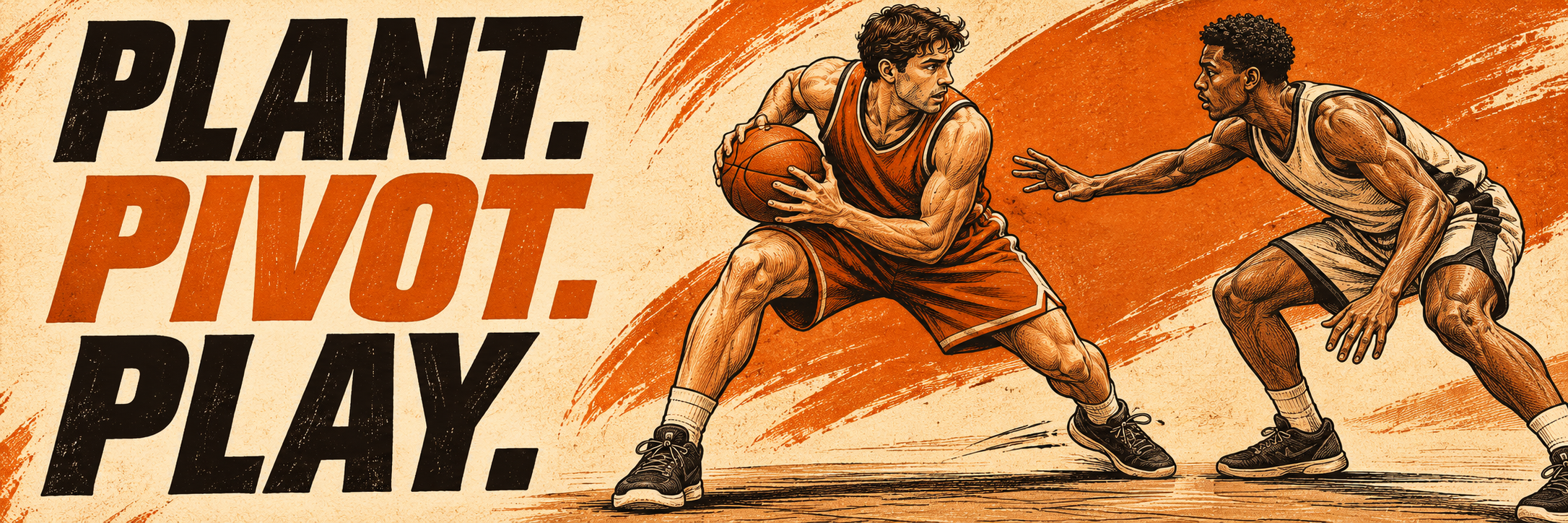
Read where the defender is positioned. Use legal body positioning to protect access to the ball. Secure the catch and organize the ball without offering the defender an easy reach.
Protecting the ball and seeing the court belong in the same action. Keep the head up and maintain awareness of the next opportunity.
Turn according to the defense
A catch does not automatically call for the same turn every time.
The defender’s position should guide the receiver’s response. Teach the player to recognize the pressure and turn accordingly, using legal pivot footwork.
Connect the catch, ball protection, and turn. The player should finish ready to make a basketball decision.
Coach the whole receiving action
As a practical application, start with a passer and a moving receiver. Focus on one receiving detail at a time.
Add a defender so the receiver must read the position, protect the catch, and choose the turn. Increase the pressure only when the player can preserve control.
Watch the receiver as closely as the passer. Did the player move to the ball? Were the hands prepared? Did the body meet the catch? Was the ball protected? Did the turn fit the defense?
A successful pass needs two players. Teach both sides of the connection.
Related practice: Passing with REACT CRT
This related passing workout from the REACT CRT channel connects visual information with basketball action. Use the receiving principles above when adapting the practice to your players. This is a related drill rather than a demonstration of every catching detail discussed here.
Article 3 of the passing series. Adapted from Coach Yoed Agmon’s original article, with practical coaching applications.
Read the original Hebrew article
Article 1: Beyond the Chest Pass
Article 2: Short, Sharp, and Fast