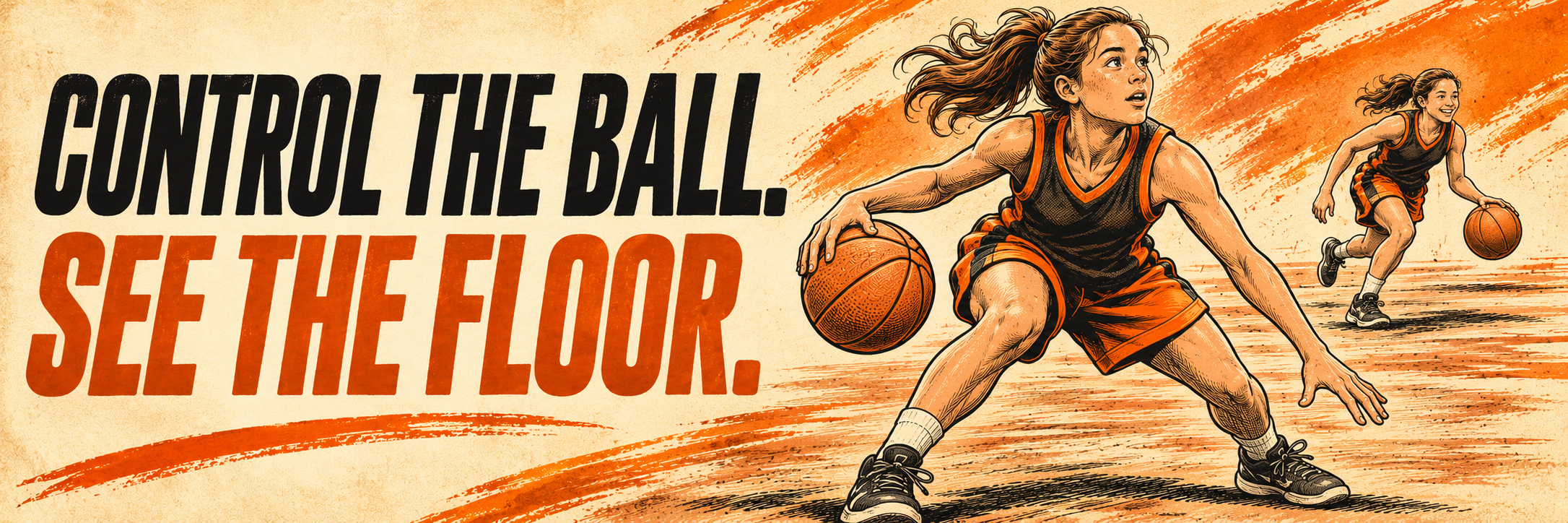
You see it in practice: sharp dribbling, good rhythm, confidence in every movement. Then the game starts and that control does not always hold up.
The difference is the task. A rehearsed routine asks the player to perform something known. A live possession asks the player to adapt while performing it.
Routine gives the player a base
Predictable practice has a job. It helps athletes learn the movement, organize the body, and find control of the ball. The route and timing are known, so attention can stay on the technique.
Keep that work. Then change the question. Can the athlete keep the same useful control when the next action is not known in advance?
Add a third moving influence
I use the idea of a three body problem as a coaching analogy. Player and ball are manageable in a controlled routine. A defender or moving teammate introduces another influence that changes the available response.
This is an analogy for interacting decisions, not a physics model of a basketball possession. The useful coaching point is that one player’s movement changes what the others can do.
A defender reaches. A teammate relocates. The lane that looked open disappears. The ballhandler must adjust rather than complete a move simply because it was next in the sequence.
Chaos is a demand to adapt
Chaos in this context means changing information and uncertainty. It does not mean careless traffic, uncontrolled contact, or adding distractions without a purpose.
The player cannot control every outcome. The player can work on the quality of the response: noticing the change, leaving an option that has closed, and connecting the next action to the new situation.
Train three connected abilities
First, spatial awareness. The athlete scans and notices relevant changes around the ball. Second, mental flexibility. The athlete can move away from the first plan when the situation changes. Third, the connection between perception and movement.
These abilities belong inside the repetition. A player should not need to stop the dribble, look around, decide, and start playing again every time something changes.
Move from a routine to a changing task
Start with a ballhandling action the athlete controls. Then introduce a visual cue that changes the required response. Keep the cue ahead so the player must gather information while dribbling.
REACT CRT gives me a way to vary visual information without telling the athlete the next action in advance. Use a clear symbol and a known mapping. Add choices only when the athlete can still identify and respond.
A screen cue is one part of the progression. Add a defender and teammate so the player also reads basketball movement and passing space.
Challenge the control, then demand a solution
In the changing practice shown here, the athlete must respond to quick interruptions while controlling the ball. Each interruption requires an immediate adjustment of the body, rhythm, or direction.
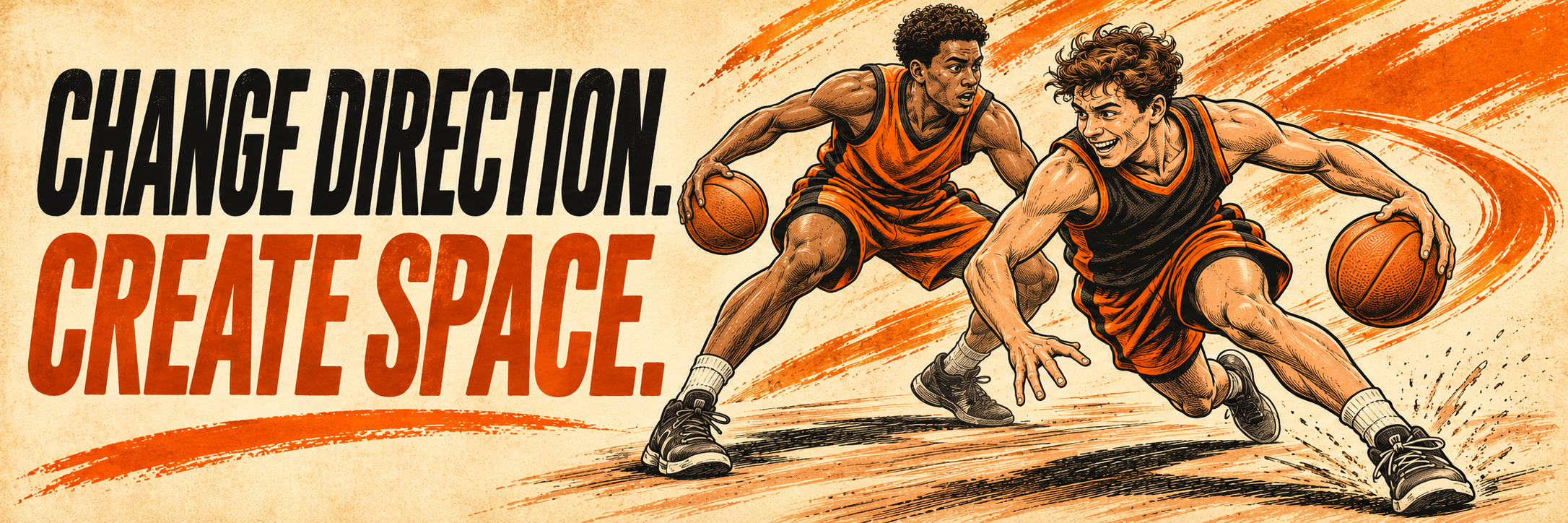
Coaching application: let a defender contest the dribble while a teammate changes the passing window. The attacker must protect the ball and choose between continuing, changing direction, and passing. Increase the freedom of the defender as the player improves.
If every repetition produces the same choice, change the starting picture. The task should require recognition, not reward guessing the coach’s pattern.
Measure what survives uncertainty
Look at the response as well as the move. Did the athlete notice the relevant change? Keep the ball protected? Abandon the closed option? Deliver the next action while it was still available?
Return briefly to isolated technique when a specific movement needs repair. Then retest it in the changing task.
Routine builds the movement. Uncertainty tests whether the player can use it. Train both, and keep bringing the ball back into the game.
Watch: Ball control in a changing task
“Make each day your masterpiece.”