The shot begins before the catch
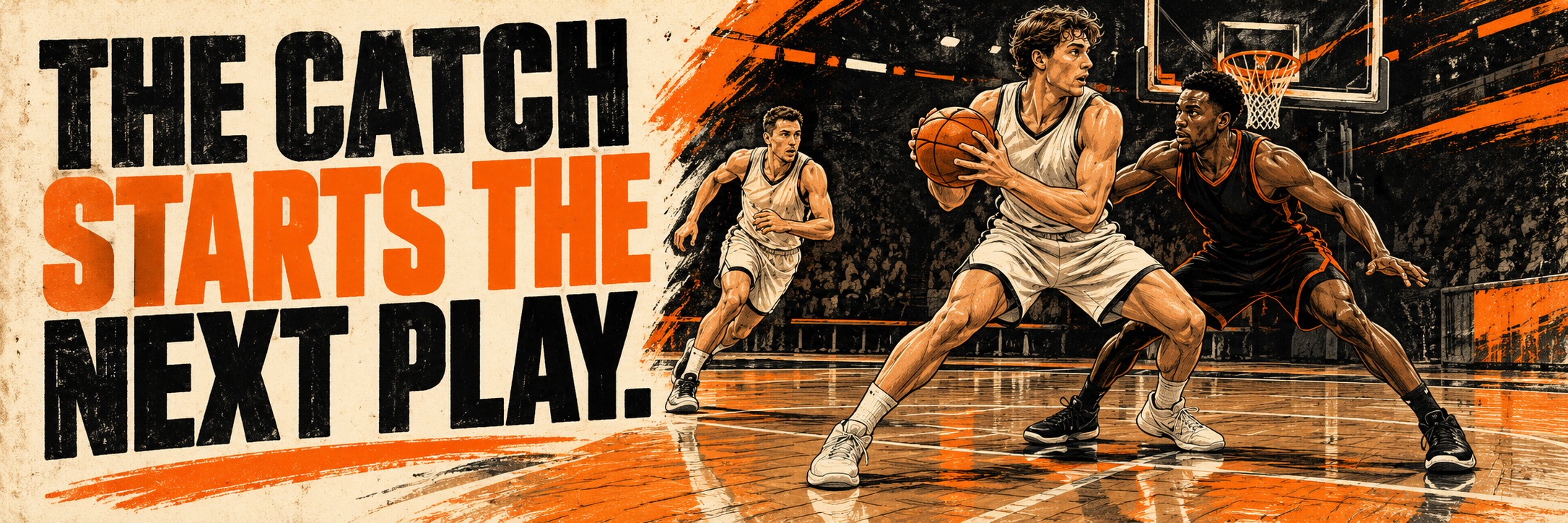
Stationary shooting has a place in teaching. Players also need to learn how to arrive for the ball in a basketball situation. A good receiving spot at the wrong time can disappear before the pass arrives.
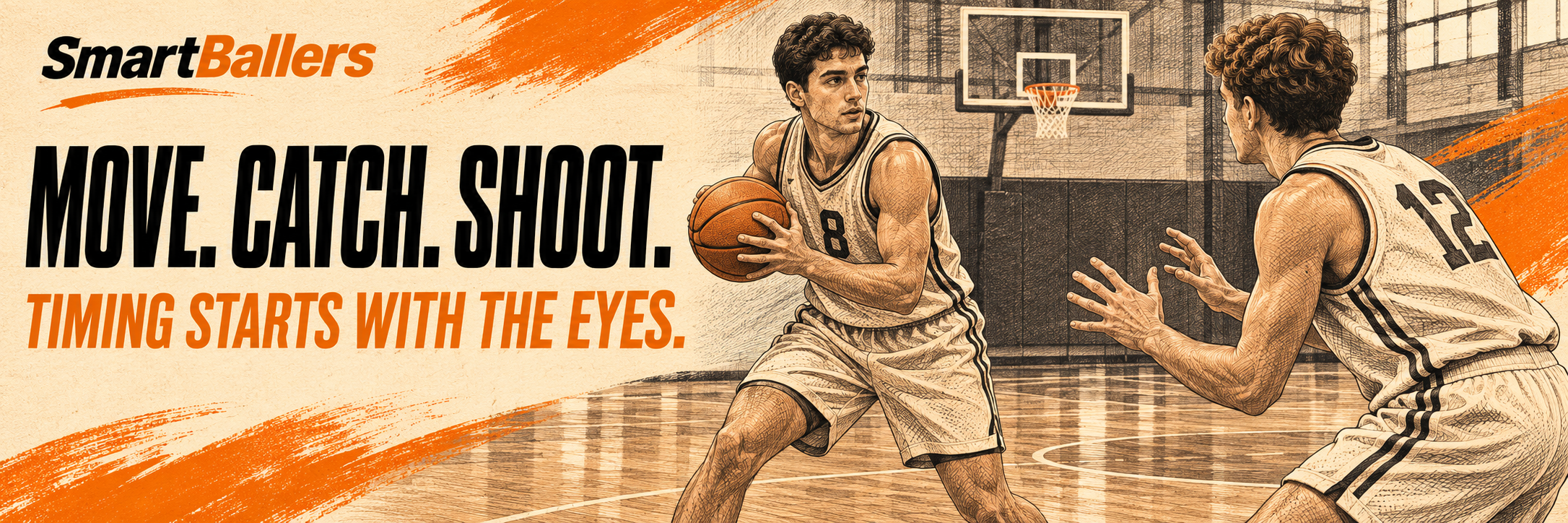
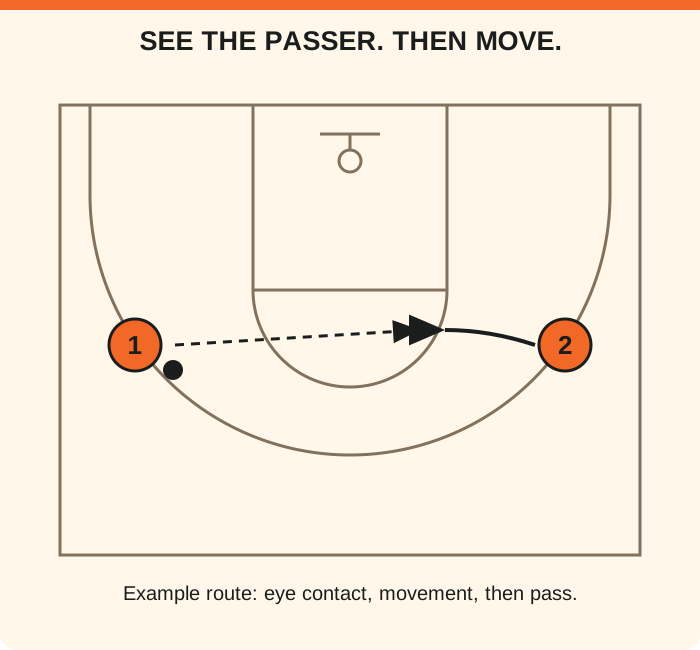
This pair progression connects movement without the ball to the passer’s readiness. The key cue is eye contact: when the player moving with the ball looks at the shooter, the shooter begins the movement to receive.
The cue teaches a shared moment. Both players have to see one another and connect the pass to the cut.
1. Move toward the ball
One player rebounds and dribbles toward a chosen area. The shooter watches for eye contact, moves into a nearby clear passing option, receives, and shoots.
Keep the timing visible. Moving too early may carry the shooter out of the useful window. Moving too late can give the defense time to get organized.
Start with ten attempts for each player, taking turns in the shooting role. Use the repetitions to connect the cue, the route, the catch, and the shot.
2. Create space away from the ball
Use the same relationship between the partners, but now ask the shooter to separate toward the opposite side and receive farther from the ball.
The movement changes the passing angle and the distance the passer must manage. The shooter still needs to recognize when the passer is ready to deliver.
Keep the catch connected to the shot. Running farther without offering a visible target only changes the route. The receiving window and the timing make it useful.
3. Add a fake and a dribble
After the catch, add a fake, a purposeful dribble, and a shot. Use this continuation with both the movement toward the ball and the movement away from it.
The new action should grow out of a controlled catch. If the player loses balance or needs extra adjustments, return briefly to the receiving action.
Keep the intention clear: prepare early, receive under control, then connect the next movement. Later, a defender can make the choice between shooting and attacking meaningful.
Make the pair accountable
The two partners can compete over ten attempts each. The player with more makes wins the round. Keep the passing quality part of the work: the shooter depends on a teammate delivering a usable ball.
Another format is a timed competition between pairs at two baskets. Count the combined makes of both partners. Choose the duration before starting so each pair knows the task.
The repeated rebounding, dribbling, and movement add a conditioning demand. Maintain useful movement and shooting rhythm as effort rises. Reduce the demand if fatigue makes the task lose its quality.
Teach the moment, then test it
Watch the sequence rather than only the final make. Did the shooter see the passer? Did the cut begin at a useful moment? Was the receiver ready when the ball arrived?
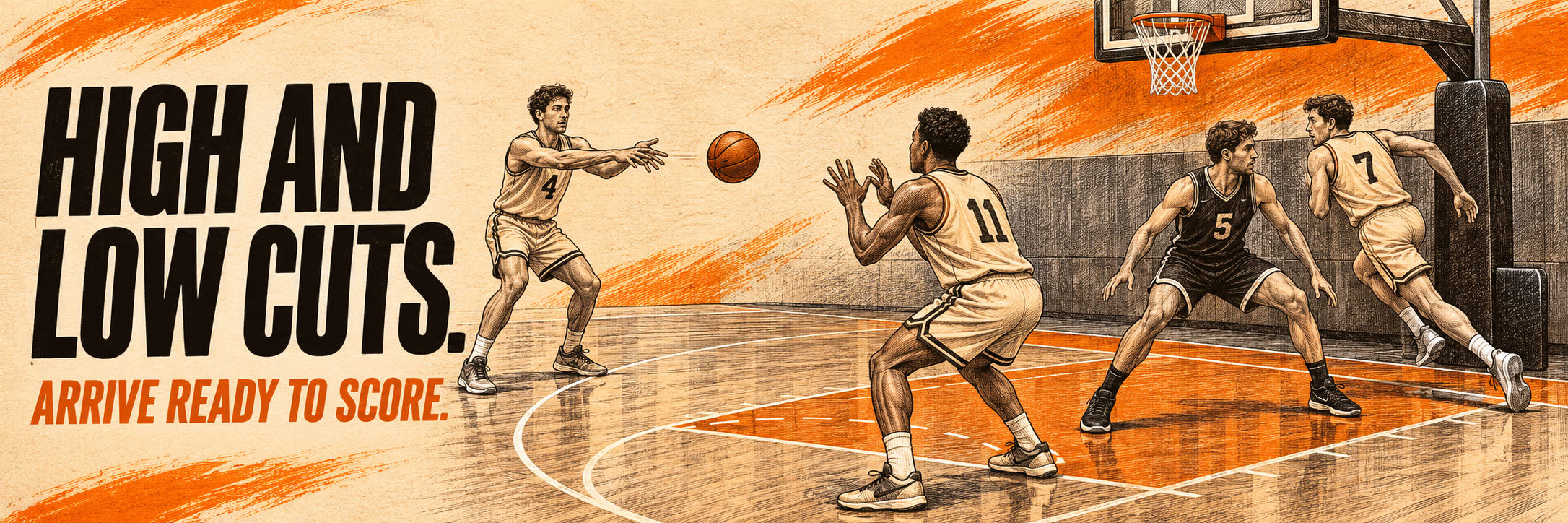
Correct the detail that breaks the connection, then let the pair experience the next repetition. For more receiving work, use The Catch Comes First. For routes near the baseline and free throw line, continue with High and Low Cuts.
When players can connect the movement reliably, test their timing against a defender. The purpose is to recognize and use a real receiving window.
Next stage with REACT CRT
Once the receiving and shooting action is reliable, add a changing visual cue. This related shooting practice from the REACT CRT channel offers a way to connect shooting to a reaction demand. It is a further training option, separate from the pair progression above.