Teach the movement before adding screens
A team can learn to share the floor, open passing lines, and attack together before screens become part of its offense. The starting point is understanding where the ball is, where the space is, and how a teammate’s movement changes both.
My preference is to teach motion offense. Even when using an organized movement pattern, I want players to understand the choices inside it. A route has value when it helps a teammate play.
Why I question the automatic give and go
The familiar instruction is to pass and cut toward the basket. I prefer asking what that cut does to the possession.
A strong side give and go can bring a defender toward the ball, close the ball handler’s driving lane, and occupy the space a teammate could attack from the weak side. That is why I do not make it the automatic answer after every pass.
The useful question is whether the cut opens an advantage in the present situation. Players need to see the lane and the other moving teammates before committing to it.
Bring the cutter from the weak side
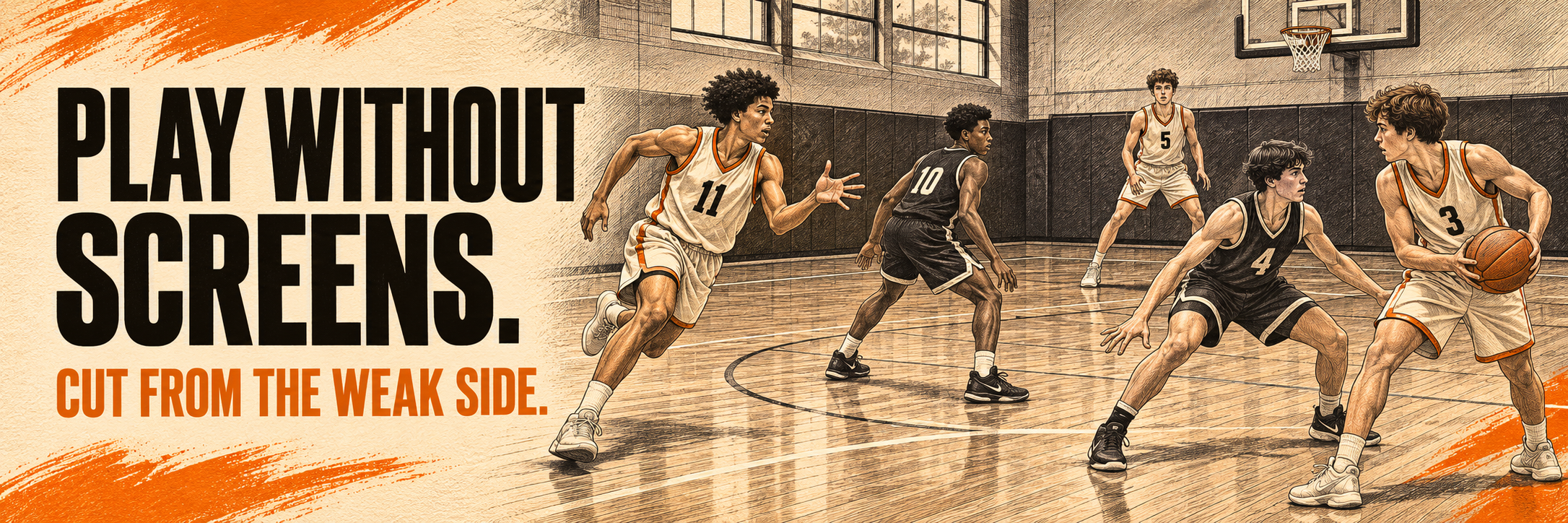
I prefer a player cutting from the weak side toward an available passing line. The movement brings a teammate into the action while allowing the player with the ball to keep a useful attacking picture.
This is a cut from the weak side to receive. Do not confuse a player passing through the high post area with a permanent high post assignment. Players should experience different positions and learn what makes each arrival useful.
Watch the timing. A cutter who arrives before the passer can see the option may disappear behind the defense. A cutter who arrives late may find the lane already occupied.

Connect the cut to the fill
As the weak side player cuts, the other players have to keep passing options available. I use coordinated weak side fills toward the first passing line, together with movement along the baseline.
Teach the group to notice the space a teammate leaves and the space the next teammate needs. A fill that sends two players to one destination replaces one spacing problem with another.
Keep the ball visible while moving. The destination has to provide a useful angle for a catch or leave a useful opening for someone else.

Use inside and outside routes
A familiar movement pattern can be taught without its screens. Replace the screening actions with inside and outside routes while preserving the relationships between the moving players.
The organizing idea is movement in and out toward the ball, with movement around the perimeter away from it. Show the players how those routes share the floor. Then let the position of the ball and the available space affect their timing.
A pattern such as Flex can be used as a teaching example. It is an option for organizing movement, rather than a requirement for this approach. The main task remains recognizing space, passing angles, and teammates.

Build the shared picture gradually
Begin with a small group and one clear movement task. Add a pass when players can move without crowding. Add defensive positioning when the group can keep the ball visible and provide a useful receiving option.
These are practice applications of the principles. Choose the starting demand according to what the players can already understand. The same movement problem can matter to a beginning player or an experienced group learning a new offense.
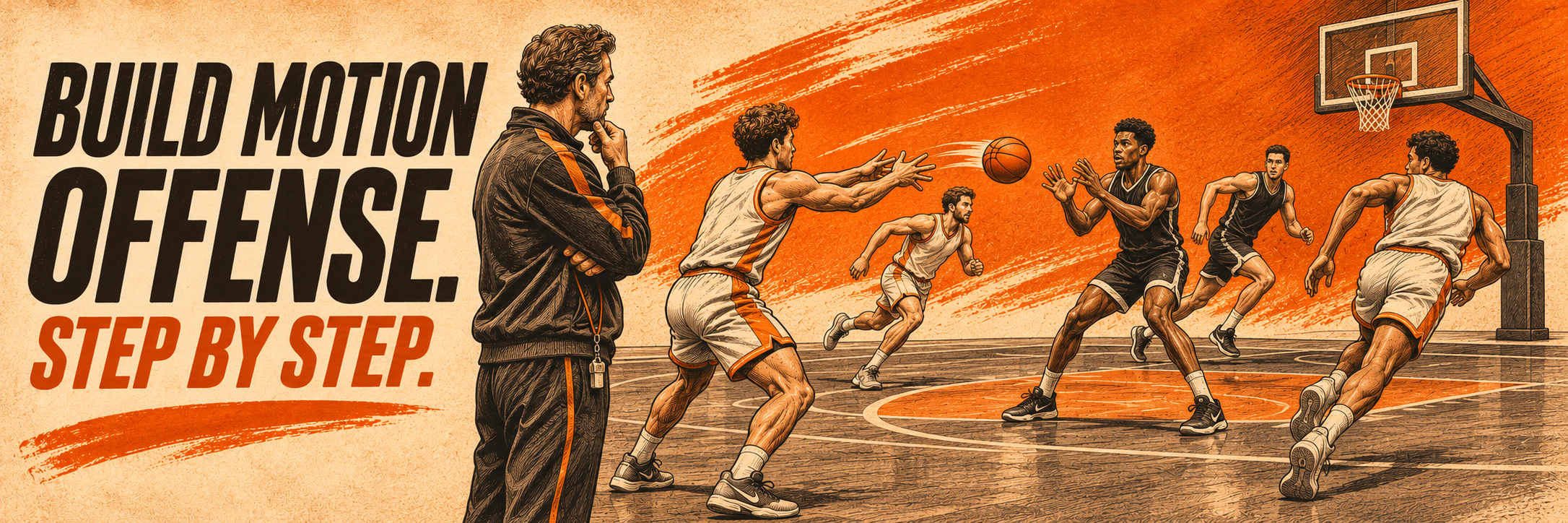
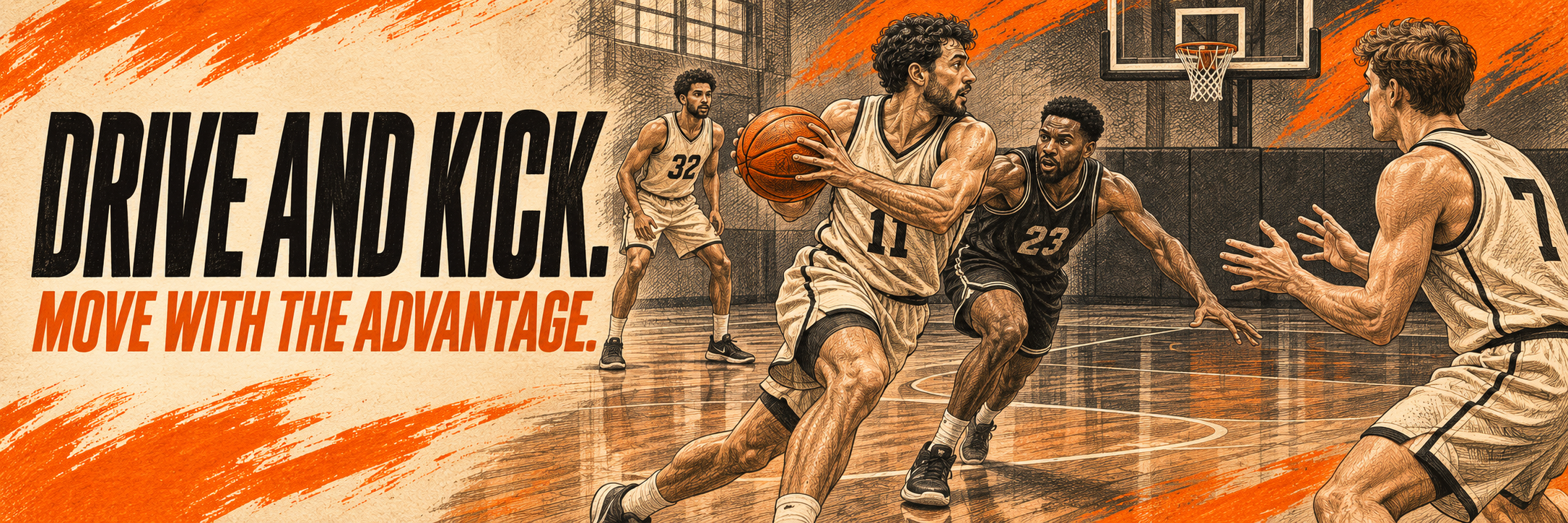
Continue with Build Motion Offense Step by Step. When a drive develops, connect the movement to Move With the Advantage. Add screens away when the group is ready to keep those same spacing responsibilities around a screen.