Pass, screen, and keep reading
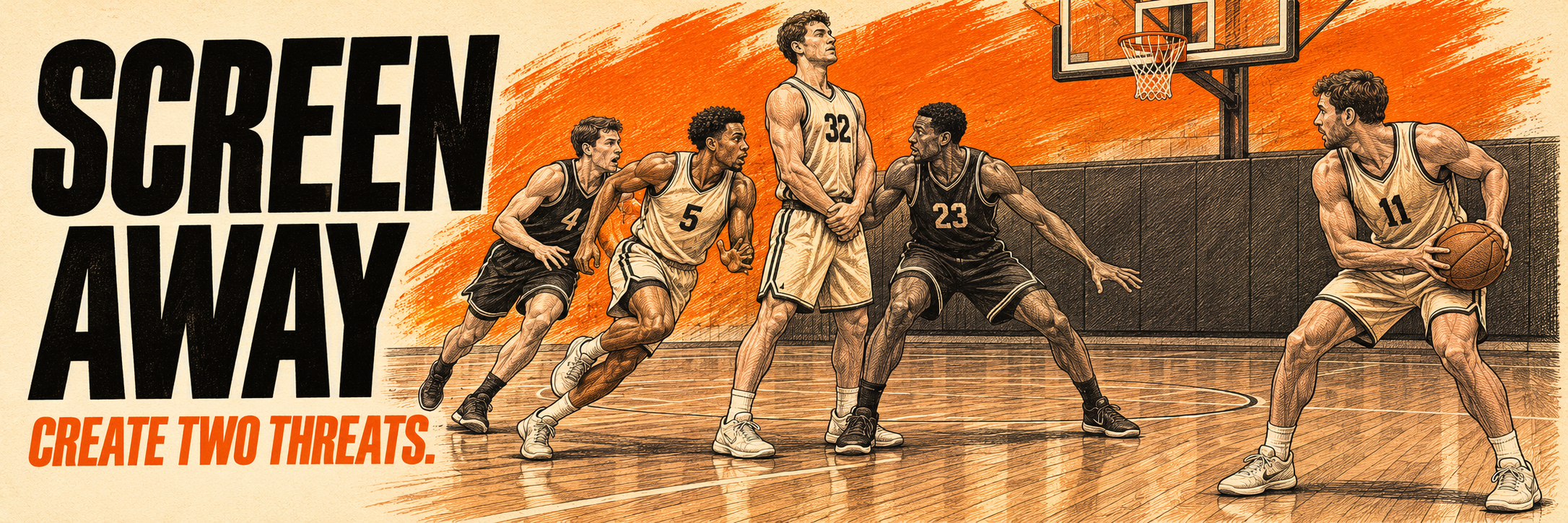
A pass followed by a screen away can change the whole possession. The passer moves away from the ball to screen for a teammate. That action can free the receiver, give the screener a chance near the rim, and open a driving lane for the player holding the ball.
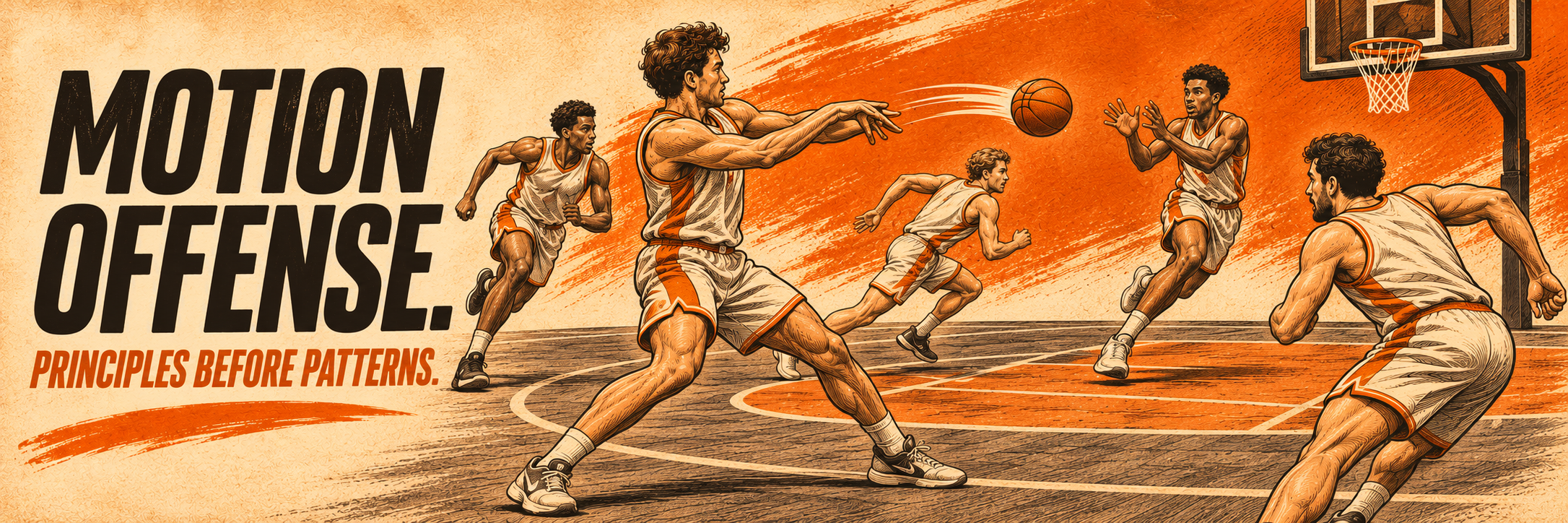
Two players become connected threats. The ball handler has to recognize which opportunity the defense gives them. Teach that shared read inside the principles of motion offense.
The screen starts an interaction. The players still have to read the positions, the timing, and the next defender.
Start with the same picture
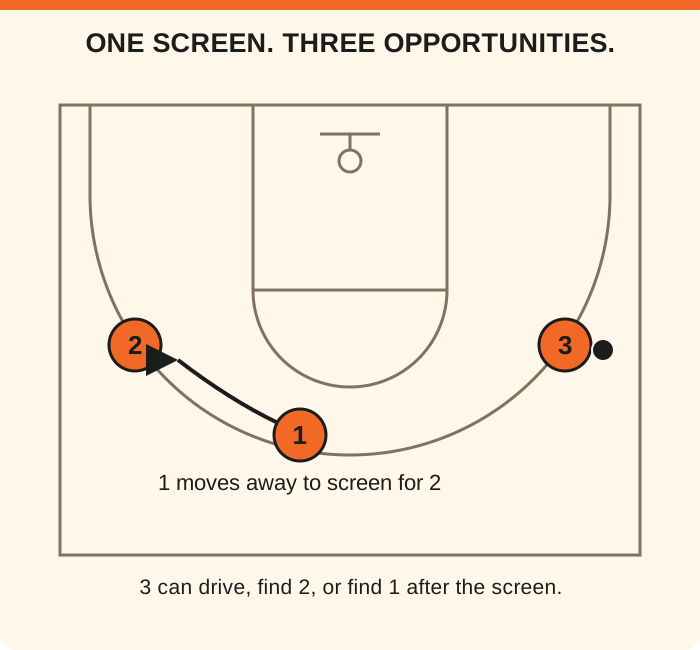
Use a simple example: O1 passes to O3 on the right wing, then moves away from the ball to screen for O2 on the opposite side. O3 sees both teammates as the action develops.
O1’s movement takes a player and a defender away from the ball. O2 has a chance to receive coming off the screen. After establishing the screen, O1 can turn toward the basket and become another passing option.
Begin slowly enough for all three players to understand what the action changes. Then let defenders affect the choices. The starting picture can repeat while the correct continuation changes.
Give the receiver an advantage
The receiver needs to see the defender before using the screen. Arriving at the screen without that information turns a useful action into a memorized route.
Teach the screen’s angle and the receiver’s timing together. O1 has to establish position before the receiver uses it. O2 has to offer a route that can lead to a clear catch while avoiding extra space for the defender to recover.
If the receiver comes free in a useful shooting position, the pass needs to arrive while the advantage is available. A delayed pass can give the defender the time the screen was designed to remove.
The screener remains a scoring threat
Watch what O1 does after the screen. A player who screens and stops watching has left an opportunity unfinished.
When O2’s defender follows the receiver and O1’s defender hesitates, O1 may have a window to turn toward the rim and receive. The timing and the passing line determine whether that window can be used.
Teach the screener to see the ball when opening to the basket. A roll into an occupied lane or behind a defender may create movement without creating an available pass.
Keep the ball handler involved
O3 has three developing possibilities: attack an open lane, pass to the receiver coming free, or find the screener opening toward the basket.
Look at the defense as a whole. Attention drawn toward the screen may create room for O3 to drive. If O3 attacks, the other players have to respond to that drive rather than insist on completing a planned route.
Do not make the ball handler wait for a screen to finish when an immediate advantage already exists. The purpose of the action is to create a useful choice and help the team recognize it.
Protect the passing angles
Where the screen happens matters. Bringing another player into an already crowded ball side can close the lane and sharpen the passing angles. More movement in that area can make the possession harder.
Place the action where it can help the group share space. The receiver needs a visible line to the ball. The screener needs a route that leaves room for the next action. The ball handler needs enough space to use an opening.
The remaining two teammates have responsibilities too. Their movement should preserve width and respond to the action instead of bringing extra defenders into it. Use Teach Space when the team needs a clearer picture.
Let the defense change the answer
Start practice with one defensive response, then allow another. A defender chasing the receiver creates a different picture from two defenders switching assignments or protecting the inside.
Ask the players what changed. Who can receive now? Is the path toward the rim still open? Can the ball handler attack? An answer that worked on the previous repetition has to fit the present possession.
If neither receiver nor screener is available, keep the offense connected. Move the ball or flow into another tool, including a ball screen when the situation calls for it.
Teach the three reads together
Use three on three to make the action visible. Begin with the pass and screen away, then let the possession develop. Judge whether the players recognize the advantage they create.
Freeze a revealing moment. Identify the missed opportunity or crowded space, return one action, and call Go. The players should experience the correction with the same teammates and defenders in view.
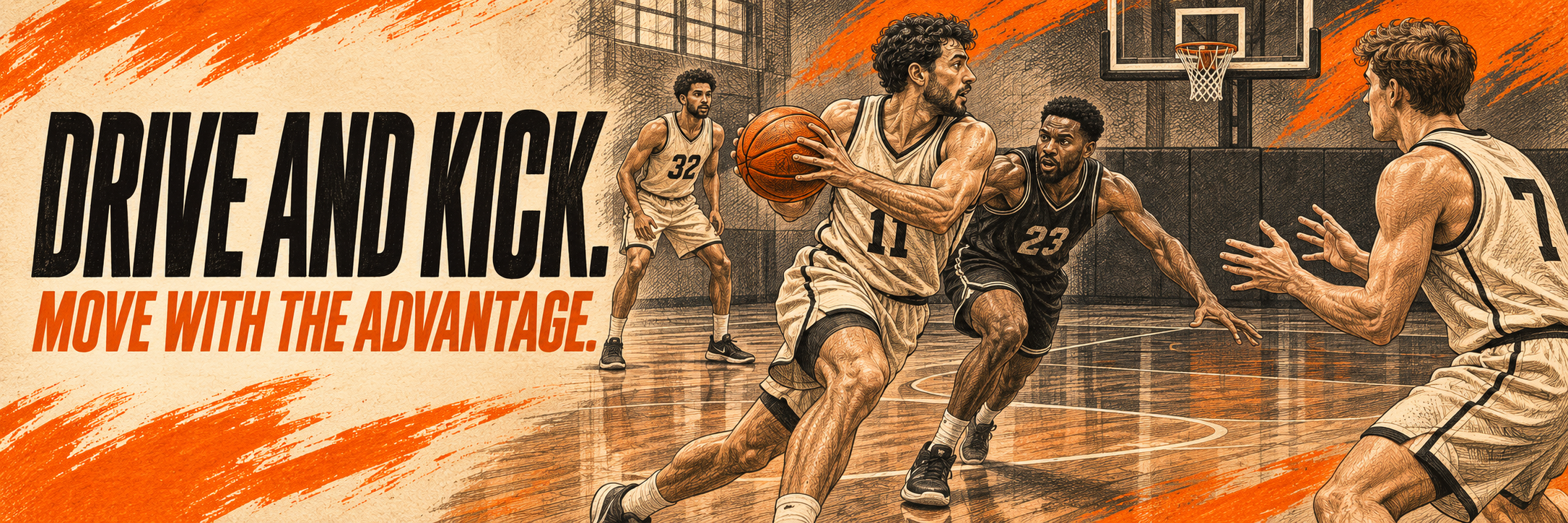
Then add the other two offensive players and their defenders. The screen away has to connect with five players sharing the floor. Continue with Drive and Kick: Move With the Advantage to develop the team’s response when the ball handler uses the lane.