A shooting threat changes the defense
A credible outside shot makes the defense account for more of the floor. That attention can help create the driving and passing opportunities the offense needs.
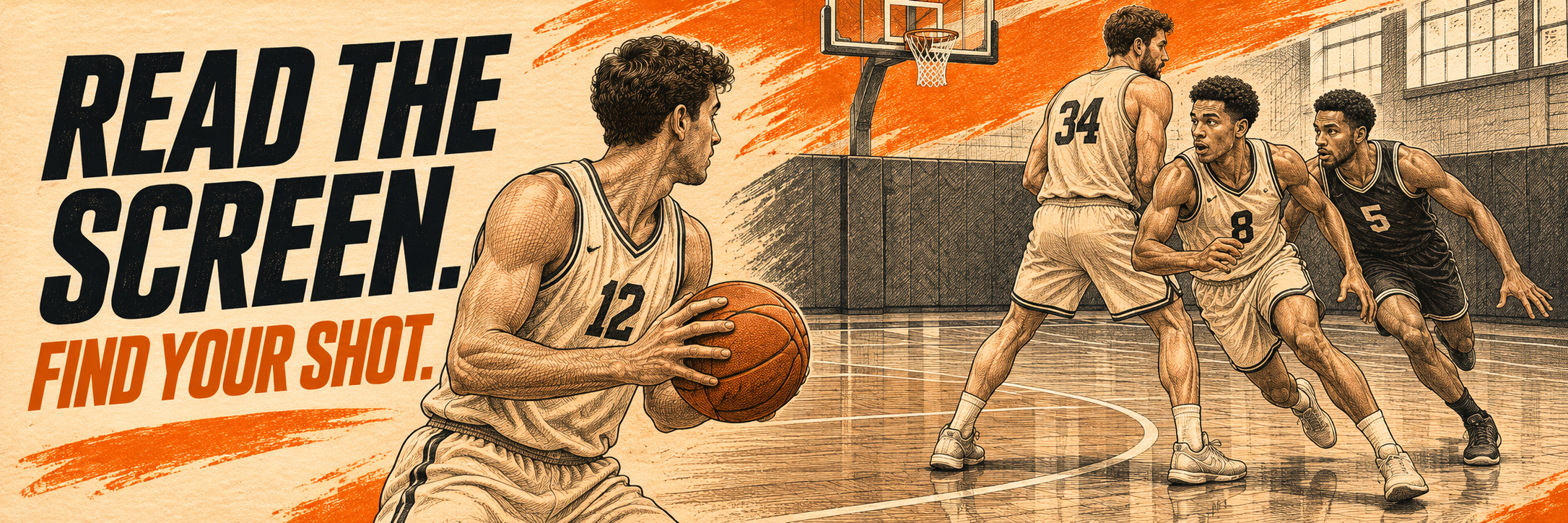
Work on the shot and the decision together. A player coming off a screen has to see the defender, recognize the available route, and receive in a position that can produce a useful attempt.
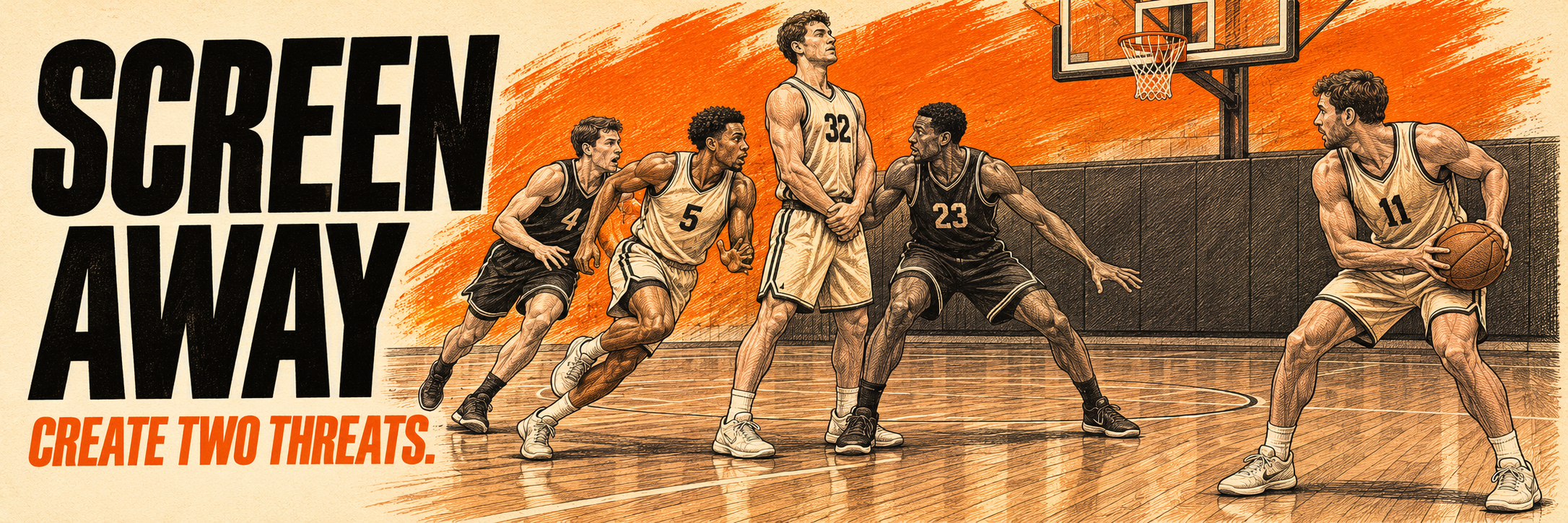
This progression builds the shooter’s read beyond the shared principles in Screen Away: Create Two Threats.
Begin with a competitive shooting warm up
Use a short pair shooting competition to start the session. Give the players a clear scoring task and establish the quality of the catch and shot before adding the defensive reading demand.
A warm up should prepare the next task. Look at balance, passing accuracy, and whether the shooter can receive ready to act. Correct a detail that would otherwise follow the player into the screened action.
Read a screen near the high post
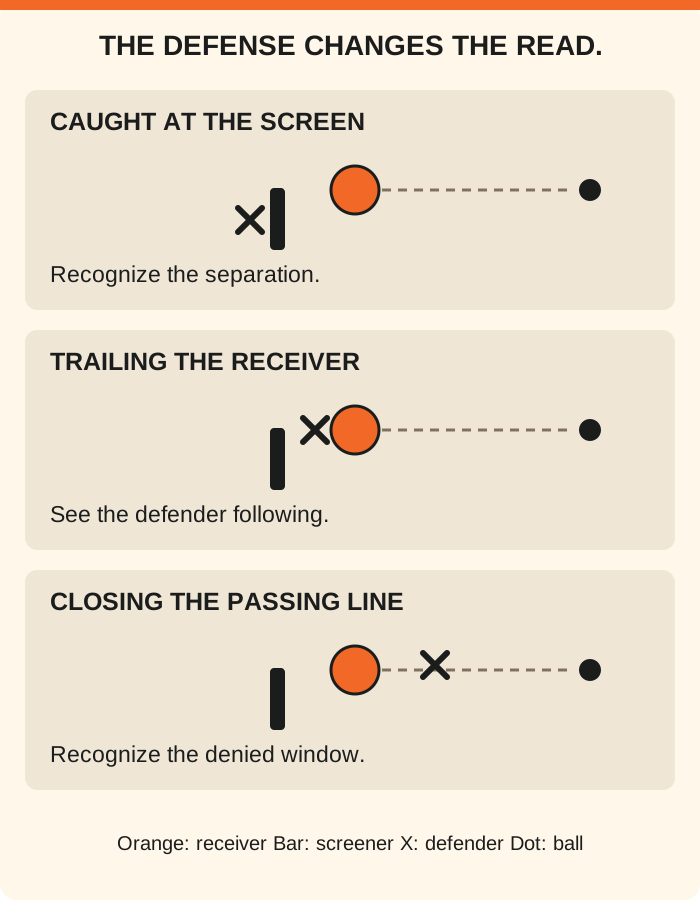
Begin with one simulated screening position near the high post. Let the defender show different responses: getting caught at the screen, trailing the shooter, or taking a shorter route to close the passing line.
The shooter must look at the defender’s actual position and choose an answer. Avoid announcing the receiving route before the defensive picture appears.
Start slowly enough for recognition, then increase the pace. Ask what the defender removed and what remained available. A fast route without that read can run straight into a closed passing window.
Move the screen to the mid post
Repeat the task with the screening position in the mid post area. The defender has the same possible responses, but the location changes the angles and the space available to the shooter.
I prefer working from the mid post rather than placing the screen down at the low post for this teaching. The receiving action still has to fit the defensive response.
Keep the passer involved. The shooter can recognize a route and still lose the advantage if the pass arrives after the window closes.
Expand to three screening positions
Add three stationary screening positions across the mid and high post areas. The player now has more possibilities to recognize, and the defender has more decisions to manage.
Increase the challenge when the player can identify the simpler picture. Adding options is useful when it improves a read. It is less useful when the player starts guessing or following a memorized sequence.
Watch the whole action: the approach, the defender’s route, the chosen receiving line, the pass, and the quality of the shot. Keep all screening positions controlled and appropriate for the players.
Use a pass in one on one
In another version, play one on one with the attacker restricted to three point shots. Allow the attacker to pass to a supporting teammate to improve the receiving position and shot opportunity.
The supporting passer gives the attacker a way to change the picture without forcing a poor shot. The player has to see whether another pass and movement can create something better.
Keep shot selection central. The restriction identifies the shooting range for the game. It does not make every shot from that range a good decision.
Finish with a clear task under effort
A timed shooting challenge can finish the session with a meaningful scoring target. The player must keep making useful decisions as the physical demand rises.
Choose a demand the player can manage while preserving the intended action. Watch whether effort changes the preparation, the receiving angle, or the willingness to force a shot.
Use the score to create purpose, and observe the decisions that produce it. Finishing tired is only useful when the basketball task remains recognizable.
Teach, practice, and correct
Explaining the read is the beginning. Players need repetitions against different defensive responses and a correction when the intended detail is missing.
Stop a useful moment, identify the defender’s position, return one action, and let the player try again. Keep the correction specific enough to use immediately.
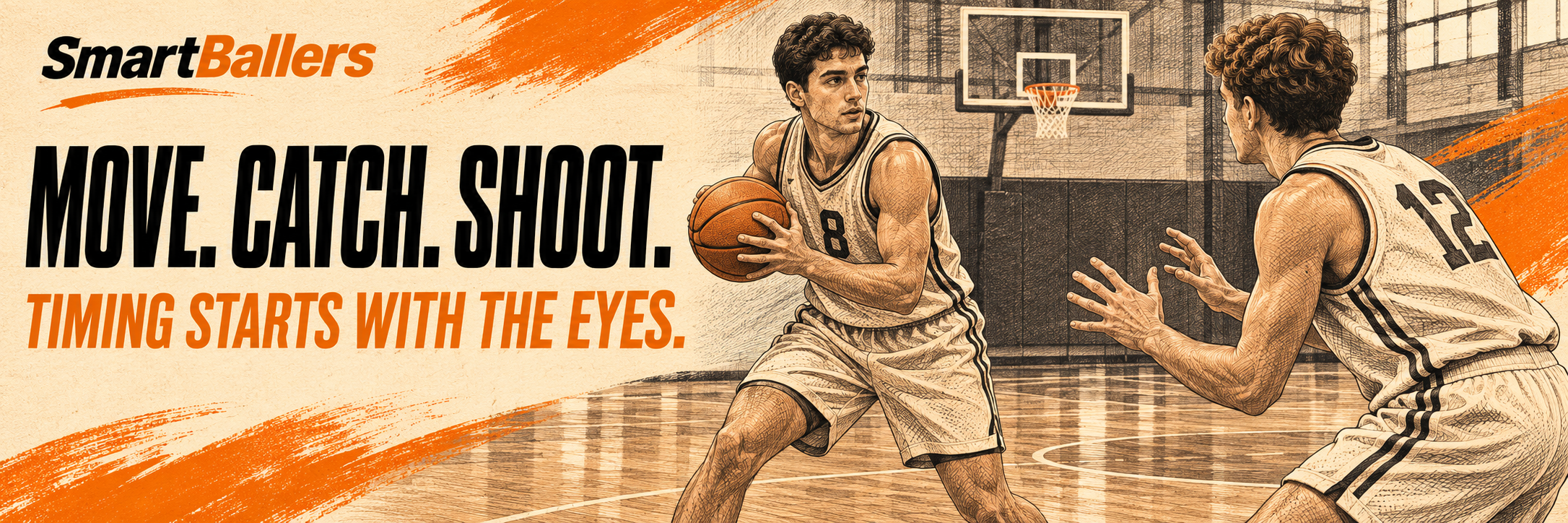
Continue with Move, Catch, Shoot for timing with the passer, and Your Shooting Drill Should Look Like Basketball for connecting technical work to a live basketball problem.