Make the arrival part of the shot
A player can reach the right area and still give the defense time to recover. The quality of the cut, the preparation before the catch, and the speed of the next action have to connect.
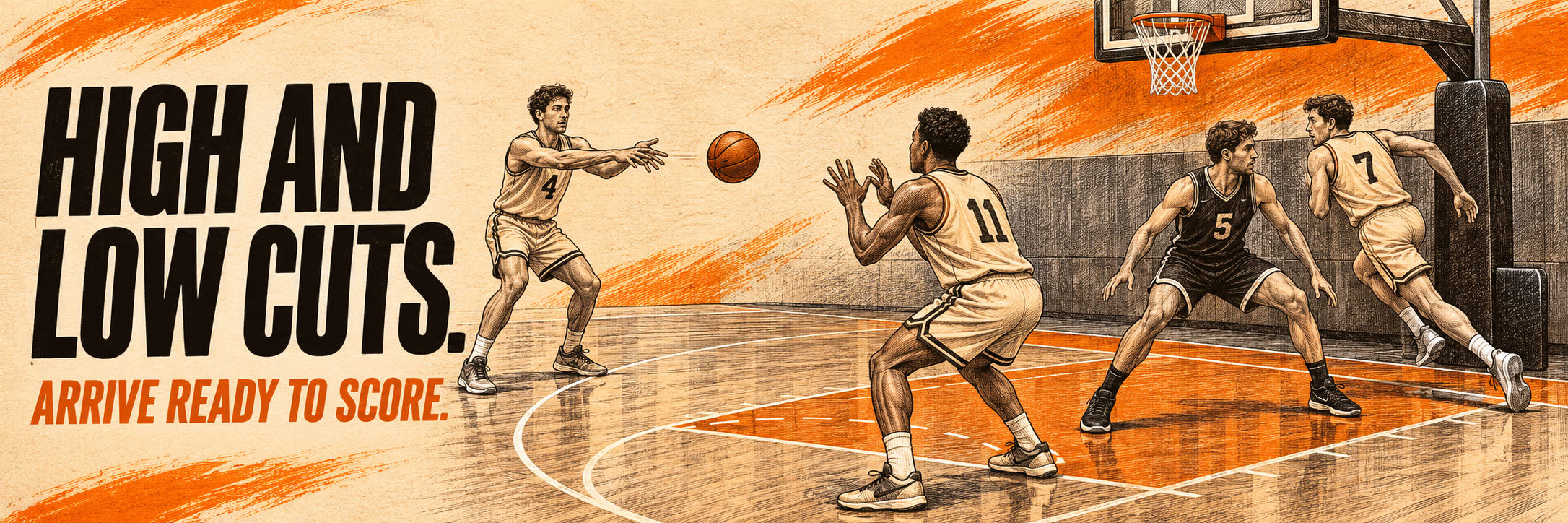
Here, high and low describe two receiving areas: the high post near the free throw line and the baseline area. The emphasis is cutting to receive and score from those areas. This is not a fixed high low passing system between two post players.
The goal is a sharp basketball action. Keep the preparation short enough that the shot can develop before the defender resets.
Start with one player moving without a ball
Use a basic shooting flow in which every player has a ball except the first player, O1. O1 moves to the high post, receives from O2, and shoots.
The value of this simple starting point is that it gives the coach a clear movement and catch to observe. The same idea can support combinations involving pairs, trios, or larger groups as the task develops.
Begin with a route players understand. Watch whether the receiver arrives ready to use the pass. Adding more players should improve coordination rather than hide an unfinished catch or foot preparation.

Cut along the baseline with an angle
In the baseline area, work on moving behind the defense and then breaking toward the ball. The route should help the receiver become visible to the passer while making the defender change position.
The feet begin preparing as the player receives. A short, quick turning action can complete part of the adjustment at the catch, with the remaining turn connected to the shooting action.
Teach that foot preparation under control and within the applicable footwork rules. The important coaching point is connecting the catch to the shot without an unnecessary stop or a long, heavy preparation.

Arrive across the high post
A cut from the wing across the free throw line area can create a useful receiving opportunity. The player should prepare the feet with the catch so the shot can follow quickly.
Keep the passer and the cutter connected. A quick cut that produces no visible passing line has not solved the problem. The receiver needs to arrive at an angle the passer can use.
Work on both the movement and the delivery. A pass that arrives late or pulls the player out of the prepared position can remove the advantage the cut created.
Choose quickness over unnecessary height
The emphasis in this work is reaching the shot quickly. A long loading action or an effort to jump as high as possible may give the defense the time it needs.
Keep the action sharp, balanced, and repeatable. The player needs enough lift and force for the shot while preserving the timing of the catch and release.
When the receiving action is too heavy, simplify it. Rehearse the approach and foot preparation, reconnect the ball, and then return to the shot. Use Build Your Shot when the release itself needs focused teaching.
Return the cut to the game
Once the basic action is clear, use a defender to test the receiving window. The player now has to recognize whether the route and the timing still make the pass available.
This is a practice progression: begin with the technical connection, then test it against a changing defensive position. Keep attention on the quality of the cut, the passing angle, and readiness at the catch.
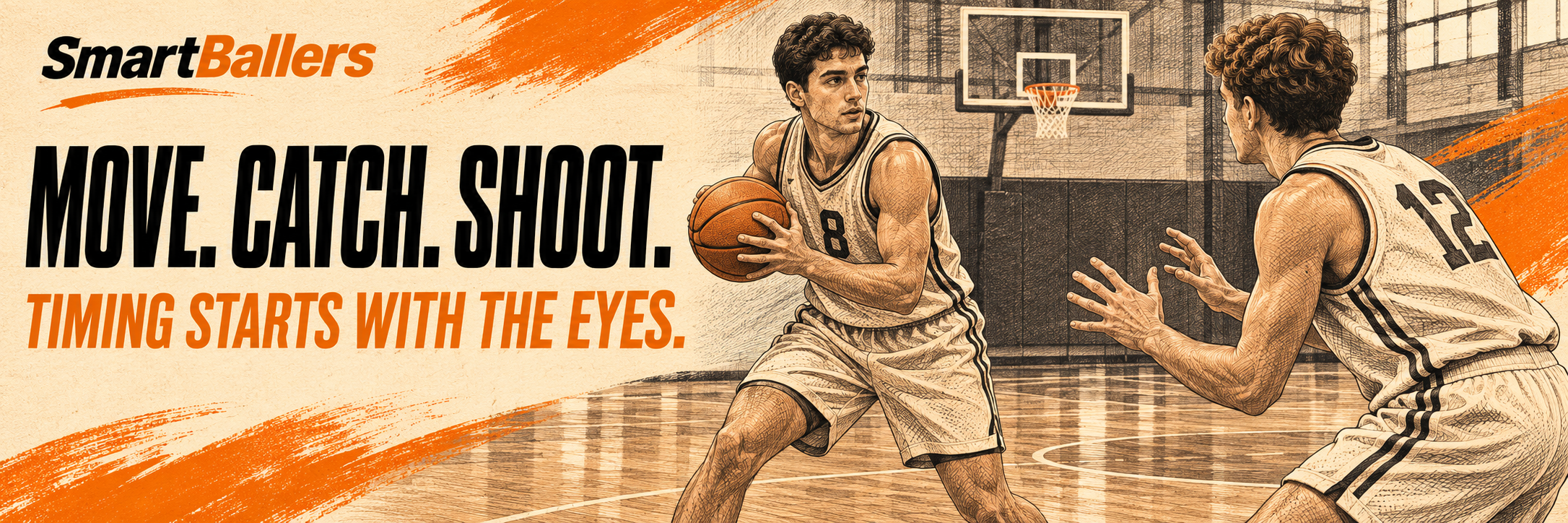
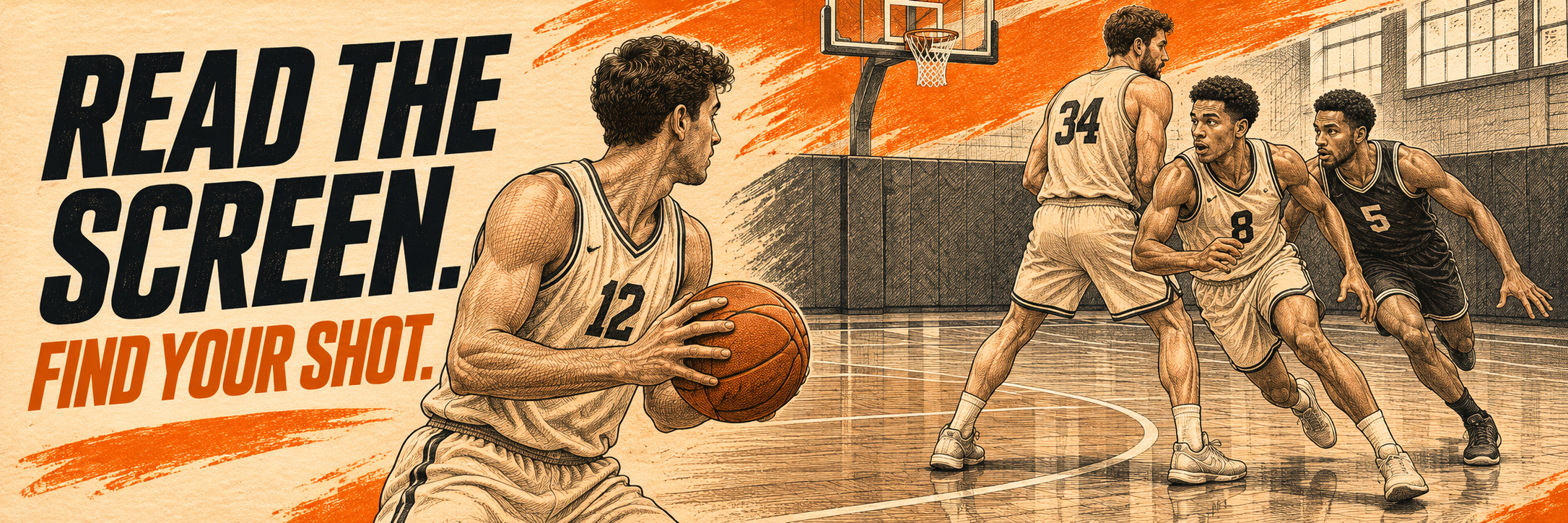
For the timing between passer and receiver, continue with Move, Catch, Shoot. For decisions around a screen, use Read the Screen.