A drive changes the job of all five players
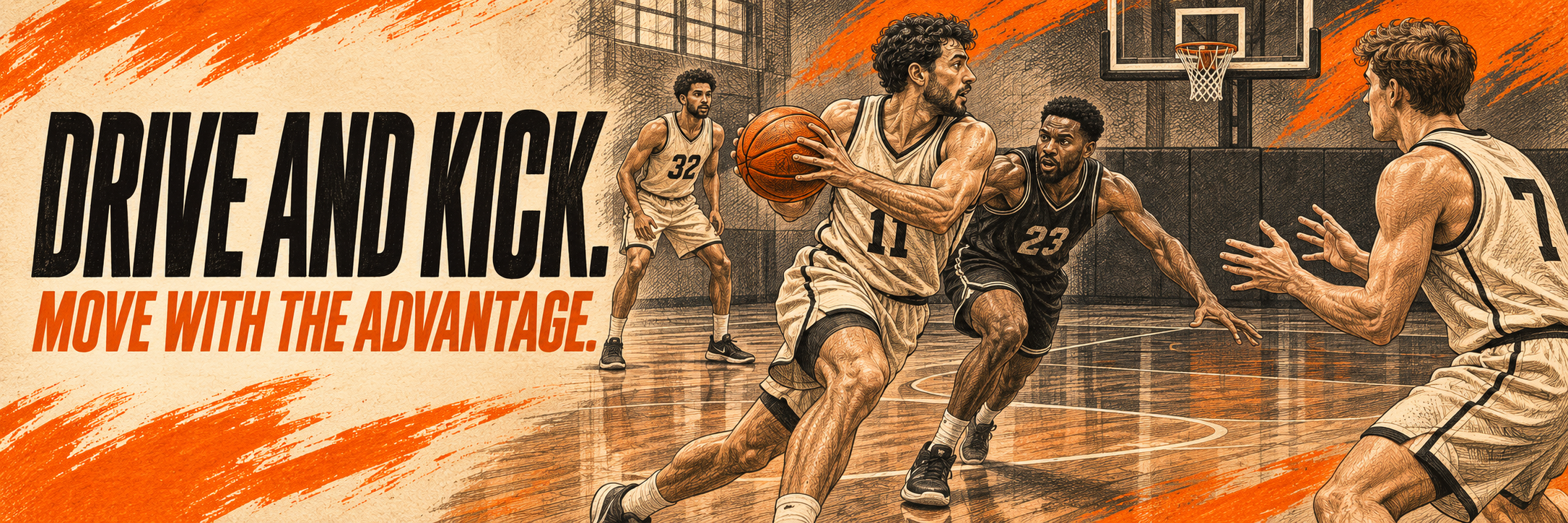
A player beats a defender and enters the lane. That advantage belongs to the team. Four teammates now have to recognize what changed and choose movement that helps.
The driver may have a finish. A helper may leave a teammate available. A second defender may take away the first pass and open another connection. Teach the offense to keep seeing as the picture changes.
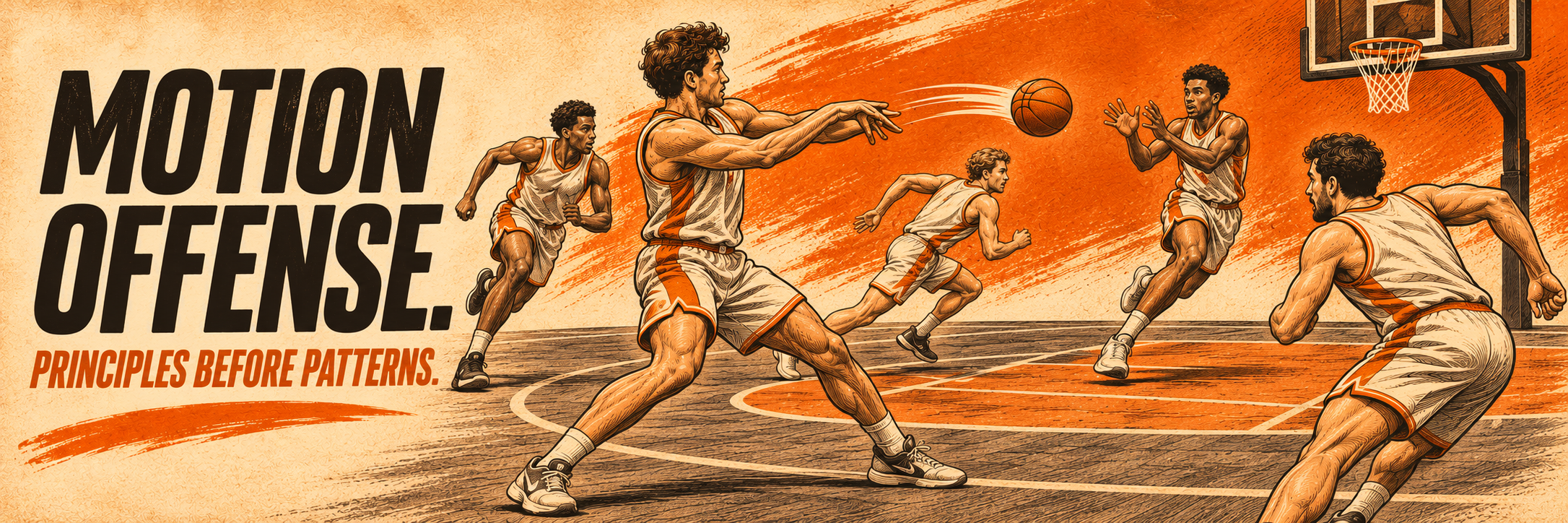
Driving is one tool within motion offense. Connect it with passing, cutting, and screening so the team has more than one way to create and continue an advantage.
Leave the driving lane usable
Before adding complicated rotations, teach players to recognize the path their teammate is attacking. A cut directly across the front of the ball can put a teammate and another defender into that path.
Move with attention to the drive. A player already near the lane may need to clear it. A perimeter player may need to change an angle so a pass remains visible. The useful response depends on the starting positions and the defenders.
Ask a simple question: did the movement leave the driver with a better option? Running to a named spot is only useful when that spot fits the possession.
Read the helper
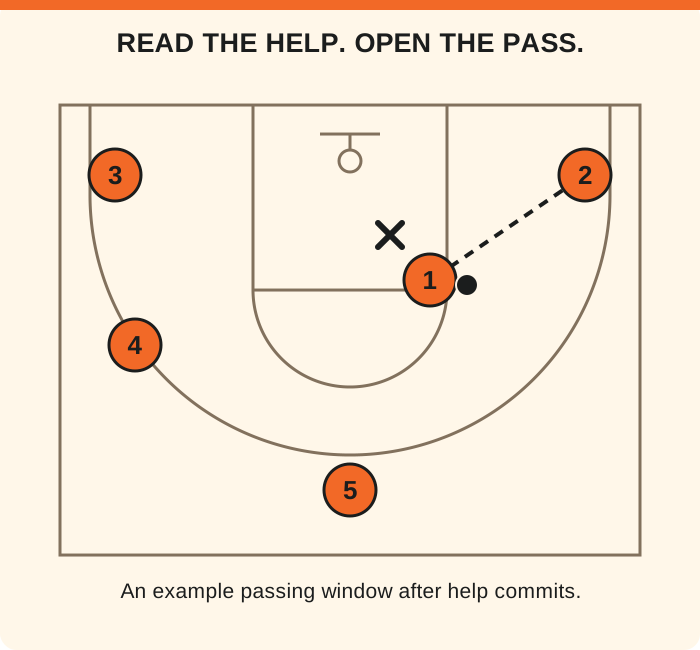
Look at which defender commits to the ball. The teammate that defender leaves should recognize the opportunity and become available.
Being unguarded does not automatically make a player reachable. The receiver has to offer a passing line the driver can see and use. A small adjustment can turn a hidden target into a clear connection.
The driver has to read the helper’s commitment without losing sight of the rim. Keep a good finishing opportunity when it remains available. Make the pass when the defense’s response creates a better team opportunity.
Give the pass an angle
The receiver should prepare to catch while the drive develops. Keep the ball visible, adjust the position when a defender blocks the line, and be ready to act after the catch.
A nearby teammate can still offer a difficult pass if the angle runs through a defender. A player farther away may be easier to reach when the line is clear. Distance alone does not describe the quality of the option.
Use Passing Is a Language to connect the passer’s read with the receiver’s movement. A useful pass is cooperation between two players.
The other three players keep reading
When one teammate becomes the likely receiver, the remaining three players still affect the possession. Their defenders may rotate toward the first pass or stay home to protect another area.
Preserve enough space for that receiver to act. Avoid sending two players into the same passing window. Stay available for the next connection if the defense takes away the first one.
Keep the weak side involved. A player away from the drive may become important on the next pass. Watching the ball without updating position can let the defense recover while the offense stands still.
The catch continues the advantage
After the ball comes out, the receiver has another decision. Is there a useful open shot? Is a defender closing with an attackable angle? Is another teammate available before the next rotation arrives?
Prepare early enough to recognize those possibilities. A catch followed by a long pause can allow all five defenders to recover. A rushed action without a read can throw away the opening just as quickly.
Teach the player to receive with awareness and choose an action that fits. The next pass, shot, or drive should respond to the defense in front of the player.
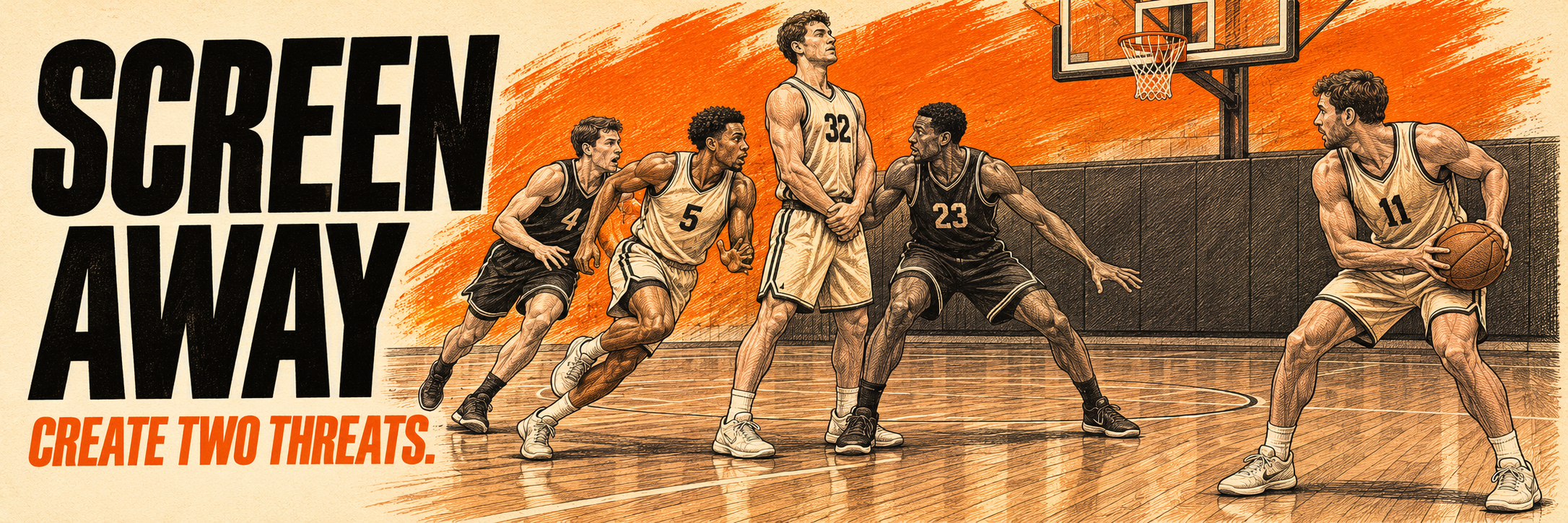
Connect it to the screen away
A screen away can draw attention from the ball and make a driving lane available. When the ball handler uses it, the receiver and screener must update their choices.
The action does not have to finish exactly as it began. A player who was coming off a screen may become a passing target for the drive. A screener opening to the rim has to recognize whether that space is now occupied.
This is the shared work of motion offense: players respond to the opportunity that actually develops while preserving useful options for one another.
Build the read into practice
Begin with three on three so players can see the drive, the help, and the receiving options. Give the offense enough freedom to finish or pass according to the defensive response.
Freeze a possession when a teammate blocks the lane or loses a passing angle. Identify the moment, go back one action, and play it again. Keep the correction connected to something the player can see.
Then return to five on five. Watch the weak side, the next pass, and whether the advantage survives the catch. Use Small Games, Big Decisions to focus a practice constraint, and Two Balls, More Decisions when the group is ready for a different awareness challenge.