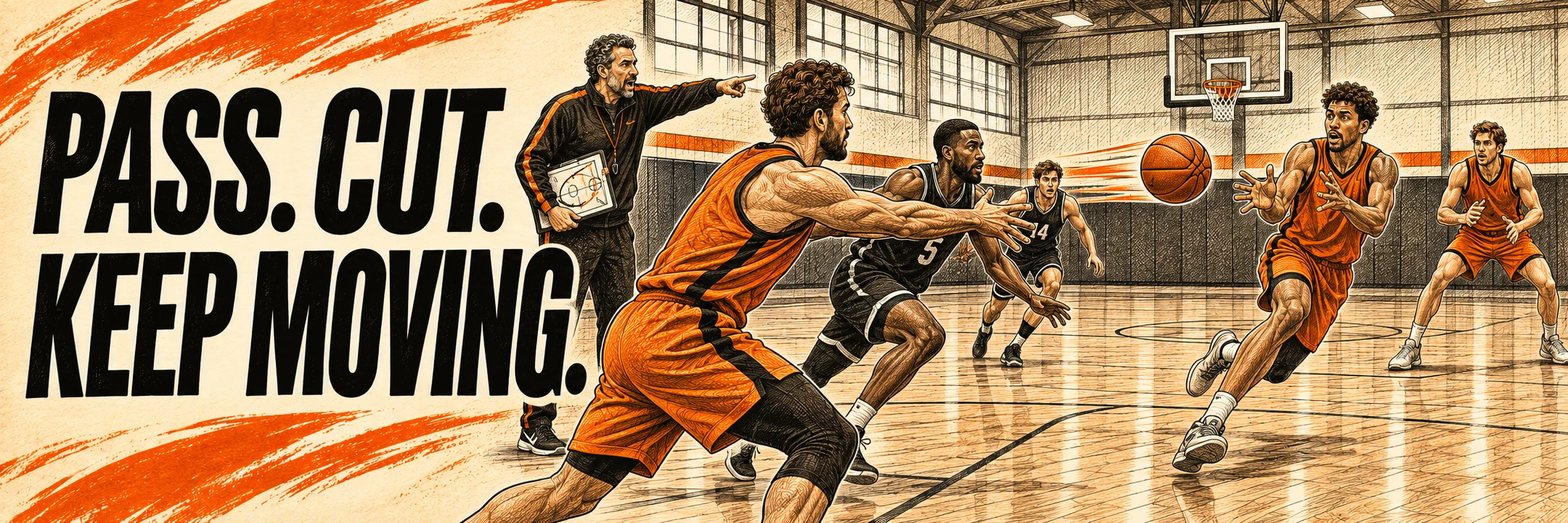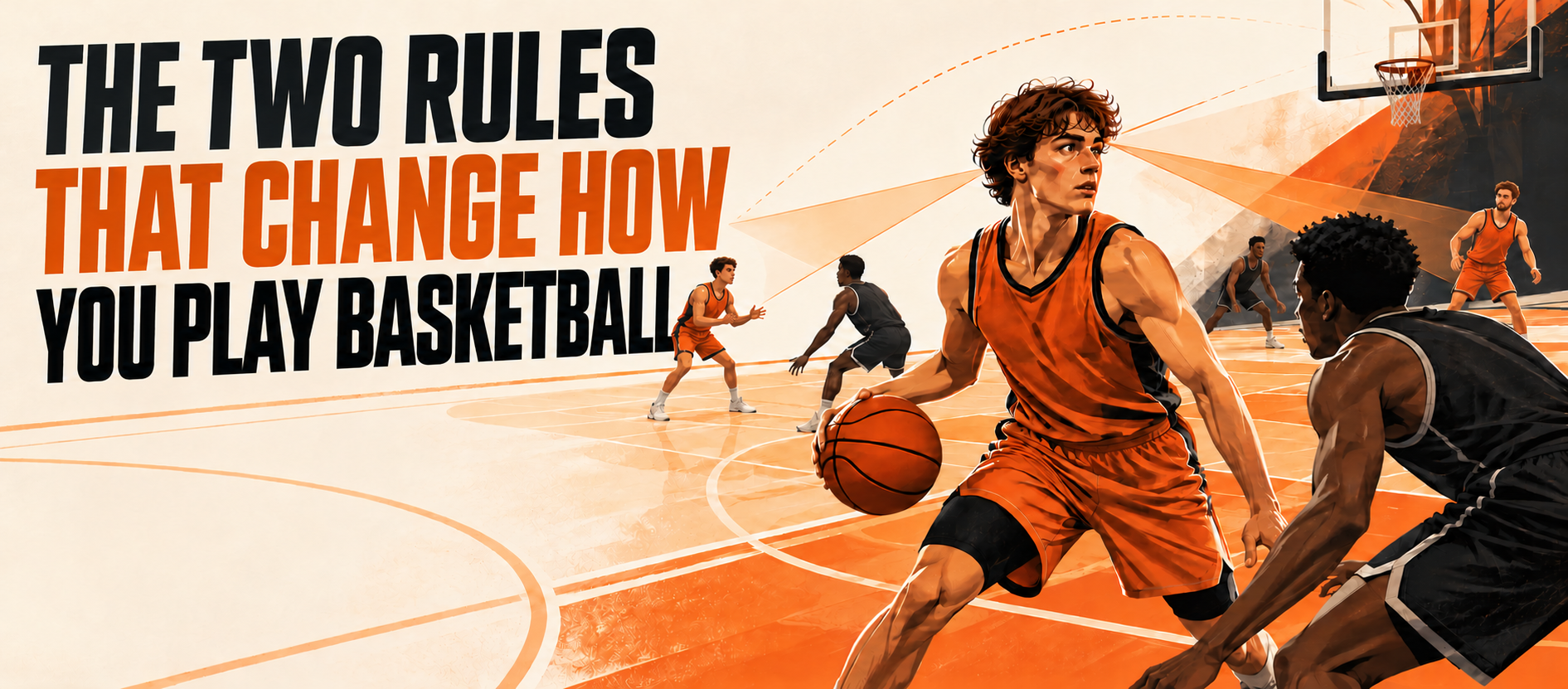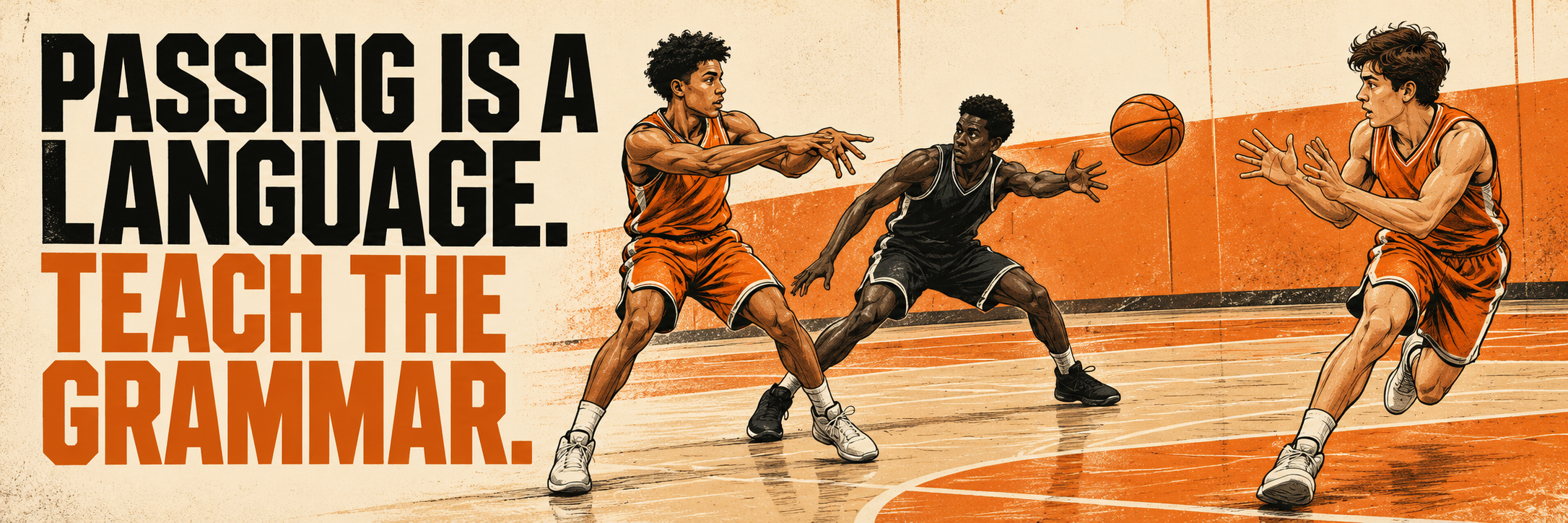
Passing is a language, and too many players have never been taught its alphabet. In today’s game, players get hours of work on scoring and ball handling. But a player who is not the leading scorer can still earn a bigger role by seeing a teammate, delivering the ball on time and helping the whole possession work.
The passer must read the receiver
Where does your teammate actually want the ball? Does the shooter prefer a firm pass into the pocket? Does the post player need a bounce pass or an overhead entry? Ask. Communication improves the timing and accuracy of passes more than random repetition.
Move the ball to move the defense
Good passing opens space before a shot is taken. The passer must know the defender’s angle, the receiver’s movement and what the next action could be. A pass delivered one second late often turns an open shot into a contested one. The quality of a pass includes the opportunity it creates.
Give passing a decision
After the technical foundation, train passing under changing conditions. Call for a cut, switch the receiver, add a defender or change the window. Reward the correct read, not just a pass that arrives. Ask the passer which defender made the window available.
Use the passing threat
A believable pass fake can create a drive, a shot, or another pass. Explore pass fakes before, during, and after the dribble, with game examples and coaching priorities.
“Make each day your masterpiece.”