Give the shooter a basketball problem
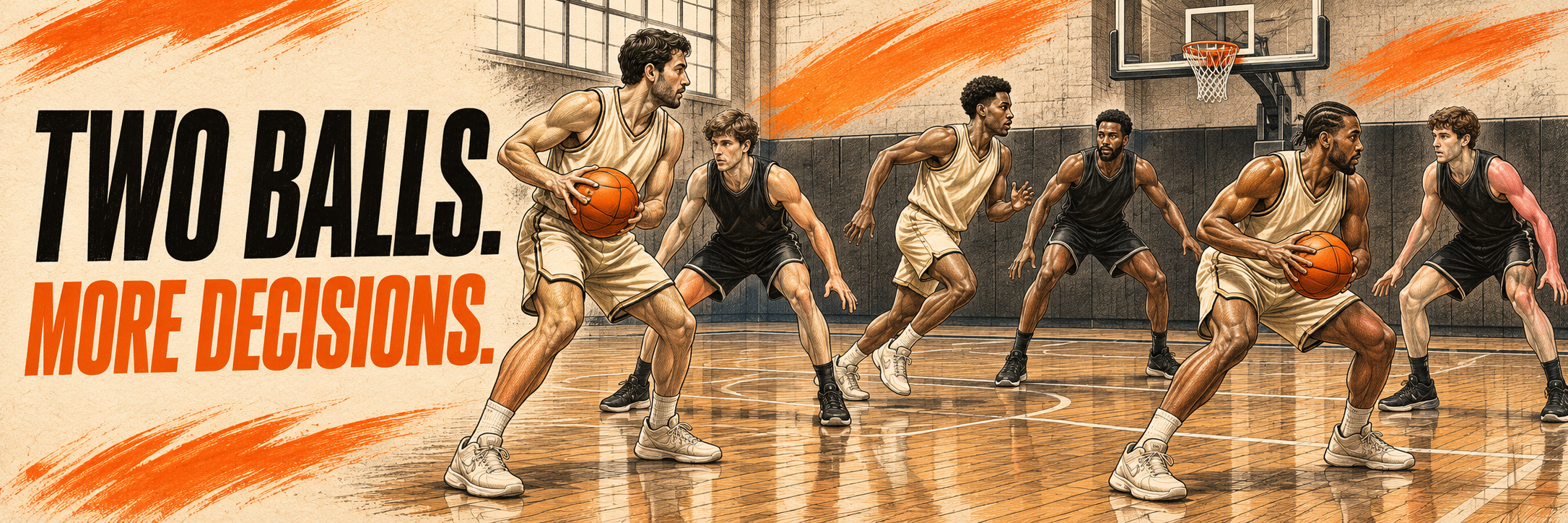
A shooting session can also teach players to see the floor, coordinate with teammates, and recognize an opening under pressure. In this game, the offense has two basketballs to organize.
The extra ball changes what players must notice. A teammate may be ready to pass while another prepares a shot. Defenders must track several threats. The offense has to find useful space and communicate without losing control of the possession.
This is a constrained practice game. Use it alongside normal basketball to develop the reads your group needs.
Organize three groups of three
Divide nine players into three teams of three. Two teams play three on three while the third team waits for its next turn. Give the offensive team two balls.
Use one basket for the live game. Before starting, make the rotation and scoring clear. A straightforward practice option is for each team to take an attacking turn before the cycle repeats. Keep that rotation consistent so the players can concentrate on the game.
The defining task is simple: the offense works together to create shots with two available balls against three defenders.
A shot takes that ball out of play
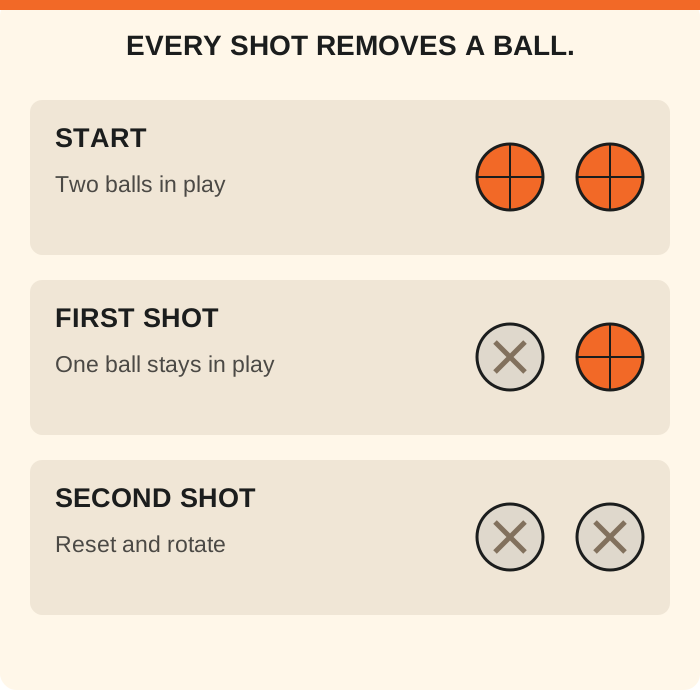
Once a ball is shot, it is finished for that attacking turn. A make and a miss both remove that ball from the game. An offensive rebound does not create another attempt with it.
After the first shot, play continues with the remaining ball. Once the second ball is shot, the attacking turn is over. Reset the balls and rotate according to the order established at the start.
Keep spent balls clear of the live action. Use a designated collector outside the playing area, and pause if a loose ball interferes. The reading challenge should come from the basketball situation.
Allow the tools you are teaching
Players can pass, cut, screen away, and set ball screens. Choose which actions to emphasize according to the team’s current work.
Two players holding balls leaves one offensive teammate without a ball. That player has to read where movement or a screen can help. The ball handlers also have to see each other so their actions share the space.
Coach the connection: who can receive, which defender is committed, and where a shot can develop? A screen that blocks a teammate’s route or a cut that brings another defender to the ball should become a clear teaching moment.
Watch the next picture
The first shot changes the task immediately. A player who was handling one ball now has to become useful without it. Defenders can redirect their attention toward the remaining ball.
Watch how quickly players recognize that change. Do they move into a useful passing line? Do they keep the ball visible? Do they preserve space for the next attack?
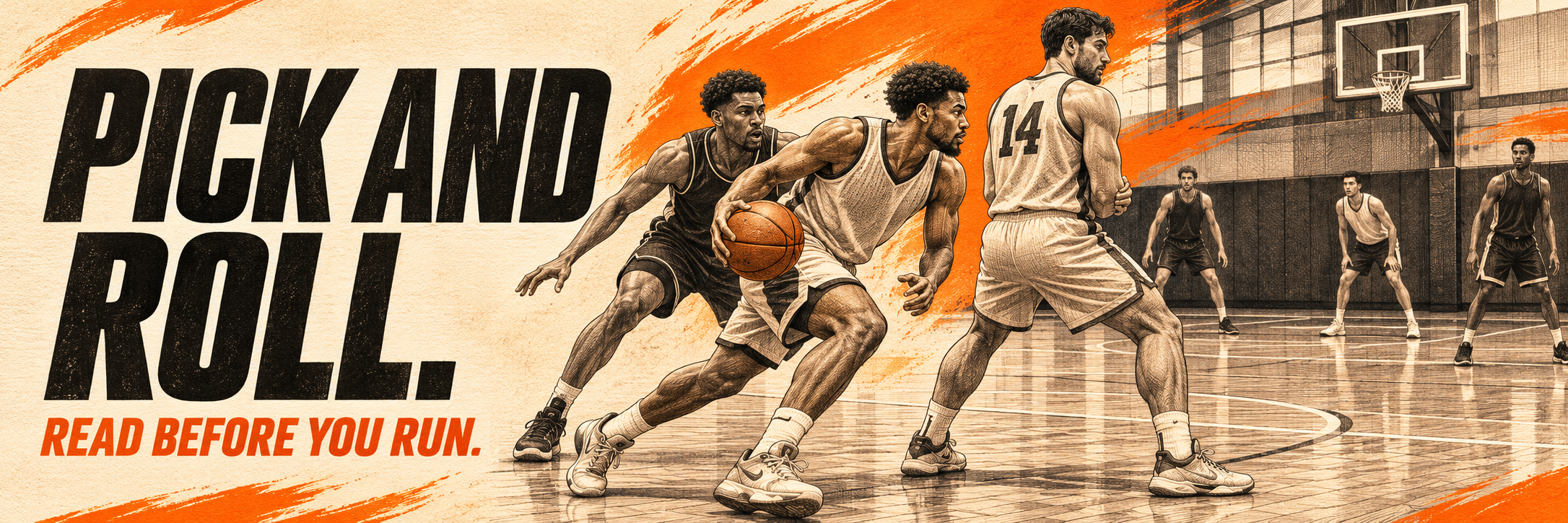
Use Teach Space when players need a clearer shared picture. Use Pick and Roll: Read Before You Run when the screen is the action that needs attention.
Add the free throw option
The waiting team can take one free throw per player. Add those makes to that team’s running total.
Use a separate, clear basket for this work so the shots and rebounds cannot enter the live game. Keep each player to one attempt, collect the results, and have the team ready for its next turn.
This gives the waiting group a scoring responsibility while the other teams play. Announce the scoring method before the first rotation.
Progress when the reads improve
A three ball version is another option. Add it only when the group can organize two balls and keep the playing area under control.
More balls alone do not make better learning. Watch the quality of the spacing, communication, shot selection, and response after a ball leaves play. Keep the version that challenges those decisions at a useful level.
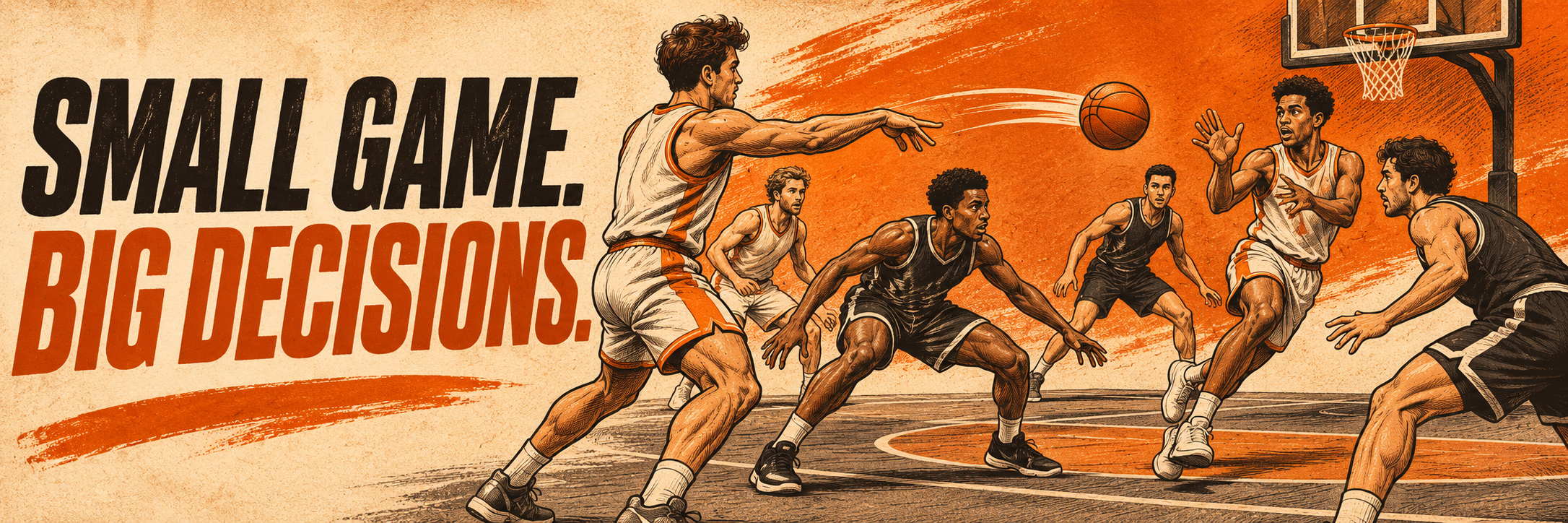
Finish with normal three on three using one ball. Look for the same awareness and movement in the standard game. For more practice constraints, continue with Small Games, Big Decisions.