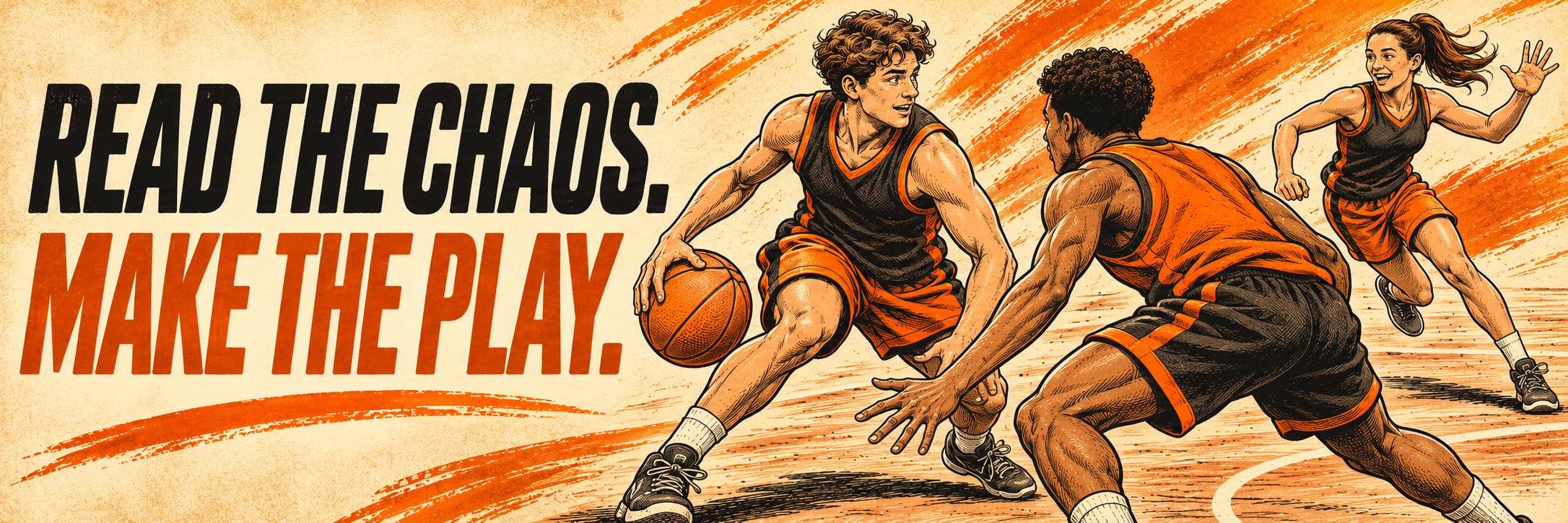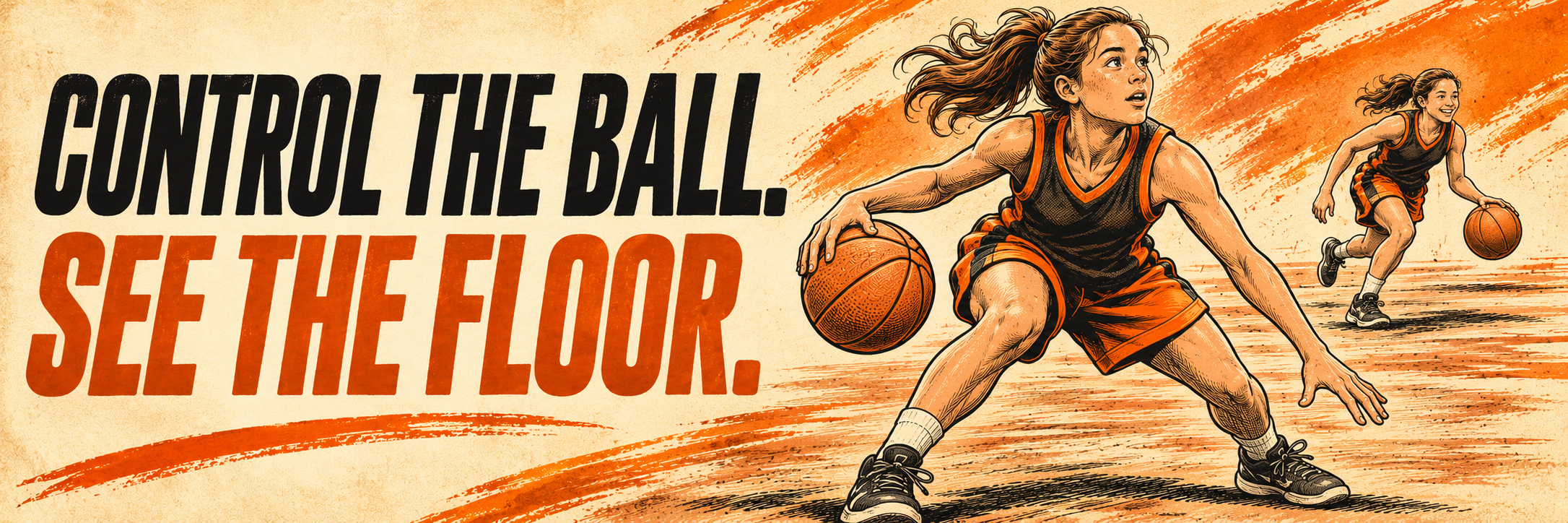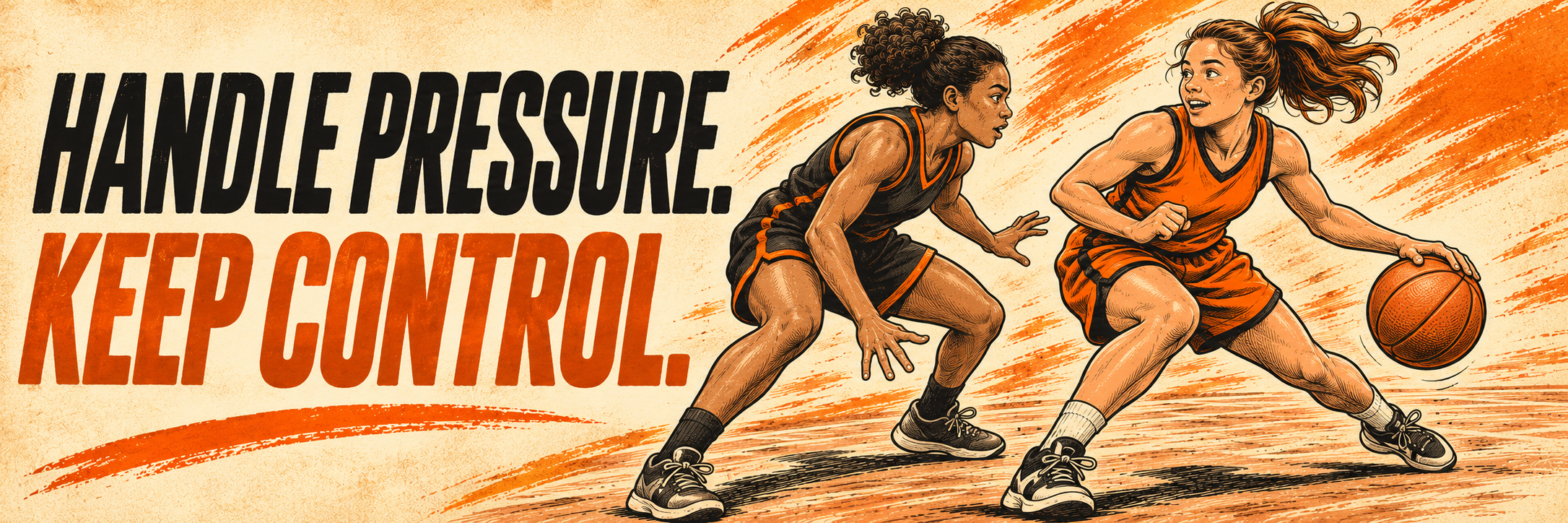
Handling two or three basketballs can look impressive. It does not automatically prepare a player to keep one ball against pressure.
The harder job is to control the ball, manage the possession, and respond to what both teams are doing. I want our ballhandlers to have a solution when the defender takes away their first option.
The retreat dribble creates another chance
One of the most useful tools is the back dribble, or retreat dribble. When pressure closes the space ahead, the player moves away while keeping the dribble alive and the court in view.
The retreat has a purpose: recover room to see and act. It is not an automatic escape sequence that continues regardless of the defender. The next decision may be a pass, a change of direction, or a renewed attack.
Separate the training demands
The source drill combines two ball control, eyes up responses to a coach signal, fakes, and different actions with each hand. Each demand challenges a different part of the player’s control.
Begin with movements the athlete already owns. Ask one hand to maintain a rhythm while the other changes the action. Then add a visible signal. If the response breaks down, simplify the coordination task so the player can still recognize the cue.
The equipment is a way to create a demand. It is not the final test of a point guard.
Connect the retreat to a low, quick exit
As the defender steps forward, the ballhandler must recognize the change. Retreat under control, then leave quickly and low when space becomes available.
I like the move behind the back as one option against pressure because it can help move the ball while the body provides protection. The choice still depends on the defender and the available lane.
Do not coach a compulsory move when the passing window is already open. Protecting possession includes recognizing when a teammate can solve the problem.
Use the free arm legally
The free arm helps establish a protective position. The body belongs between the defender and the ball.
Keep that protection within a legal position. Do not teach the player to shove, hook, or hold the defender. The training aim is control of space and ball position while remaining able to move.
Take it into a live possession
Coaching application: start with one ball and a guided defender. The defender closes the forward lane, then either stays close or gives ground. The attacker must read that change.
Add a teammate as a passing option. The ballhandler may retreat, attack the available side, or pass. Begin with manageable pressure, then allow the defender to compete.
Keep the problem recognizable. Changing every condition at once makes it difficult to tell whether the athlete needs help with ball control, vision, or the decision.
Evaluate control by the next action
Watch whether the player keeps the dribble alive without turning away from the floor. Can the athlete create space, see help arriving, and deliver the next action on time?
Count the possessions that end with a useful decision as well as the turnovers. A player who never loses the ball but never creates or connects an advantage still has work to do.
The objective is composure that leads somewhere. Retreat. Read. Act again.
Watch: Dribbling under pressure
“Make each day your masterpiece.”