A good drill gives players something to do. Good coaching gives them something to learn. You can run a passing drill for twenty minutes and still miss the decision that matters. You can play three on three and get plenty of action without improving the behavior you came to teach.
Players need opportunities to explore, choose, make mistakes, and discover solutions. My responsibility as a coach is to give that experience a clear purpose, then help the player recognize what to keep and what to change.
Tell players what the rep is for
Before a drill or practice game, I recommend choosing one or two teaching points that fit the session and the players. That number is a practical coaching choice to keep attention manageable. It is not a scientifically established limit for every task or age.
Play smarter is too broad. After you pass, create a new passing option gives the player a behavior to recognize and perform. Make better decisions also needs a basketball picture: where is the defender, when does help arrive, and which teammate has the advantage?
Give the player a clear question to solve. Ask a player to explain the cue in their own words before the first rep. You will quickly learn whether your instruction was clear.
Coach the point you announced
If the teaching point is movement after the pass, notice that movement. If every comment concerns makes and misses, players will naturally give the scoreboard their attention.
Consistency means recognizing the behavior you asked for and helping players correct it when it disappears. A brief reminder between possessions may be enough. Stop the group when a shared problem deserves a demonstration. Avoid turning every possession into a lecture.
The game itself should support the purpose. Adjust the number of players, space, scoring, or rules so the target problem appears often enough to practice. Then check whether those conditions encourage useful basketball choices.
Make the correction useful for the next attempt
Bad pass describes an outcome. It does not tell the player whether the problem was timing, recognition, angle, or delivery. A useful correction identifies the next action the player can change.
Ask: What did the defender do before you released the ball? Where was the open teammate? What changed when help arrived? Sometimes a question will reveal the problem. Sometimes the player needs a direct explanation or a quick demonstration.
Then let the player try again in the same or an equivalent situation. Feedback needs an opportunity for action. Ask, explain, retry, and observe.
Separate the read from the execution
A player can choose the right teammate and deliver the pass poorly. A difficult shot can go in even though a teammate had a much better opportunity. The result alone cannot tell you whether the decision was good.
Tell the player which part worked: You found the open player. Now release the ball earlier. That preserves the correct read while identifying the execution change.
Evaluate the decision using the information available when the player acted. Help the player understand what to repeat, even when the possession ended badly.
Focus attention without taking over
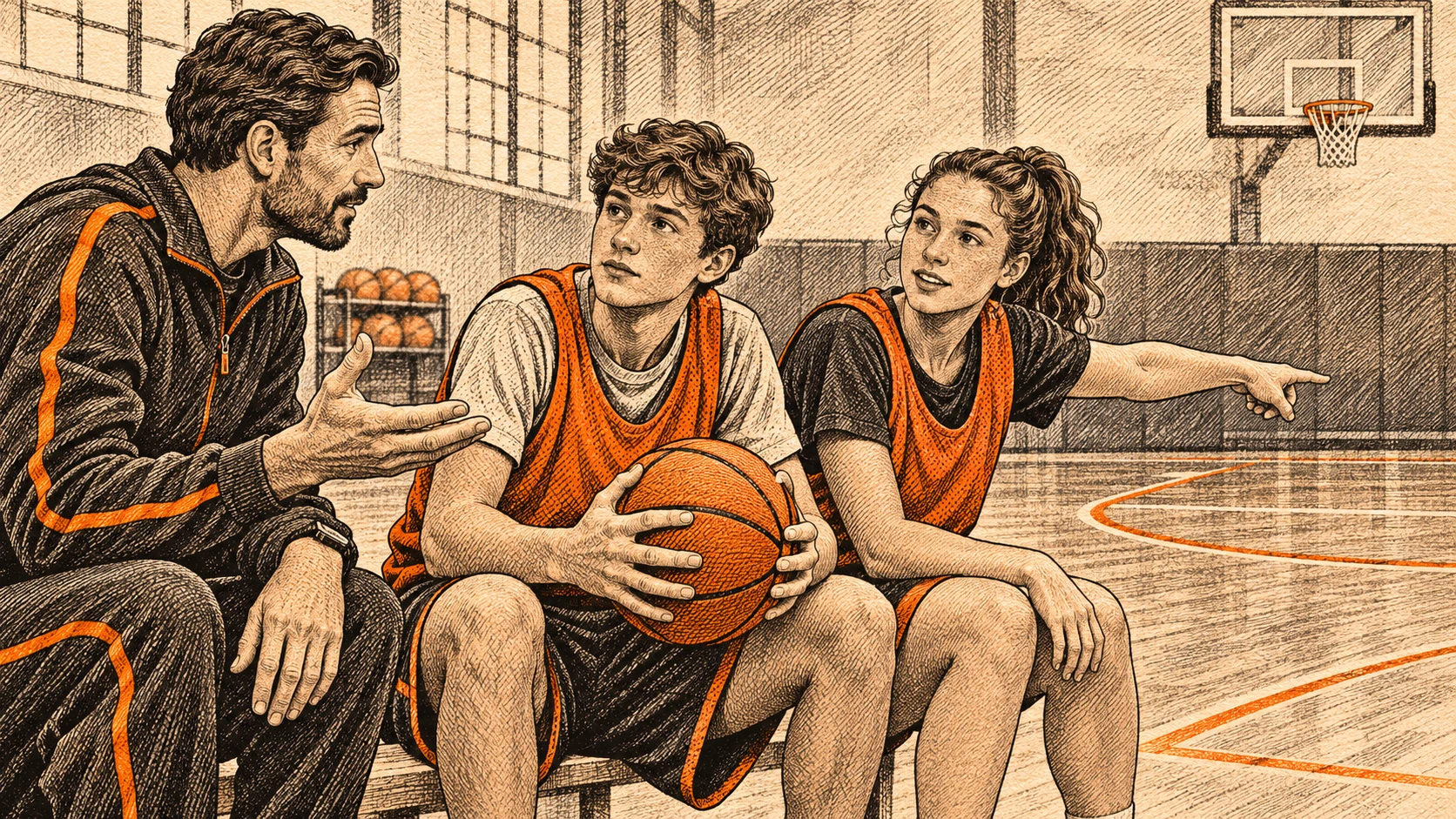
A teaching point should help the player notice something useful. It should not make the player wait for the coach to call every move. Leave room to choose, explore, and solve the problem.
The wording matters. A cue about the target or the effect of an action can serve a different purpose from a cue about a joint position. Choose language that fits the task. A technical correction and a live tactical read may require different kinds of guidance.
Adjust the amount and timing of feedback to the player. A beginner may need clarification that an experienced player can supply independently. Ask what the player noticed before adding another instruction.
Put the principle into a practice game
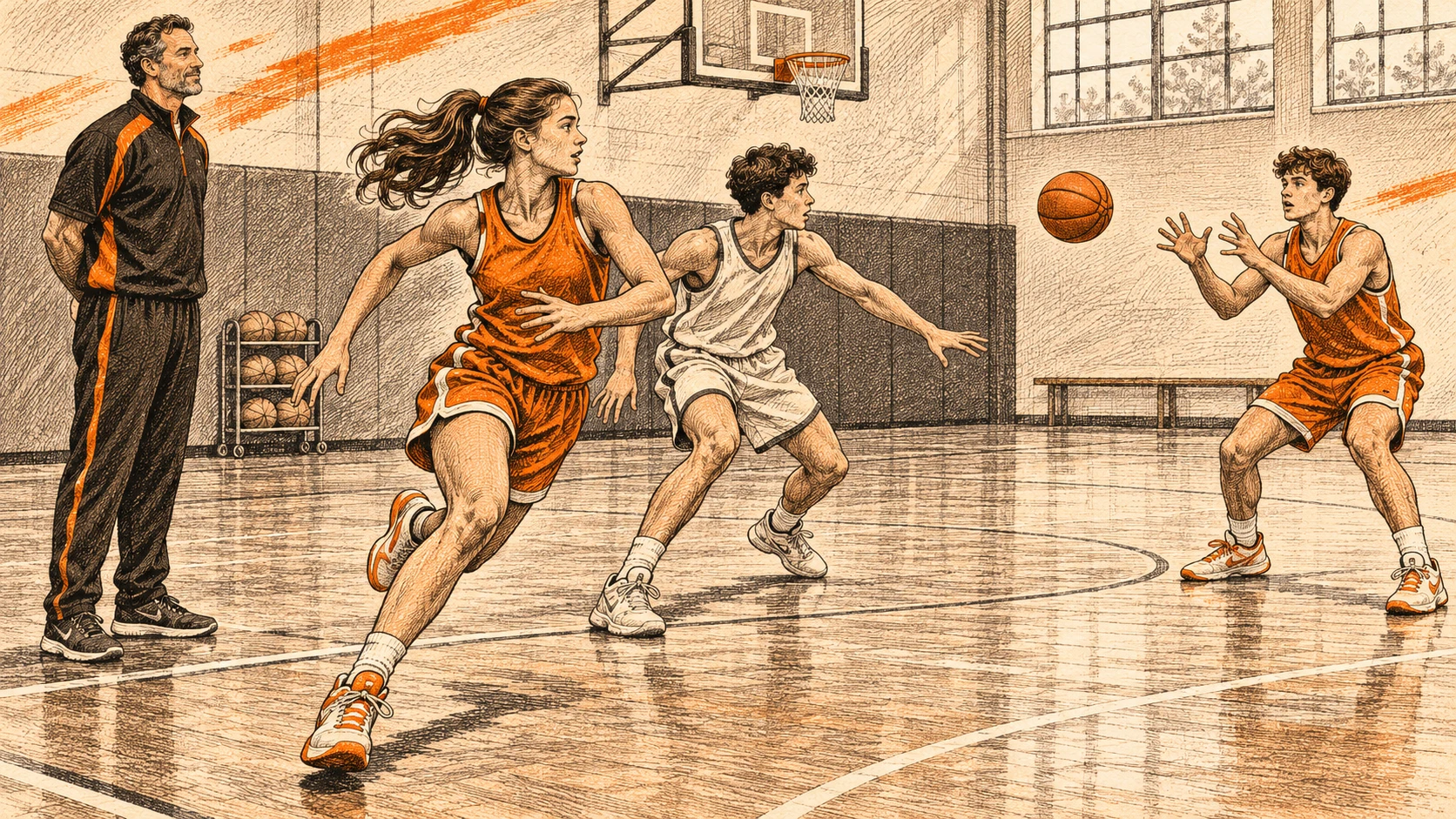
Use three on three in the half court. Start with one teaching point: after passing, move to become a useful passing option. Define success as creating an available lane without crowding a teammate. Explain that cutting, replacing, or holding useful spacing depends on the defense and the situation.
Play a short round. Observe whether players move with purpose or simply run because they were told to move. Between rounds, identify one successful example and one adjustment. Let the players explain what made the passing lane available.
Repeat the game. When the first point becomes steady, add a second demand: scan the help defender before receiving. Later, remove any special scoring rule and look for the same decisions in ordinary play.
What the research supports
In a small 2019 basketball study, eleven boys aged 12 to 13 took part in a decision training investigation. Over eleven weeks, the intervention combined video feedback with guided questions about their own game decisions. The intervention group recorded better decision and execution scores during the intervention than the comparison group. The sample was small, and the combined program does not isolate the effect of a single cue. Read the basketball study.
A 2024 study with 56 skilled adult basketball players found better free throw performance under external or holistic attentional cues than under internal cues. This supports choosing the content of a cue carefully. It does not establish better tactical learning or lasting improvement from that brief shooting task. Read the attentional focus study.
A systematic review of 13 studies in children found no single preferred feedback frequency across tasks. Study quality was low, with moderate evidence favoring feedback requested by the learner for retention. The practical message is to adapt feedback rather than assume that more comments or fewer comments always produce better learning. Read the feedback review.
These findings support purposeful instruction and appropriately chosen feedback. They do not prove that learning requires a verbal cue before every drill. Players can learn through exploration too. My recommendation to use one or two clear teaching points is a coaching principle informed by this evidence.
Check what remains when you stop talking
A player who performs only after a reminder still needs support. At the end of the drill, watch a stretch without prompts. Later, change the defender, space, or game situation and see whether the player recognizes the same principle.
Look for progress across sessions. A successful rep today is useful information. Applying the idea independently next week tells you more about learning.
Give players a clear purpose, useful feedback, and another chance. The drill and the game create the opportunity. Your coaching helps turn that opportunity into progress.
Connect the teaching point to the next practice
Use these ideas with practice games for better decisions, shooting drill design, and player development.
When using REACT CRT, define the cue and the action clearly, then add a live basketball problem and observe the player's read. Explore the REACT CRT practice guide and testing transfer to the game. The app can organize a visual response task; on court assessment is still needed to judge what carries into play.
“Make each day your masterpiece.”