A young player scores 30, beats everyone off the first step, and already plays above the rim. The gym starts making predictions. I want the coach to ask a different question: what will this player be able to do when today’s physical advantage is no longer enough?
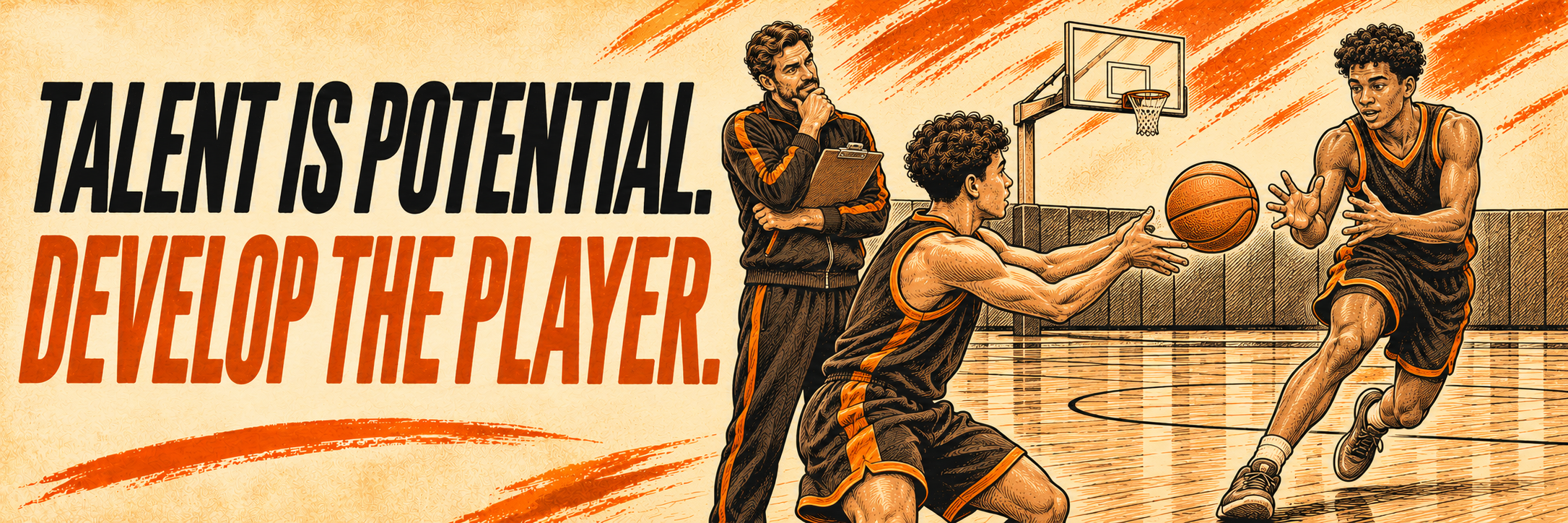
Talent deserves attention. Development deserves a plan. When I evaluate a player, I look at the tools, the choices, the learning habits, and the response to difficulty. Today’s score tells only part of that story.
Separate physical tools from basketball talent
Height, reach, speed, and strength are starting information. The basketball question is how the player uses them. A long reach becomes useful when it closes a passing lane at the right moment. Speed becomes useful when the player recognizes when to accelerate and when to stop.
In my coaching language, talent is a natural quality that can create an advantage. Measurements alone do not tell me whether the player can turn potential into useful basketball. Watch what the player does with the information and opportunities in front of them.
Do not confuse early maturity with a finished player
Players in the same school grade can be at different stages of physical development. A stronger body may dominate a youth game while a player who is still growing struggles to hold position. That matters when a coach decides who gets repetitions, responsibility, and patience.
I do not want a promising player reduced to carrying towels because today’s body is less ready for contact. Nor do I want the early standout living on an advantage without learning the game. Give both players a challenge that develops what they will need next.
Ask what is improving across months. Keep records of movement control, decisions, skill execution, and the ability to use feedback. Look beyond the result of one game.
Look through more than one lens
An IQ label cannot describe everything a player brings to basketball. In my coaching framework, I look through twelve lenses: social awareness, body and movement control, practical application, creativity, language, rhythm, spatial awareness, logical thinking, awareness of the natural environment, self awareness, emotional awareness, and perception.
Each lens raises a practical question. Can the player read space? Find a rhythm? Understand an instruction and use it? Recognize a teammate’s intention? Recover emotionally and make the next decision? These observations help me choose how to teach the individual.
The point is to recognize different strengths and development needs. A quiet player may communicate clearly through movement and eye contact. A player who struggles with a long explanation may learn from a demonstration followed by a live problem.
Value the right response to a changing situation
When coaches call someone a natural game player, I look for the behavior behind the label. Does the player notice the change, decide with purpose, and choose an action that fits? Fast movement is useful when it answers the situation.
A player who repeats an impressive move after the defense has taken it away still needs another answer. Teach players to see the floor and adjust. The connection between perception and action is central to how I use Cognitive Reaction Training.
Watch leadership and communication
I look for players who help a possession work. They give a teammate a target, recognize a passing window, organize a defensive responsibility, or bring the group back to the next task. Leadership can be visible without a speech.
Communication also happens through a raised hand, a glance, a change of pace, or a cut that a teammate can read. Ask whether the player receives information as well as sends it. A useful signal creates a shared understanding.
A moving catch can reveal a great deal
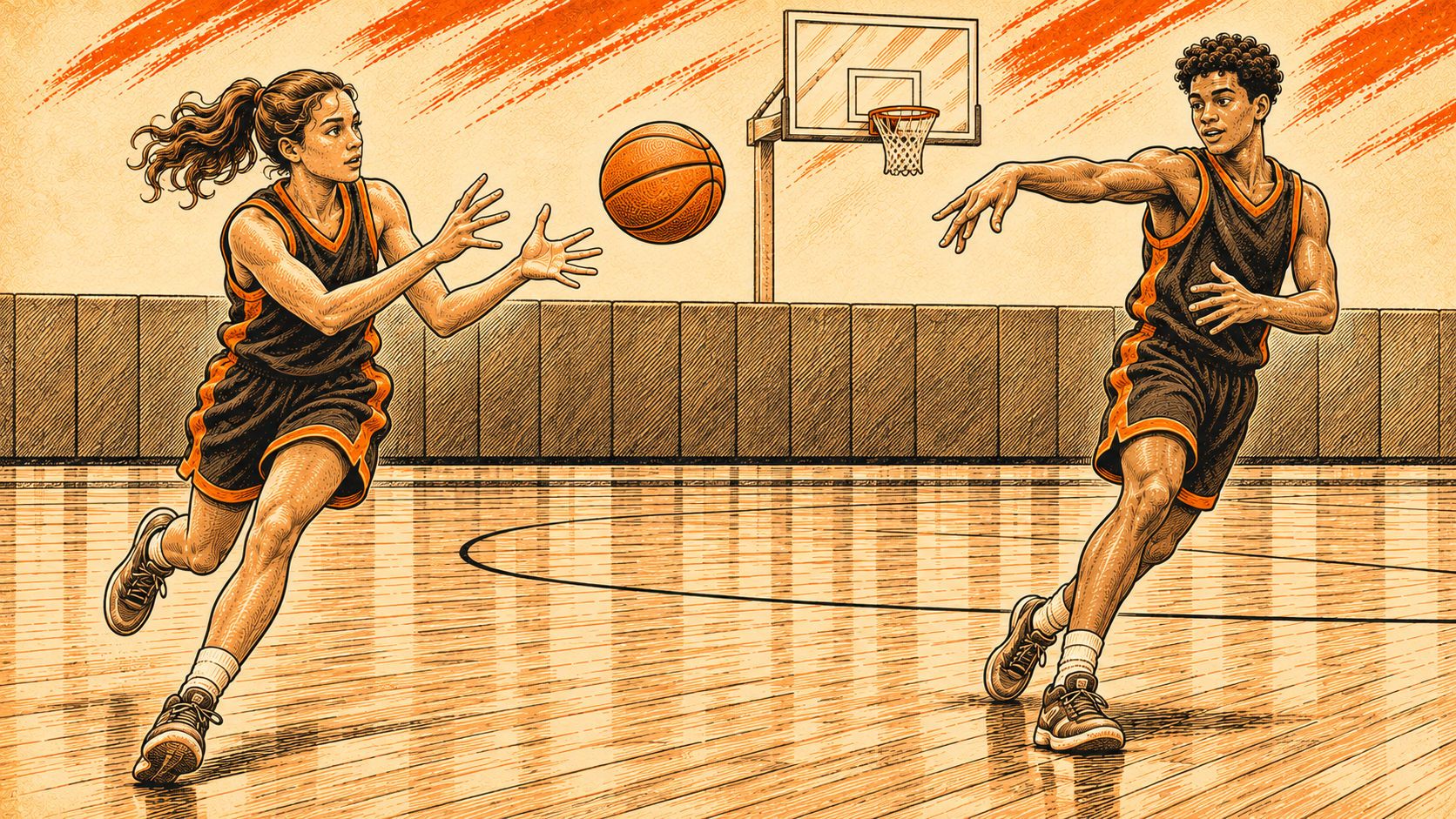
One task I use is receiving the ball while running away from its starting position. I watch how the player tracks the pass, adjusts the path, turns toward the ball, prepares the hands, and organizes the catch.
Then I watch the first dribble. Does it happen at the right time? Can the player keep the movement flowing and make the next action available? This simple sequence lets me observe perception, coordination, timing, and efficiency together.
I use what I see to choose the next teaching point. Change the pass, direction, or pace and observe again. Give the player feedback and another opportunity. The response to teaching belongs in the evaluation too.
Persistence turns potential into a process
The difference I care about is what happens after the missed opportunity. Does the player return, identify the problem, and make another serious attempt? The next repetition needs attention and a purpose.
Build persistence into the practice structure. Give a clear task, useful feedback, and another chance to apply it. Recognize a better decision or a corrected movement even when the final outcome is imperfect. A player needs to know what progress looks like.
Potential can draw the first compliment. Consistent work gives development somewhere to go. I want to see how a player trains across an ordinary month, including the days when the work is frustrating.
Heart shows up in actions
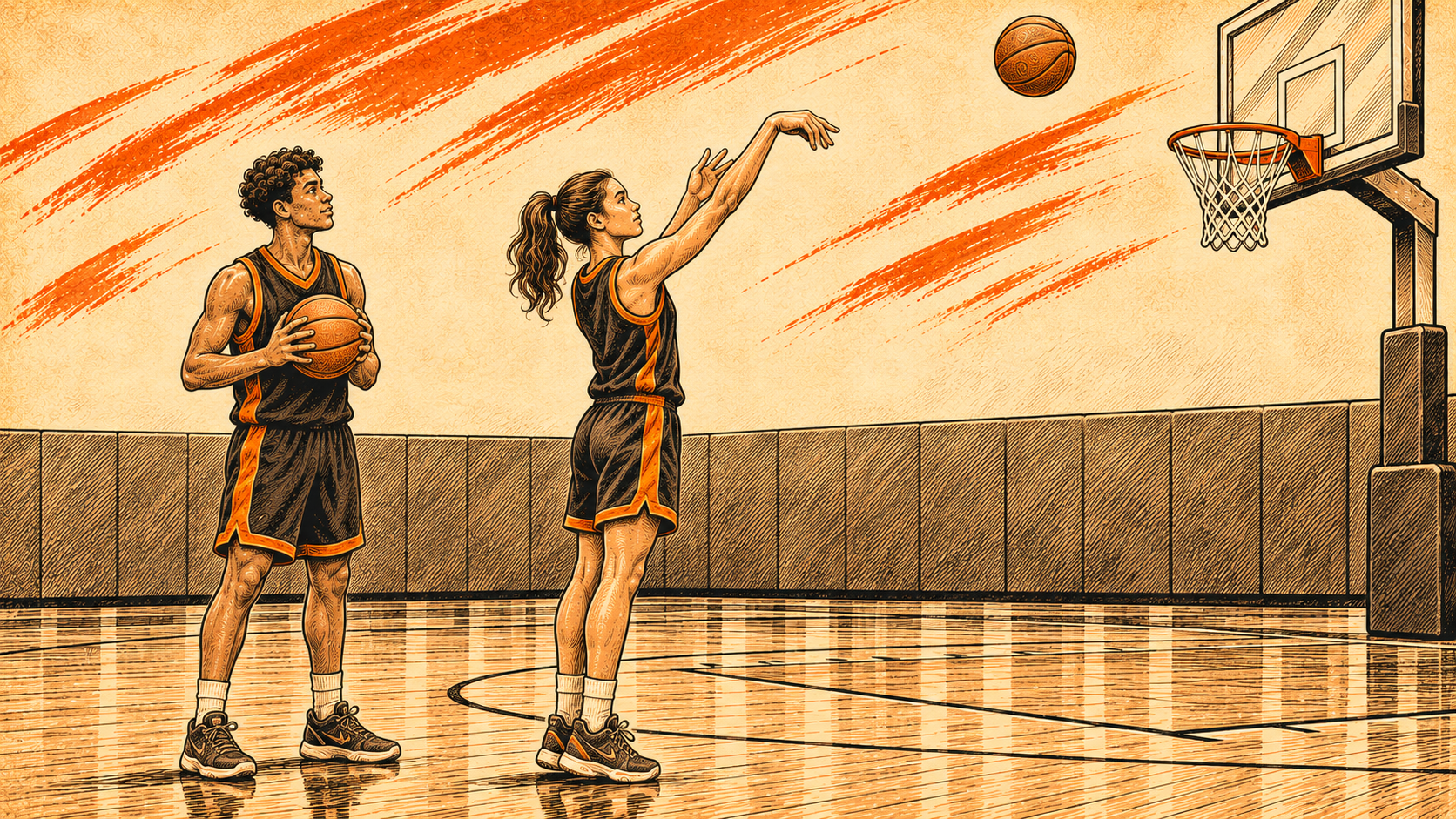
The player coaches describe as having heart brings commitment and energy to the group. Look for the effort to recover after an error, chase the next loose ball, support a teammate, and stay available for the next possession.
Heart and persistence can reinforce each other. Commitment gives a player a reason to keep working; repeated, purposeful effort deepens that commitment. Make these habits visible in the standards you teach and recognize.
Coach the player who can emerge
When you are ready to label a young player, imagine that player ten years from now. What opportunities are you providing? Which skills, habits, and decisions are you helping the player build?
The responsibility becomes especially important through the teenage years, when today’s performance can too easily become a fixed verdict. Evaluate repeatedly. Adapt the challenge. Keep the pathway open for improvement.
Choose one player in your next practice. Observe a moving catch, a live decision, communication with a teammate, and the response to a mistake. Write down one strength and one next step. Then give that player a useful opportunity to work on it.
Keep developing the full player
Connect this perspective to The Two Rules, Court Vision, and defensive communication. To connect visual choices with movement, explore the REACT CRT practice guide.
“Make each day your masterpiece.”