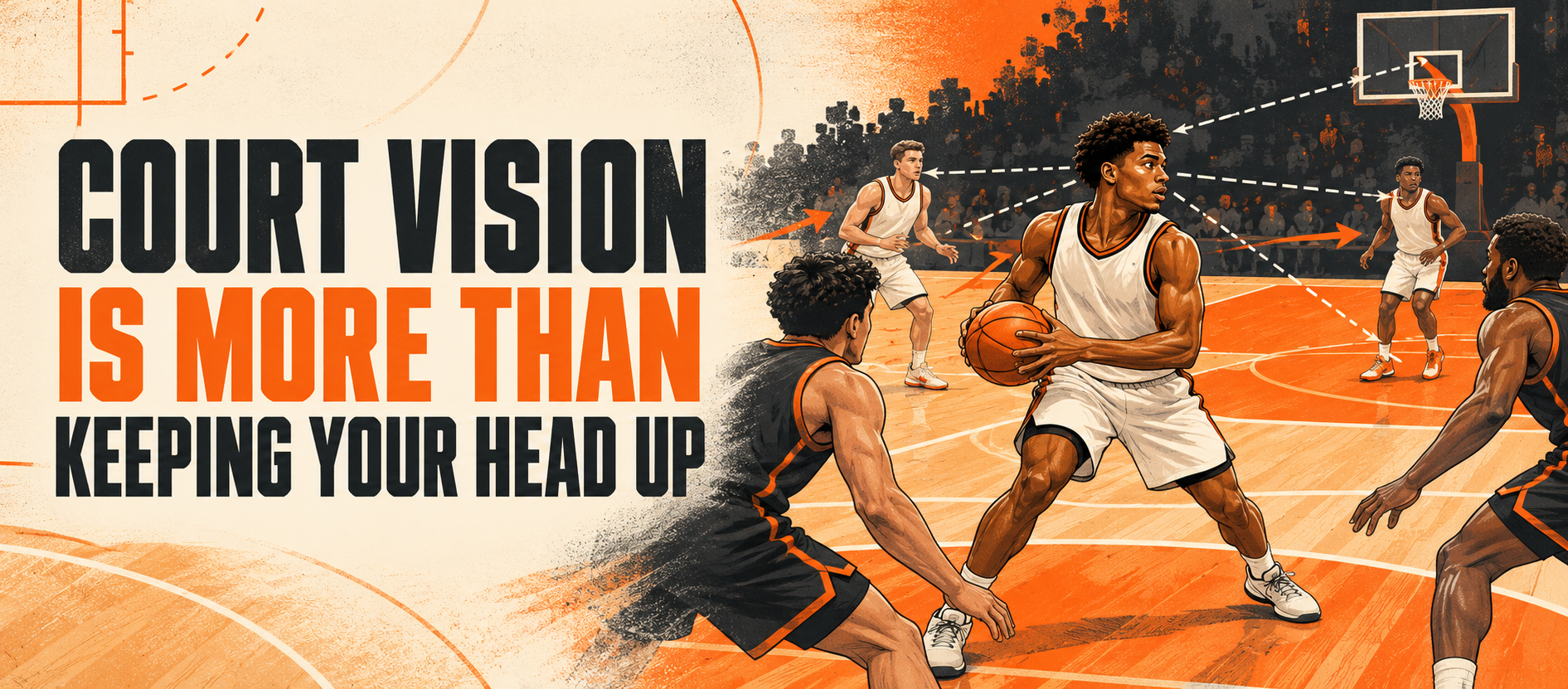
“She sees the game well.” I hear that a lot. But does it mean she sees the floor, or that she knows what to do with what she sees? A big part of my work with teams over the years has been helping players understand the game, break down situations and make decisions, instead of memorizing our play or the opponent’s. It takes time. It can be frustrating, and players sometimes pay for mistakes. But when the game starts to make sense to them, that is the fun part.
Three dimensions of a player
The physical dimension is control of the ball and body with the head up. The cognitive dimension is understanding what matters now: who is open, which space can be attacked and when to move the ball. The emotional dimension is being able to make that choice under pressure without freezing after a mistake. I call this the 3D player.
Train the read, not just the move
A long sequence of flashy dribbles can look impressive and teach very little about basketball. Start with technical control, absolutely. Then put that control into situations that require a real choice. Have a ball handler scan the floor while the coach signals a cutter. The player must deliver the pass from the dribble when that option appears.
The moment matters
Players often hesitate because they are replaying the previous turnover or worrying about the next one. Teach them to be present in the possession. Recognize the opening, act, then evaluate after the play. Prepare the decision early enough to use the opening when it appears.
“Make each day your masterpiece.”