A lead can hide a game that is getting away from you. We may still be six points ahead while the opponent wins the paint, forces rushed shots, and gets us reaching on defense. Waiting until the score flips means we have ignored the possessions that warned us.
Until the final buzzer, I want to know who owns the momentum. At the buzzer, the scoreboard settles it.
The score always matters. It determines our urgency, the value of the next possession, and how much risk we can accept. Momentum tells me how the game is moving: which team is repeatedly creating the situations it wants, and which team is being forced to react.
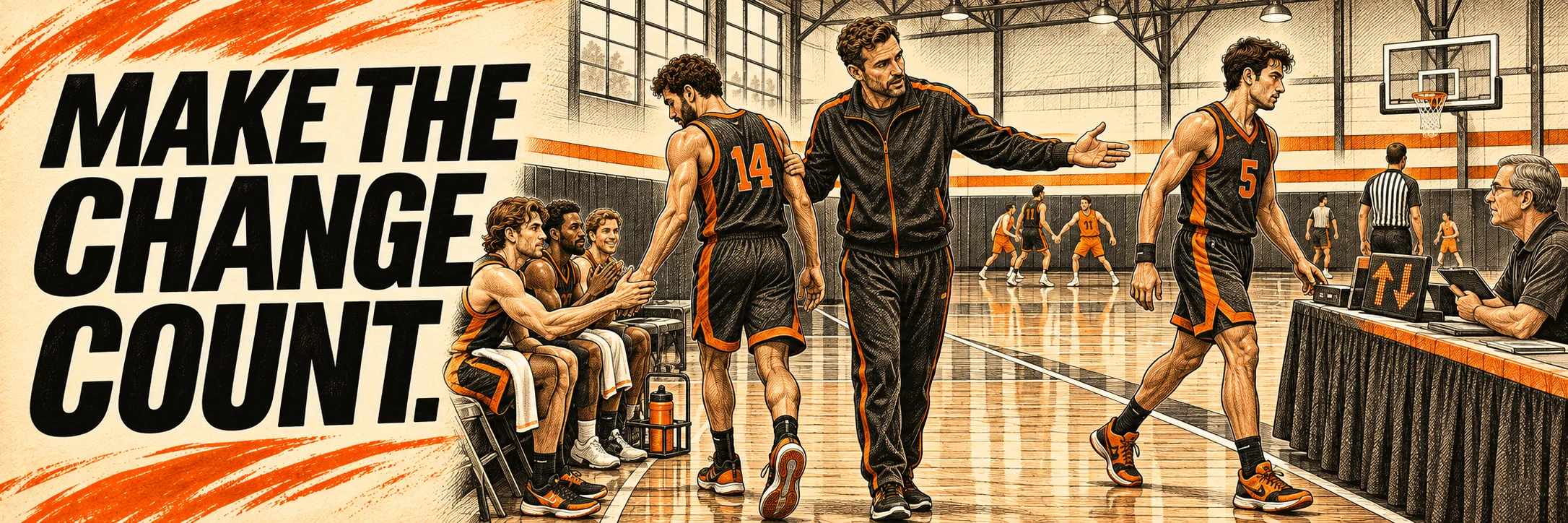
A substitution can change that relationship. A player enters with a specific job, changes what five players can do together, and gives the opponent a different problem. The job must be clearer than “bring energy.”
Read the Possessions Before Reaching for the Bench
I look at three things: how we are creating shots, how we are conceding them, and whether our players can still execute their roles.
Are we getting downhill, or dribbling sideways against pressure? Are their baskets coming from offensive rebounds, paint catches, or transition? Is a tired guard late to every recovery? Is our lineup giving the opponent a place to hide its weakest defender?
A scoring run gets our attention. The possessions explain what to change. Three difficult makes by a well guarded shooter are a different problem from three uncontested layups. Pulling a defender who executed the coverage correctly can remove the player we actually need.
Do not wait for a timeout to notice these things. An assistant can track the source of paint touches and live ball turnovers while the coach watches matchups and communication. Use accurate statistics to challenge an emotional impression. A short run of plus minus, by itself, does not explain what a lineup is doing.
A Mistake Does Not Automatically Mean a Substitution
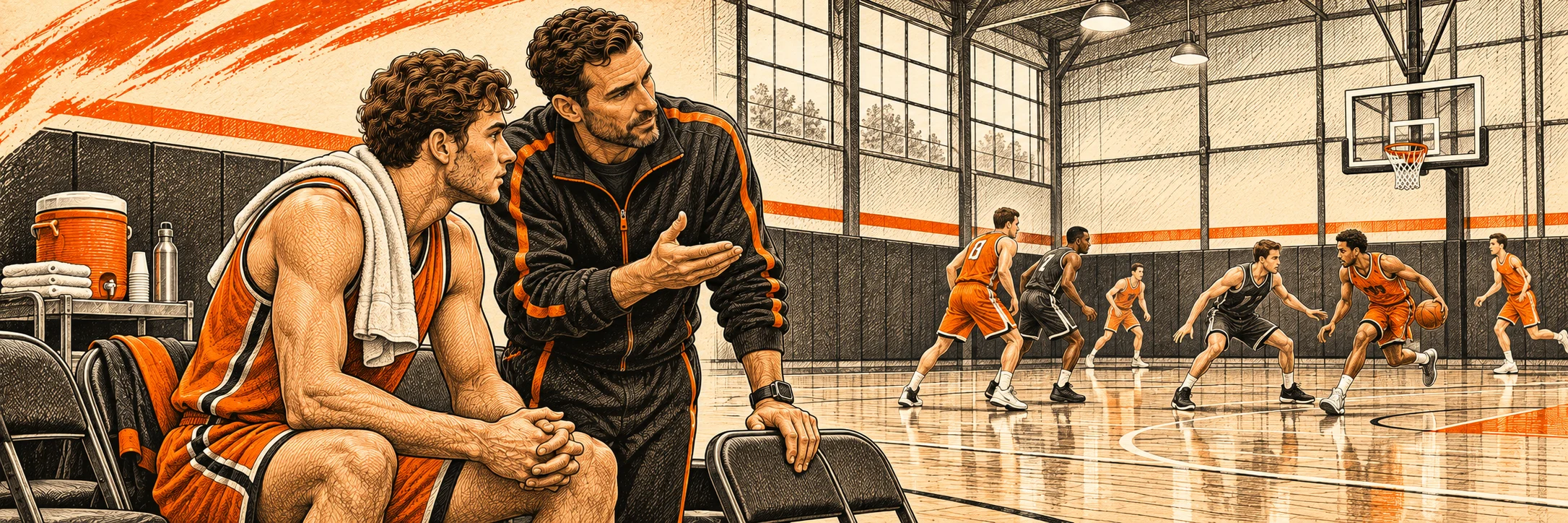
One of the most damaging habits on the sideline is the emotional substitution. A player makes a mistake, the coach reacts, and the replacement enters without knowing which problem to solve.
I often give the player another possession or two while I assess the options. The purpose is to keep players willing to read, pass, and initiate. If every unsuccessful attempt sends them straight to the bench, they can learn to avoid decisions.
That does not mean ignoring a repeated breakdown. A player who cannot execute the role may need a correction, recovery time, or a different matchup. A medical concern needs immediate attention. The decision should serve the next possession.
Before sending someone in, state the job. “Keep a second outlet behind the trap.” “Hit their center before finding the rebound.” “Make their guard defend a cut before we start the ball screen.” The entering player should be able to repeat it.
When the outgoing player sits, give a brief explanation tied to the play. Do not make the whole bench watch an argument while the game continues.
Use the Sixth Player to Add Something
Starting and contributing are different responsibilities. Some players enter more effectively after observing the opening matchups. A scorer off the bench can make the opponent defend a new threat after its first group has settled into the game.
Talk with the player. Know what helps that player become ready. Then plan the entry around an actual role and an available opportunity. A sixth player forgotten on the bench cannot influence anything.
Keep the surrounding lineup functional. Bringing in a shooter while removing the only player who can handle the opponent’s pressure may leave us unable to deliver the ball to that shooter. Ask what the five can execute together.
Give a Replacement Ballhandler an Overlap
Against heavy pressure, handing control directly from a warm starter to a reserve who has been sitting can be a difficult transition. I use an overlap when the lineup allows it.
Think of the rotation in three steps. First, bring the reserve guard alongside the primary ballhandler, with another perimeter player resting. Let the incoming guard receive, see the coverage, and share the work. Next, rest the primary ballhandler and restore the perimeter player while the reserve handles the role. Finally, bring the primary ballhandler back when ready and complete the rotation at the next legal opportunity.
This is the purpose of the three step substitution: a controlled handoff. It does not mean replacing three players simultaneously. The timing depends on the lineup, the available substitution opportunities, and how the incoming guard responds.
During the overlap, give the reserve real responsibility. If the starter handles every decision, the reserve remains unprepared for the next stretch. Let the starter support as an outlet and communicator.
Substitute to Change Momentum
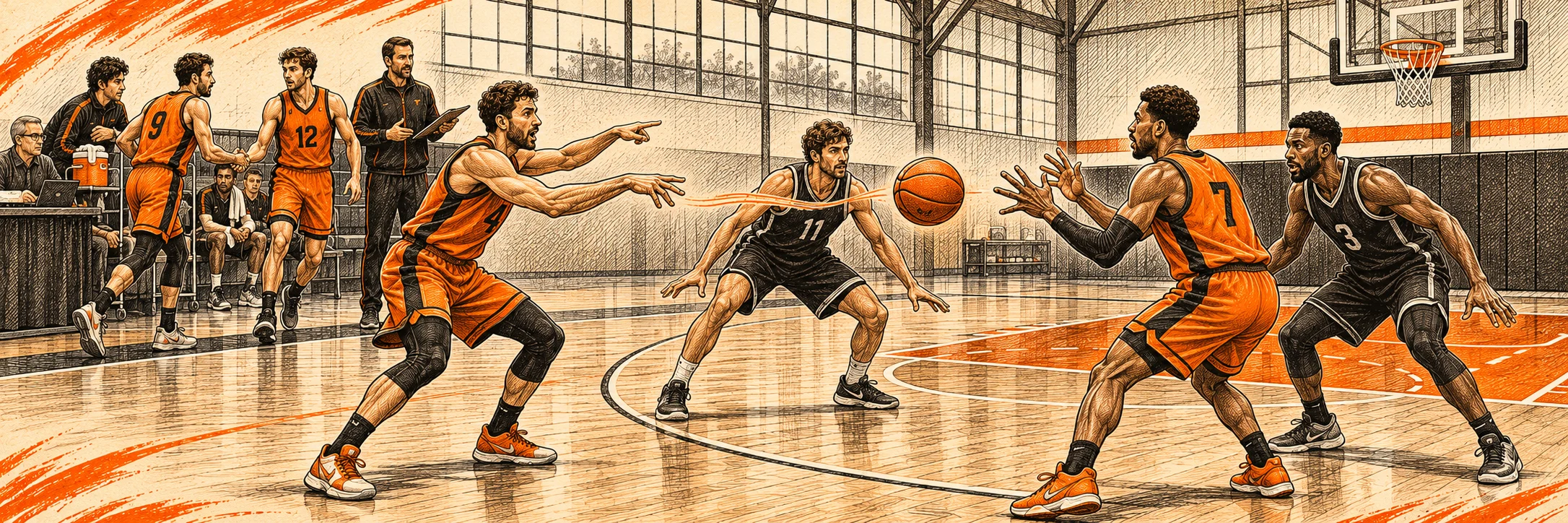
A run can demand a different player, but the player does not have to be a scorer. A rebounder may stop the extra possessions feeding it. A composed guard may remove the live ball turnovers. A cutter may occupy the help defender who has been sitting in our driving lane.
Here are three examples of a substitution with a measurable purpose.
If the opponent is pressing us into rushed decisions, add a second reliable ballhandler. Check whether we advance under control and begin the offense with time to play.
If we defend the first shot but keep conceding putbacks, add a player who can locate and make contact with the rebounder. Check whether the possession ends after one attempt.
If the opponent has stopped respecting an offensive position, bring in a shooter, cutter, or screener who forces that defender to work. Check whether the help position changes and our next action gets more space.
The next two or three possessions can tell us whether the intended behavior has changed. They cannot establish a reliable lineup rating. Keep watching the quality of the work, not only whether the next shot drops.
Build the Rotation Toward the Finish
I want useful players involved before I need them in the closing possessions. Where the roster allows it, the first half gives me information about which players and combinations are ready that night.
Depth requires preparation. Give reserves meaningful roles in practice and enough live decisions to perform them. Build the pairings that help one player support another. A good rotation preserves functioning combinations while managing individual minutes.
Do not weaken the start of the second half out of habit. In a game with quarters, I usually want a dependable group opening the third. In NCAA men’s basketball, the equivalent problem is the opening stretch after halftime. Choose the group for the matchup and its readiness that day.
A planned rest can use the break between periods to extend recovery without removing a player for as much playing time. The game must still allow that rest. Manage the stretch in front of you rather than waiting for a time mark while the player is clearly struggling.
Foul Trouble Is a Decision, Not an Automatic Chart
Know the personal foul count on both teams. Then consider the time remaining, the matchup, the player’s self control, the available replacement, and what the game needs now.
In a game with a five foul limit, two early fouls or four before the closing stretch deserve attention. Those counts do not create a universal substitution rule. A disciplined player may remain effective; another may keep chasing the same contact. In the NBA, the ordinary limit is six personal fouls, so copying a five foul rotation chart changes the risk calculation.
Late in a close game, preserving a player on the bench can mean losing the possessions for which we were saving that player. Put the best available response on the floor while managing the risk honestly.
Substitutions must follow the competition’s legal opportunities. A stopped clock is not automatic permission to change players. NBA rules, for example, do not allow an ordinary substitution simply because a field goal has been made. Free throw sequences and reentry also have restrictions. Know the rulebook before building an offense and defense substitution plan.
The Bench Is One Tool for Changing Momentum
Sometimes the five on the floor can solve the problem once we change the demand. Before assuming a different player is the answer, identify what is feeding the opponent’s control.
| What is feeding the opponent | A possible response | What to watch next |
|---|---|---|
| Our live ball turnovers | Add a ballhandler or change the pressure outlet | Controlled advancement and a playable first pass |
| Rushed perimeter shots | Run a familiar action through a paint touch | Shot quality and defensive floor balance |
| Offensive rebounds | Clarify contact assignments and change personnel if needed | The rebound secured after the first shot |
| A repeated favorable matchup | Change the matchup or practiced coverage | Whether the same advantage remains available |
| Our predictable rhythm | Change the entry, screening angle, or tempo | A different defensive reaction |
| Confusion that survives those adjustments | Use a timeout for a specific correction | Players carrying out the instruction after the break |
These are options to test against the game, not guaranteed momentum switches. A timeout also gives the other coach time to organize. A defensive change can create new openings. A faster tempo can serve the opponent. Choose the response by the problem and the players who must execute it.
For the defensive options, read Change the Defense With a Purpose. For the huddle and timeout rules, use Timeouts: Know When to Stop, Know When to Play. The full strategy for reaching the finish appears in Coach the Game Toward the Final Two Minutes.
Train the Substitution Before Game Night
Use three live practice situations. Set the score, time, foul counts, and available players before each one.
First, give the opponent a run built on pressure. The coach must identify the cause, send in a player with one job, and let the next possessions test that choice.
Second, rehearse the guard overlap against a live press. The incoming guard must take responsibility before the starter rests. Correct the outlet spacing and the first decision, then repeat.
Third, play a close finish with one important player in foul trouble. Have the staff explain its choice before the next possession. Review whether the player, matchup, and remaining time supported the decision.
Use one or two teaching points in each segment. Separate a poor choice from poor execution. Give the group another chance to solve the same problem.
The bench should give the team more ways to play. Coach it with the same precision you expect from the five on the floor.
Rules and Further Reading
NBA Rule 3: Players, Substitutes and Coaches, personal foul limit and substitution opportunities. FIBA Official Basketball Rules 2026, Articles 19 and 41. NCAA rules comparison for 2026/27, disqualification and replacement provisions. Rules checked November 6, 2026.
“Make each day your masterpiece.”