A scouting report can be accurate and still be useless to the players. Twenty clips, six coverages, and a long list of tendencies do not help if the group cannot recognize the first action at game speed.
The coach needs a broad picture. The players need a plan they can carry onto the floor. Prepare the opponent through your team's own habits, available personnel, and actual practice time.
Build the preparation around three questions: What does the opponent want? Where can we disrupt it? What will we do when the first plan meets resistance?
Separate What You Saw From What You Expect
Record the opponent's repeated actions before assigning motives. “The guard rejected the screen on these possessions” is an observation. “He will reject every screen” is an assumption. Your coverage cannot treat the second statement as a fact.
Watch the conditions around the action. Which side of the floor? Which screener? Which defender? Did the rejection follow an early defensive lean? A tendency tied to one matchup may disappear against a different stance or coverage.
Keep makes and misses in context. A player going two for three in the clips you found does not establish a dependable shooting percentage. Use the sample you actually have, distinguish complete game data from selected clips, and remain ready to revise your read.
Use a simple staff note: observation, proposed response, and what would make us change it. That third entry stops a report from becoming something the bench defends after the opponent has already adjusted.
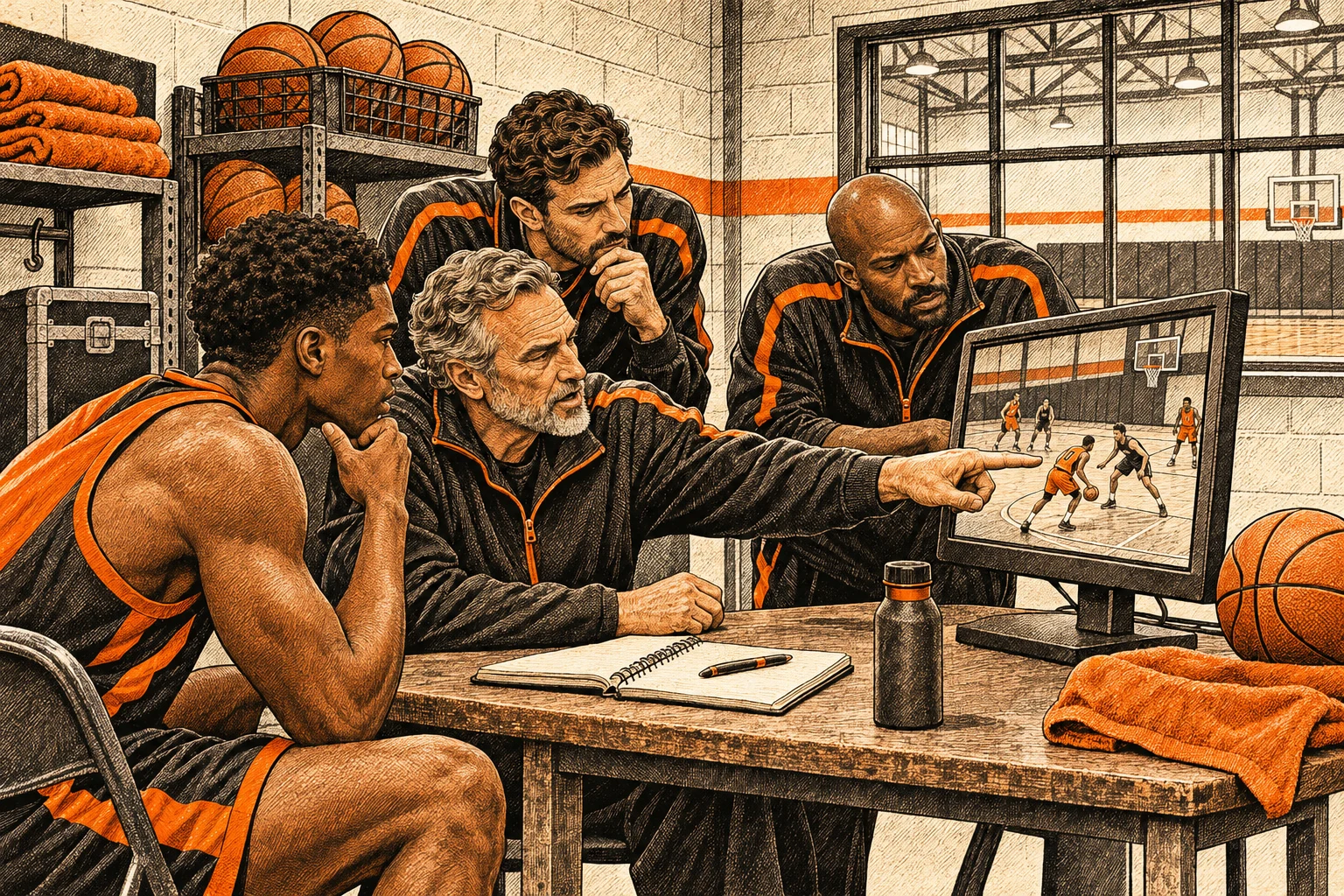
Find the Opponent's Reliable Advantage
Start with the action that repeatedly puts the defense into rotation. It might be a guard turning the corner, an early post seal, a second side ball screen, or an offensive rebound that keeps the defense scrambling.
Identify the players who connect the action. The leading scorer may finish the advantage, while another player creates it with the entry pass or screen. If your whole report follows the scorer, you can miss the player who starts the problem.
On defense, ask how the opponent wants to steer the ball. Do they send it toward the sideline? Switch particular matchups? Crowd the paint and recover late? Look for the next window after the first pressure, then check whether your players can reach it with their current passing and movement skills.
Do not build a plan around a delivery your guard cannot make under pressure or a coverage your big has never practiced. The opponent's weakness matters only if your group has a usable way to reach it.
Give the Players Three Priorities
Reduce the report to three jobs. Each job needs a trigger the player can recognize and an action the team has practiced. The following is an example, not a report on a specific opponent.
1. Remove the First Advantage
If their main guard repeatedly attacks a high ball screen, name the coverage and the early responsibilities. The on ball defender needs the screen call before contact. The big needs the agreed depth and angle. The help defender needs to know when to tag the roller and how the next rotation works.
“Stop their best player” gives nobody a usable assignment. Teach the sequence that takes away the preferred first action without abandoning every other threat.
2. Finish the Defensive Possession
If the opponent sends a particular forward to the offensive glass, assign the contact and the rebound responsibilities. Identify who protects transition when the ball changes hands.
A contested miss followed by an uncontested putback is an unfinished possession. The scout should reach that second effort. Otherwise, you prepare for the first shot and leave the opponent's repeat opportunity untouched.
3. Reach Our Best Offensive Window
If pressure commits two defenders to the ball, show where the release receiver must appear and where the next pass can go. The outlet needs a visible target, enough space to receive, and a decision prepared before the catch.
Against a different opponent, this third priority might be an early post touch, a weak side cut, or attacking a long closeout. Choose the action your group can execute. Do not add a new offense merely because the film suggests an attractive possibility.
Teach It on the Floor
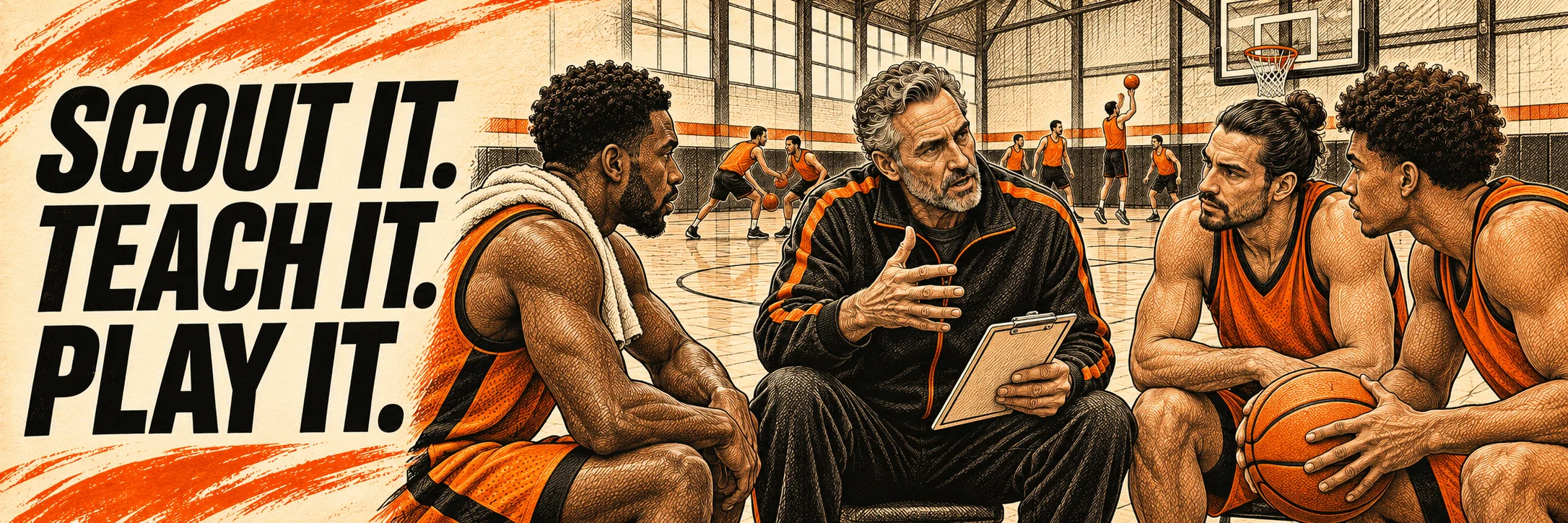
Use the clip to identify the cue, then move to the court. A player recognizing a freeze frame has not yet demonstrated a live read.
Walk through the starting alignment and the first responsibility. Then give the scout group a real choice inside the opponent's action. The guard can use or reject the screen. The roller can slip when the defense arrives early. The weak side player can cut when help turns its head.
Increase pressure as the group handles the read. The final block should force decisions against defenders or attackers who can change the picture. Keep one or two coaching points visible rather than stopping every possession for a different instruction.
This connects directly to giving each scrimmage a job. The job here is to find out whether the plan survives a live opponent. A clean walk through is preparation for that test, not evidence that the team has passed it.
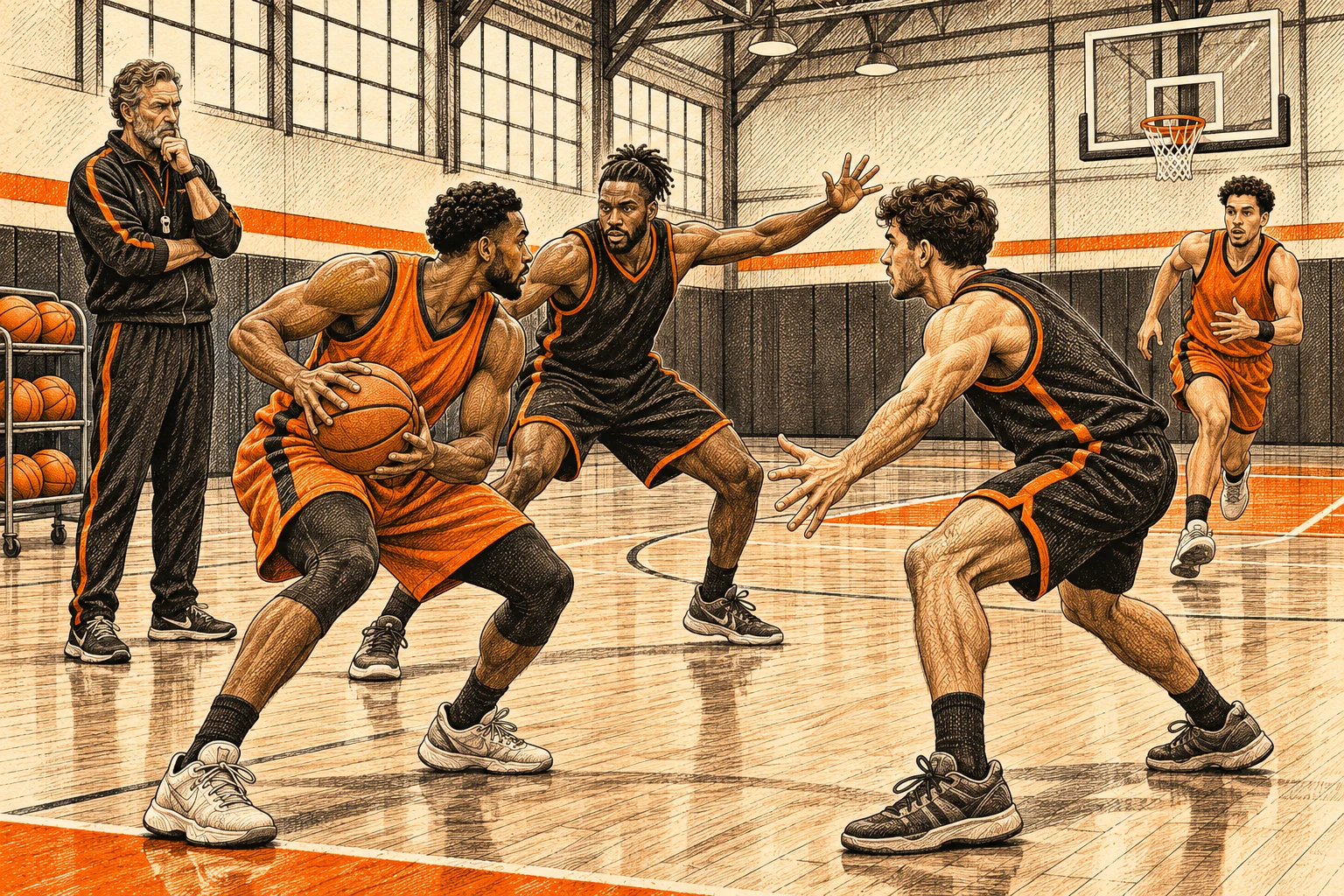
Prepare a Second Answer
You do not need six emergency defenses. You need a practiced response when the first one stops addressing the problem.
Suppose the guard begins rejecting the screen and reaching the paint. First inspect the execution: was the stance correct, was the screen call early, and was the big in the agreed position? Repair an execution problem before assuming the whole coverage has failed.
If the coverage is being executed and the opponent still gains the same advantage, use the second answer you have prepared. Explain the trigger for the change and the jobs it changes. A new call that only three players hear creates another problem.
The same process applies to offense. If the opponent removes the first entry, the next action should belong to your system. Players need somewhere to go without turning toward the bench for a rescue on every possession.
Plan the Pace for This Matchup
Against a deeper or more talented opponent, especially on the road, consider whether your group benefits from reducing unnecessary possessions and forcing organized half court work. The purpose is to reach the closing stretch with the game within reach and useful players available.
That does not mean passing up a clear layup or holding the ball until a poor shot becomes unavoidable. Taking longer is useful only if the possession still produces a reasonable opportunity. Likewise, playing quickly can serve your team when it attacks an unsettled defense rather than repeating rushed decisions.
There is no universal instruction that the underdog must always slow down. Turnover risk, shooting, rebounding, fatigue, and the matchup all affect the choice. State the reason for your pace plan and check whether the game supports it.
For the full approach, see coaching toward the final two minutes. Keep timeout rules and management as their own preparation task. Use the rules of the competition you are actually playing, including its clock, substitutions, and timeout procedures.
Read the Game After the Scout Ends
The opening possessions test the report. Watch where the opponent creates an advantage, whether your players recognize the cue, and what happens after the first rotation. Keep the staff's observations tied to possessions rather than the noise in the gym.
Momentum can shift before the score catches up. The leader may be losing the glass or struggling to enter the offense. The trailing team may be creating better shots but missing them. Read that direction carefully without treating momentum as a guarantee of the next result.
A timeout is one response. A purposeful substitution, a coverage change, a better outlet, a paint touch, or a clean defensive rebound may address the cause more directly. Choose the action for the basketball problem you can see.
After the game, compare the report with what actually happened. Which tendency held? Which assumption failed? Which instruction reached the floor, and which one stayed in the film room? Feed those answers into the next preparation cycle.
Your report earns its value when players recognize a situation, share the same response, and execute it under pressure. Keep enough detail to prepare them and enough clarity for them to play.