“Why am I not playing?” Every coach hears it. So does every player at some point: “I deserve more minutes.” “You do not believe in me.” “I would have confidence if I played more.”
The conversation needs a basketball answer. A player should know what the team needs and what performance would make the coach more willing to use them. A coach should be able to explain the assignment without hiding behind “work harder.”
I tell my players that I look for two kinds of contribution: players who create points and players who create possessions. Bring one consistently and you give the team a reason to use you. Bring both and you give the coach more ways to keep you on the floor.
Create Points for the Team
Scoring is the visible part. Everyone notices the player who finishes. I also want players to recognize the pass that creates the finish and the screen that leaves a teammate free.
Those are three ways to produce points: score, deliver the pass that creates a scoring opportunity, and screen effectively enough to free someone else. They are not equal on every possession, but all belong in the coach's evaluation.
A guard who moves the ball while the window is open can create more offense than a guard who dribbles through that window and takes a difficult shot. A screener who arrives at the right angle, establishes a legal position, and reads the defender can change a possession without touching the ball again.
The coach must acknowledge those contributions. If the only praise goes to the scorer, do not be surprised when everyone wants to finish and nobody wants to do the work that makes the finish available.
For a player, the question becomes specific: Can I make the next teammate's job easier? Show it in the action, repeatedly, against real defensive pressure.
Create and Protect Possessions
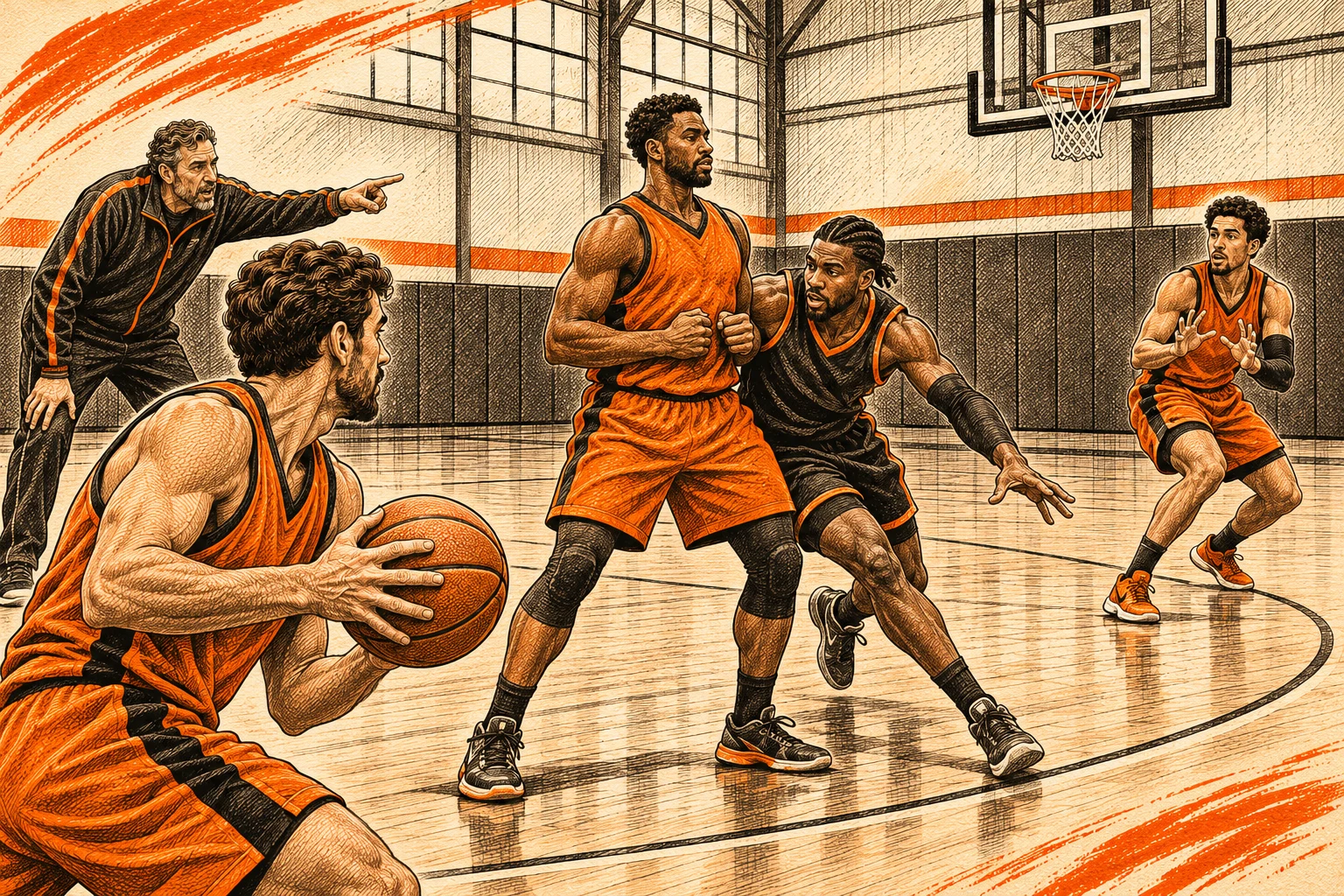
Defensive rebounding puts the ball in our hands. A difficult shot forced by sound defense gives us a chance to secure that rebound. A steal or a legally drawn offensive foul can end the opponent's possession. An offensive rebound earns another opportunity within our own possession.
I place a high value on offensive rebounding. It can give the group another chance after the first action fails. That does not mean everyone should chase every miss. A player assigned to floor balance must protect against the break. Contribution includes doing the team's job, not collecting a statistic at its expense.
The same applies to steals. A gamble that opens the lane may damage the defense even if it occasionally produces a highlight. Pressure the ball with an understanding of the help, the recovery, and the next assignment.
Count the less visible work too. A box out may allow a teammate to collect the rebound. A defender may force the ballhandler away from the preferred hand and into a contested pull up. Credit the action without pretending the possession is finished before someone secures the ball.
Which Game Problem Can You Solve?
A reserve needs an answer to this question. When the opponent controls the glass, who can enter and finish a defensive possession? When the point guard faces pressure, who can provide a usable outlet? When the offense stalls, who can set a screen and make the next read?
Your role can begin with a clear strength. It should not become an excuse to neglect everything else. A shooter still has to know the coverage. A defender still has to catch, space, and move the ball. The coach needs a contribution the lineup can use without creating an avoidable breakdown elsewhere.
Practice is where you make that contribution dependable. Show the assignment against starters, in difficult matchups, and after a mistake. One good repetition gets noticed. A pattern gives the staff a reason to trust the substitution.
For the coach, a substitution should answer the game. “Bring energy” is too vague if what you need is to deny a particular catch, cover the roller, or give the ballhandler a release against pressure. Tell the player the job before sending them in.
Trust Runs Both Ways
The player wants the coach's confidence. The coach wants evidence that the player can carry an assignment into a live game. Neither side should wait passively for the other to solve everything.
The player's responsibility is preparation, attention, and a useful response after an error. The coach's responsibility is instruction, a fair reading of performance, and a clear explanation of the role. Confidence grows on firmer ground when both can point to the work.
A single turnover should not automatically erase trust. Was the pass on time? Was the angle available? Was the technique appropriate to the pressure? A sound read with a poor delivery needs a technical correction. A forced pass into a closed window needs a different correction. “You lost it, sit down” does not teach that distinction.
Players still need room to make decisions. If every unsuccessful attempt threatens the next substitution, some will stop taking useful opportunities. That can make the box score look safer while the offense becomes passive.
Demand accountability for the decision and the response. Do not confuse a player taking responsibility with a player becoming afraid to act.

Have the Minutes Conversation Clearly
For the player, three questions can move the conversation forward: What is my present job? Which action is keeping me from a larger role? Where can I demonstrate the improvement in practice?
Ask away from the emotion of a substitution or the final buzzer. Listen for an observable assignment. “Be more reliable” still needs a basketball definition. It might mean calling the coverage before the screen arrives, opening the outlet angle, or completing the box out before looking for the ball.
For the coach, use a recent possession and a concrete next step. Show what the player already contributes, explain the gap, and provide a chance to practice the correction. Avoid promising minutes you cannot guarantee. Matchups, foul trouble, fitness, and the needs of a lineup can change the rotation.
Revisit the conversation after there has been a real opportunity to work. A role explanation should not become a permanent label attached in September. Players develop. The team changes. The staff must be willing to see new evidence.
Stay Ready Without Ignoring Preparation
Watch the game from the bench. Know who you may guard, what coverage is being called, and where your offensive opportunities will come from. Follow the last possession closely enough that you do not need the whole game explained when your name is called.
Stay physically ready through the team's appropriate warmup and bench preparation routines. Mental readiness is not a substitute for physical preparation, and a player should not hide pain or symptoms to prove toughness.
On entry, handle the first assignment. You do not need to prove your entire value in the first twenty seconds. A rushed shot or a gamble can put you outside the job that brought you into the game.
The Coach Also Has a Development Job
In a competitive senior setting, the immediate matchup can drive the rotation. In youth basketball, planned opportunities to develop players also belong in the program. Explain the approach to the group and families before it becomes a dispute about one game, and follow any participation rules that apply to the competition.
Coaches cannot demand experience from a developing player while providing no meaningful chance to gain it. Build opportunities in practice, controlled games, and appropriate competitive situations. Give the player a clear job and enough context to learn from the result.
Minutes alone do not explain a player's worth. They do tell us something about the current role. Make that role clear, keep it open to improvement, and judge contributions beyond the points column.
When you ask for more minutes, bring the conversation back to the floor: this is the problem I can solve, and this is the work that shows I am ready.