A stance is readiness, not a pose
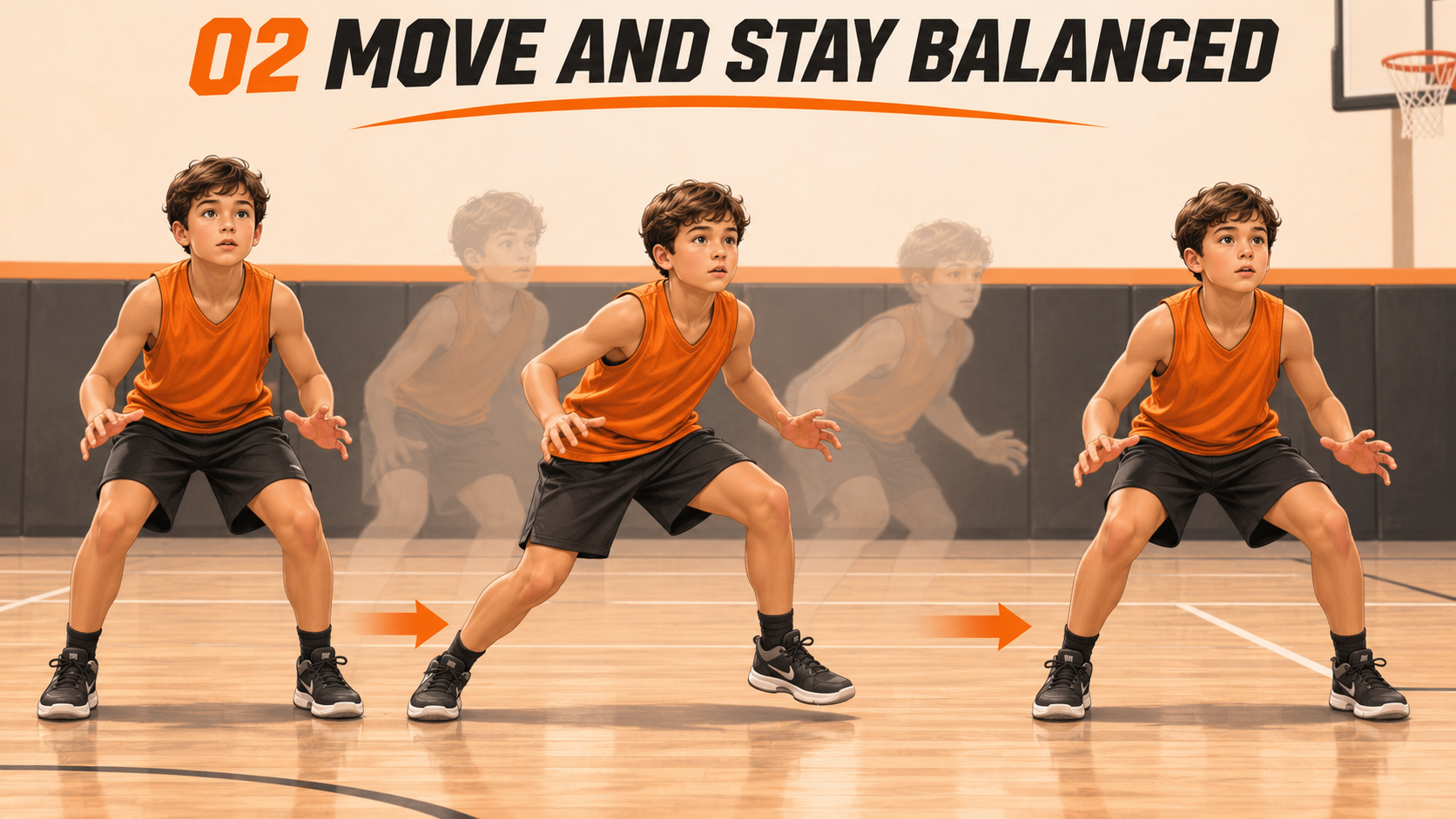
Before the dribble, pass, shot, or defensive reaction, the player needs a body that is ready to move. I want balance that survives a changing situation, not a perfect photograph of bent knees.
Teach one clear point, let the players experience it in a game, then make a short correction. Choose the starting challenge by what the player can do, not by age alone.
Build the starting position
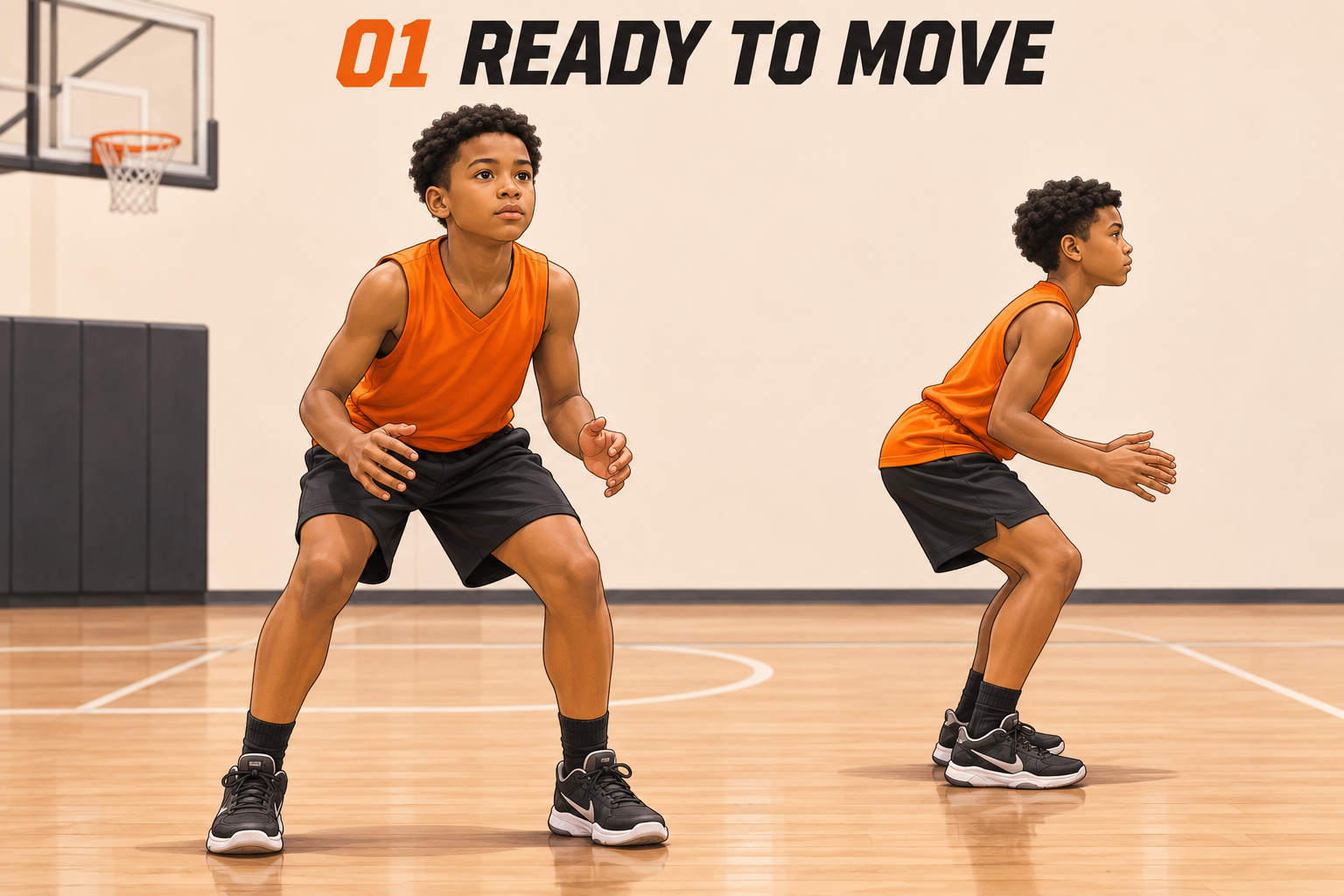
Set the feet comfortably apart, soften the knees and hips, and keep the chest lifted with the eyes forward. The hands stay available. The player should be able to step in either direction without first standing up or bringing the feet together.
Use short active rounds. Change direction, stop, reset, and go again. The stance is a position to move through, not an endurance hold.
1. Up, down, and reset
Call “up” for a relaxed standing position and “down” for the ready stance. Players respond without dropping the eyes.
First establish two correct responses. Then change the order and pace. After a mistake, have the player reset and rejoin rather than spend the lesson sitting out.
2. Coach says
Use the same two positions, but respond only when the instruction begins with “Coach says.”
The movement stays simple while the listening rule becomes more demanding. Award a point for a correct choice and a controlled position.
3. Red light, ready stance
Players move toward a finish line. A visible stop signal means brake and settle in a ready stance. Restart only on the agreed go signal.
Begin at a walk. Progress to a jog, then short faster approaches when the player can stop under control. Use light signals, or a clear hand signal can serve the same purpose.
4. Stop at every line
Use the court markings for a relay. Players travel to the next line, brake, establish the stance, and then accelerate toward the next one.
Count a leg only when the stop is controlled. Fast running does not cancel an uncontrolled arrival. Work on the stop before making it a race.
5. Musical spaces
Give each player a clearly separated home space. On the signal, find a space and arrive balanced. In the competitive version there is one fewer hoop than players.
For an introductory round, give everyone a space. Add the missing space once players can look for an opening without colliding. Use short rounds and rotate the searching role.
6. Freeze and release tag
A tagged player freezes in a ready stance. Another player releases them with the agreed signal, then both rejoin the game.
Use a hand touch to release a teammate. Keep the freeze brief and watch for a ready position that remains balanced.
7. Circle chase
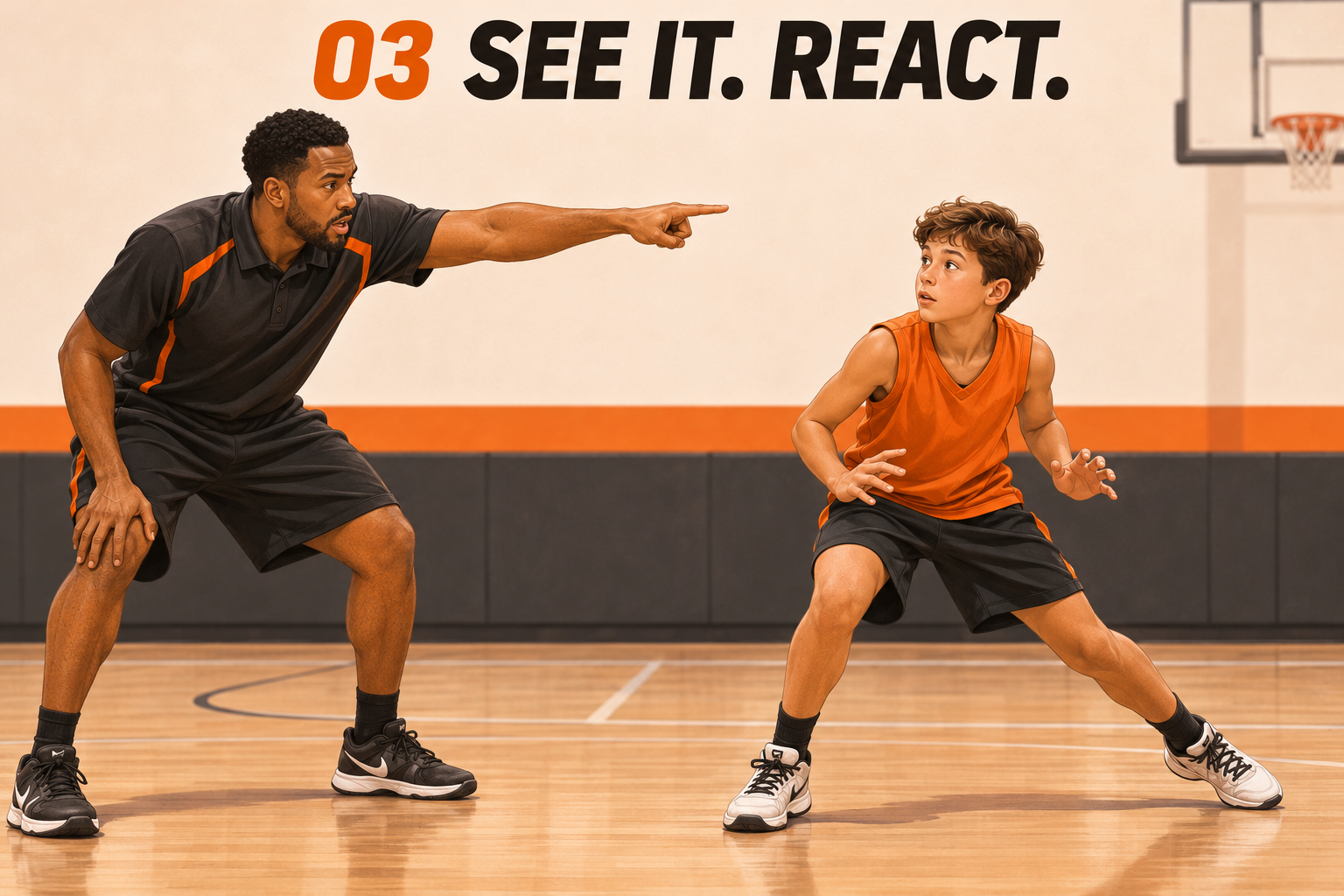
Players form a generously spaced circle. Call two opposite players to chase around its outside while the others stay ready to respond to the next call.
Start each runner from a balanced position and give everyone a clear running direction. The task is to recognize the call and leave efficiently, not lean forward until balance is lost.
8. The tunnel relay
Make short lines with enough space between players. Pass a ball through the tunnel formed by their legs. The receiver at the back carries it around the outside and becomes the new front player.
Keep the task focused on moving the ball. Keep the waiting position comfortable, the groups small, and the ball moving.
9. House swap
Players occupy home spaces while one player searches for an opening. Two occupied homes can swap at any time; the searching player tries to claim a vacancy.
A new home counts only after a controlled arrival. Progress to a moving dribble, a clean gather, and legal footwork at the destination.
10. Sea and land
Mark a line with one side called “sea” and the other “land.” Move to the named side and settle in the ready stance. Repeating the current location means stay.
Next, add a ball: one dribble to change sides, then gather and stop. A repeated call now tests the choice to hold rather than dribble automatically.
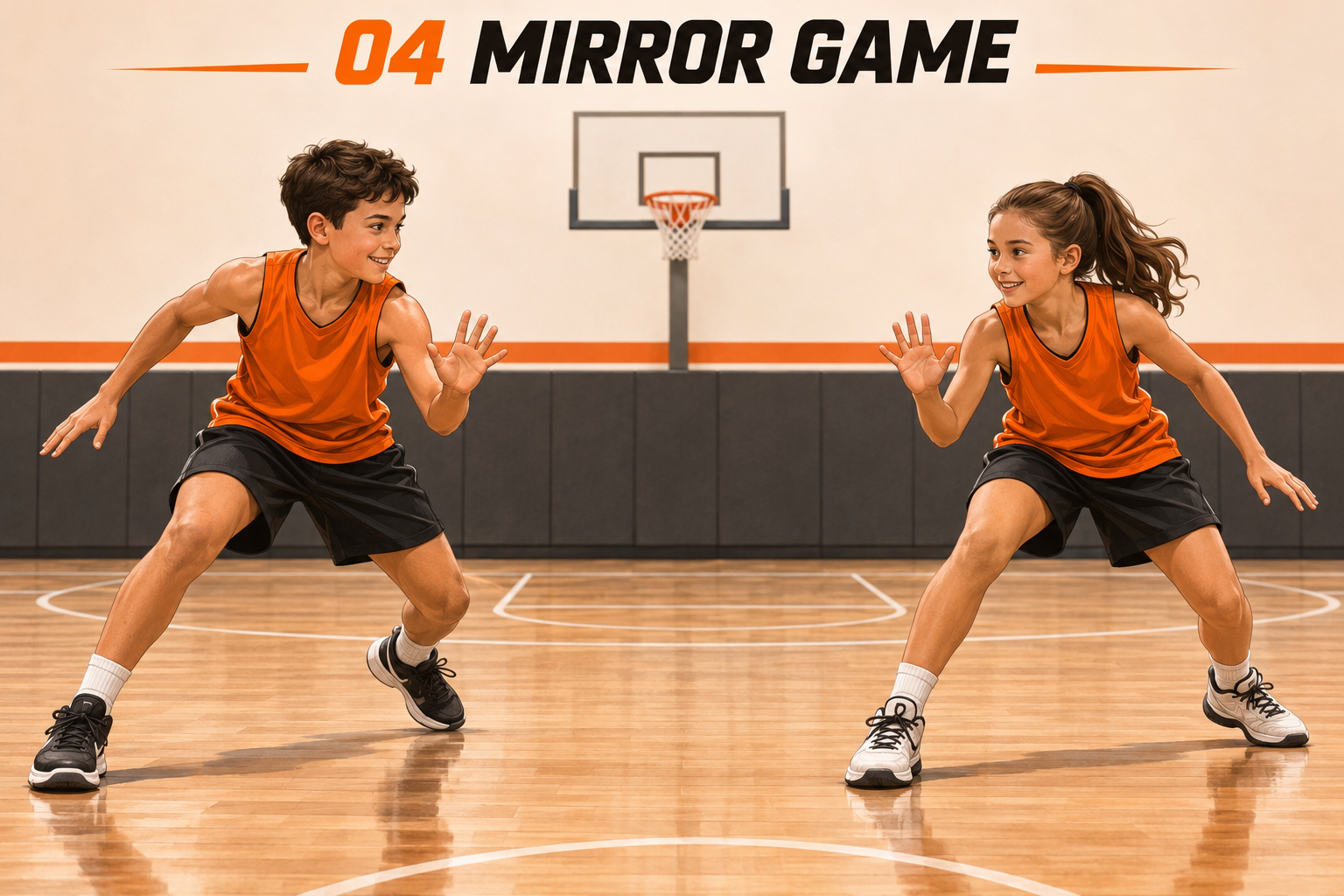
Coaching application: the mirror game
Partners face each other with clear space between them. One leads with small lateral movements and the other mirrors. Keep the eyes on the partner and recover the stance after each move.
This additional application connects the same ready stance principles to a moving person. Change leaders regularly. Increase the uncertainty before increasing the speed.
Choose the next challenge
Progress from finding the position, to arriving in it, to responding from it, and finally using it in a live situation. Change only one demand at a time: speed, direction, cue, ball, or opponent.
Look for an observable result. Can the player stop without an extra stumble? Can the head stay up? Can the next action begin immediately? If not, simplify the challenge and rebuild.
“Make each day your masterpiece.”