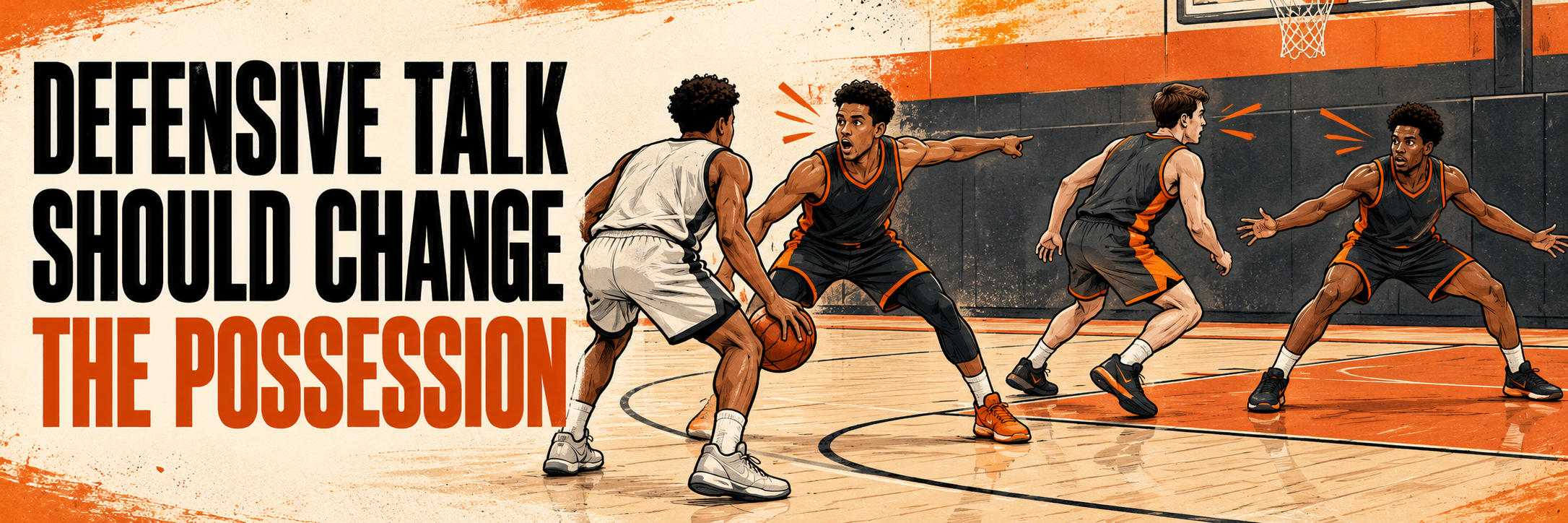
I want players to know what to say and when to say it. The call should help a teammate prepare for the next action, not add more noise.
Teach specific information
Help defenders identify what to call and when to call it. The details change with your coverage, but the purpose stays the same: let the ball defender and the help defenders know what is coming. Communication must improve timing, positioning and collective responsibility.
Make silence visible
With younger players, I keep the language simple. When a defender takes the ball handler, call “Mine.” When the ball handler stops dribbling, call “Five.” Later, add a clear call for the shot and for the coverage on a screen. The exact words can change. Every player should know what the call means and what to do next.
Build ownership
Each player carries part of the defensive picture. A team becomes coordinated when players feel responsible for sharing what they see. Adjust the language to your group and avoid turning the drill into shouting for its own sake.
Reward the call that helps a teammate make a better defensive decision.