I started working on athletic movement when I was 17, coaching younger players at Hapoel Jerusalem. At the old Strauss gym, we finished practice by running up and down the benches and stairs. After my army service, I sat with my sports teacher, Maksim Dimenshtein, to learn more about athletic training. Over time, I adapted that work for basketball. One movement I kept returning to was the stop and quick exit in the opposite direction.
Train basketball movement
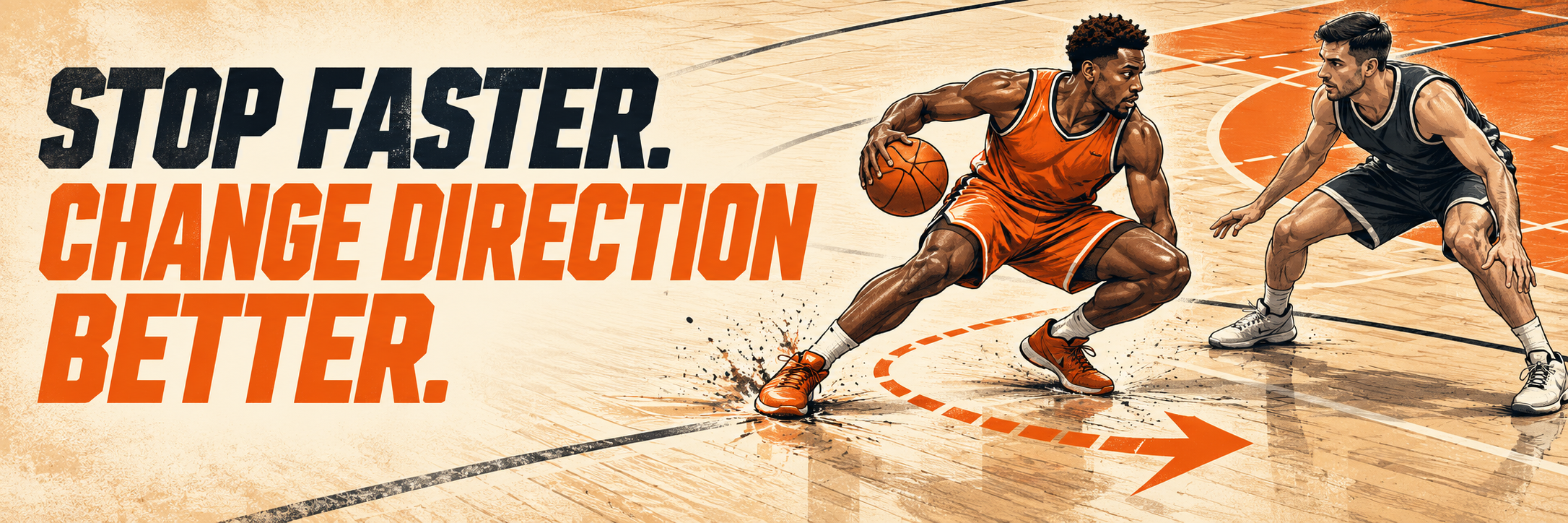
A quick series of tiny steps may improve coordination, but basketball repeatedly demands forceful deceleration followed by a sharp change of direction. Your athletes must learn to lower the center of mass, create a useful body angle and push away from the stop without wasting a step.
Use opposing force
Stopping is not the absence of movement. It is an active production of force against the direction of travel. Once players understand that, you can coach the transfer of body weight from one side to the other. The defender who can brake efficiently can react to the next attack instead of being dragged by the previous one.
Add the read
Start with a controlled stop and exit. Cognitive Reaction Training can use a partner or visual signal to determine whether the player goes right, left or stays. The body must remain ready while the eyes collect information. Agility means changing the plan and moving in the right direction at the right moment.
Work on the quality of the stop, the weight transfer and the first explosive step out of it.