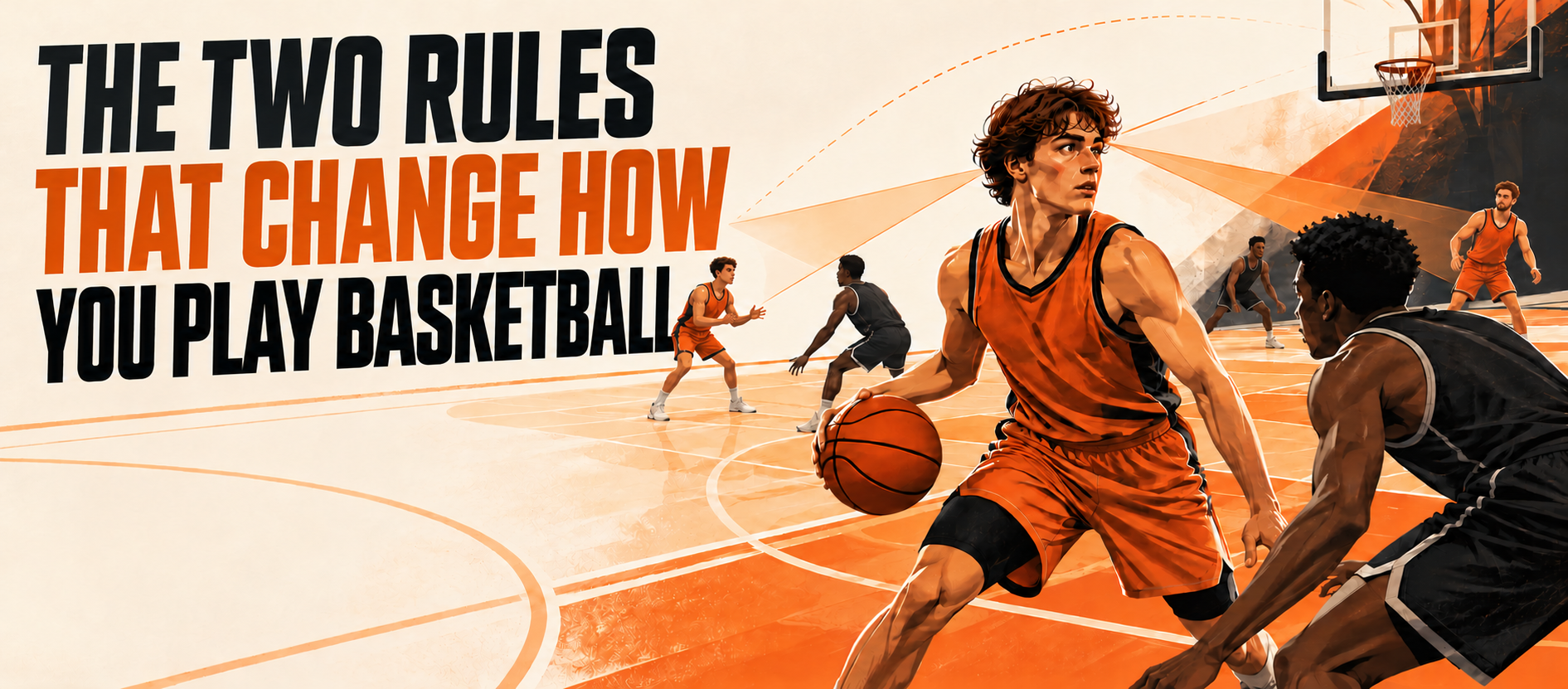
I developed Cognitive Reaction Training out of a basketball problem: too many players practice a move with their eyes down, then enter a game that demands they read everything around them. REACT CRT gives us a way to bring visual information into a physical drill.
The read comes before the move
Basketball does not give a player time to think through a checklist after the catch. The player has to notice useful information early: the defender’s balance, the open side, help in the lane, a teammate’s position and the time on the clock.
That is why I separate the task into three parts: see the cue, understand what it means, then choose and execute a response. If the player moves quickly but responds to the wrong information, speed did not solve the problem.
Start with one clear rule
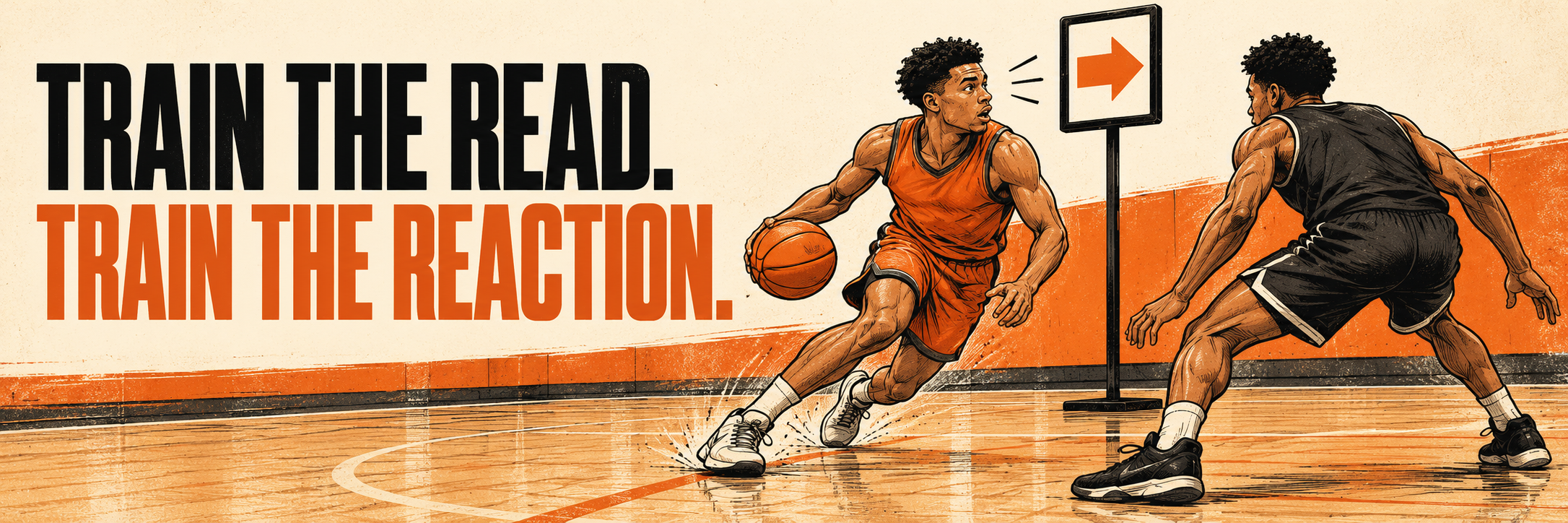
A visual cue should have one agreed meaning during a set. Keep the first rule simple enough that the player can perform it without stopping to decode the instructions. For example, use D for drive, S for shoot and P for pass. The cue starts the decision. The player still has to control the ball and finish the action with balance.
In the first stage, the player learns the cue to action connection. In the next stage, add a live defender. Now the player must recognize what the defender and help defense are giving up. The symbol can start the rep, while the basketball picture determines which option is actually available.
Drill one: drive, shoot, pass
Set the REACT CRT app to show D, S and P at a pace the player can handle. Start at the wing with a ball. On D, attack the basket. On S, rise into a balanced shot. On P, deliver the ball to a target. In the original video version, the pass goes to a wall. With a partner, use a moving target so the pass has a real destination.
- Begin with two cues. Add the third only when the player can identify the cue and complete the action without rushing.
- Use four rounds of 45 seconds of work and 15 seconds of rest as a starting point. Slow the cue rate or shorten the round if the player begins guessing.
- Keep the eyes up between cues. The player should know where the basket, defender and passing target are before the next symbol appears.
- After the basic mapping is steady, add a defender. The player reads the closeout and help position before choosing the available action.
Score the rep on the decision first, then the execution. A correct read with a rushed finish is a different problem from a wrong read. Tell the player which one happened, then give them another chance to solve it.
Drill two: know the clock, choose the shot
The second video uses 1, 3 and 5 to represent seconds remaining. That small change gives the rep a game problem. The player has to recognize how much time is left and select an action that can be completed before the horn.
Use a passer, a shooter and a rebounder. Call or display the time cue, then deliver the ball. With five seconds, the shooter can read the closeout and use one decisive action. With three seconds, simplify the choice and get into the shot quickly. With one second, the catch and release have to be ready before the ball arrives.
Do not reward a shot just because it went in. Check whether the player was ready, whether the choice matched the time and defense, and whether the release beat the clock. Those are the habits the drill is meant to expose.
Progress it without losing the point
Change one demand at a time. First increase the number of cues. Then add a defender. Then make the player move into the catch or make the decision under a short clock. If you add all of those at once, you will not know whether the player missed the cue, misunderstood the read or simply could not execute the movement.
Keep the target clear: the player should recognize the information, choose a response that fits the situation and move under control. Agility is the quality of changing direction at the right moment, not just moving quickly between markers.
What to watch as a coach
- Does the player scan before the cue and keep track of the floor?
- Can the player explain the cue and the reason for the choice?
- Does the first step match the open space and the defender’s position?
- Can the player stop, shift or pass without losing balance?
- When the player makes an error, can they correct the next response?
Track one or two points at a time. If the player is still learning the rule, do not judge the drill by shooting percentage. If the read is solid but the finish breaks down, keep the cue and decision while coaching the execution.
Do not merely count repetitions. Make the player perceive the cue, interpret the play and execute the right response with agility.